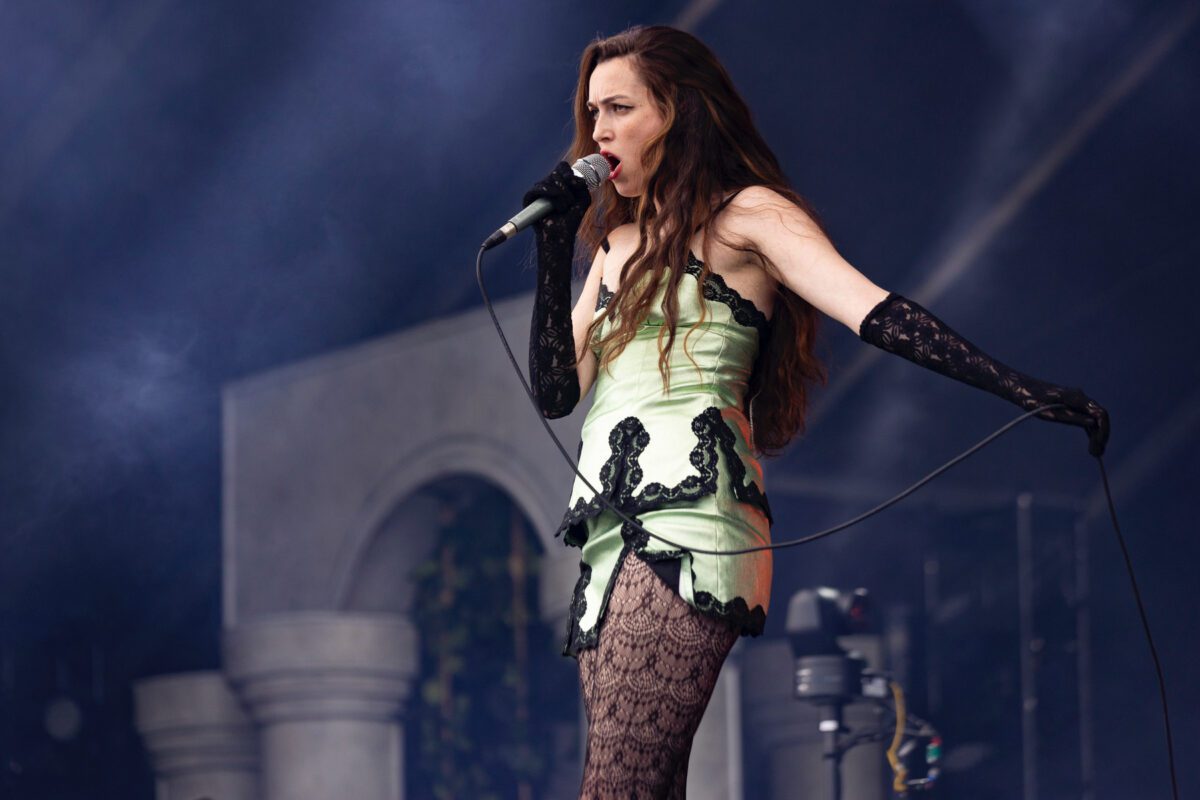
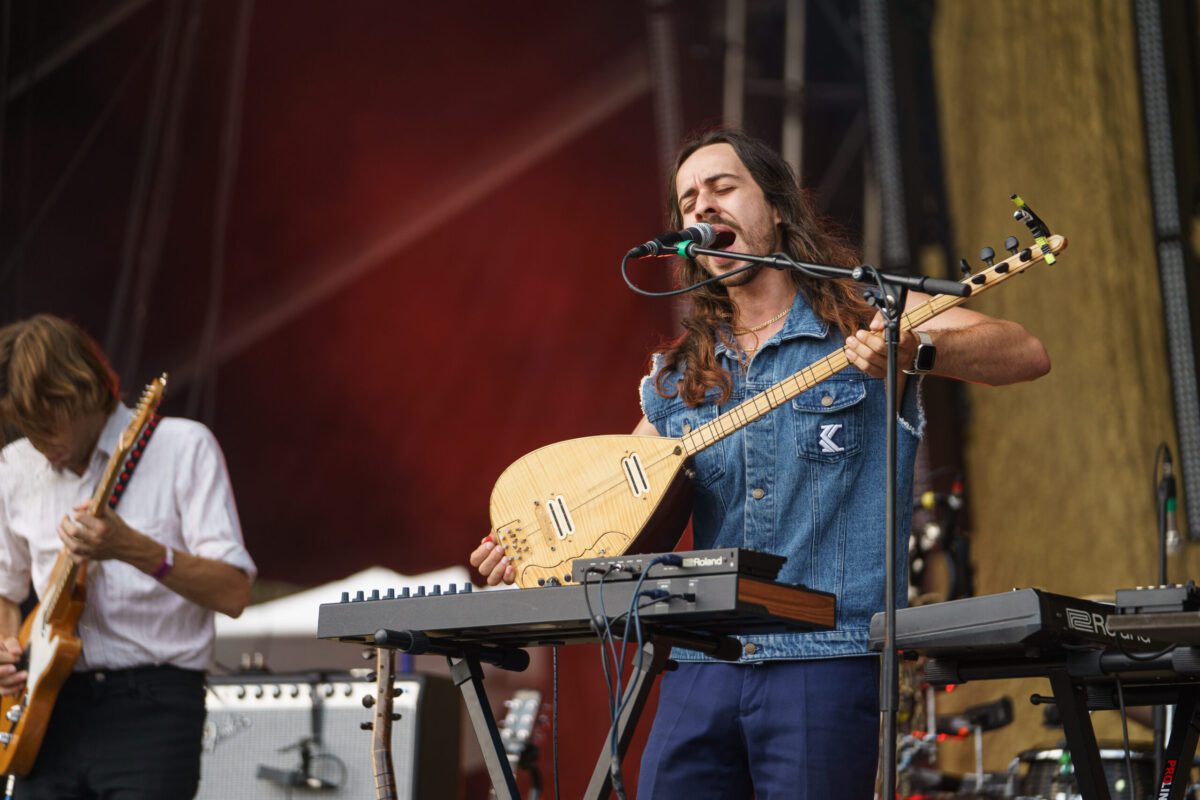
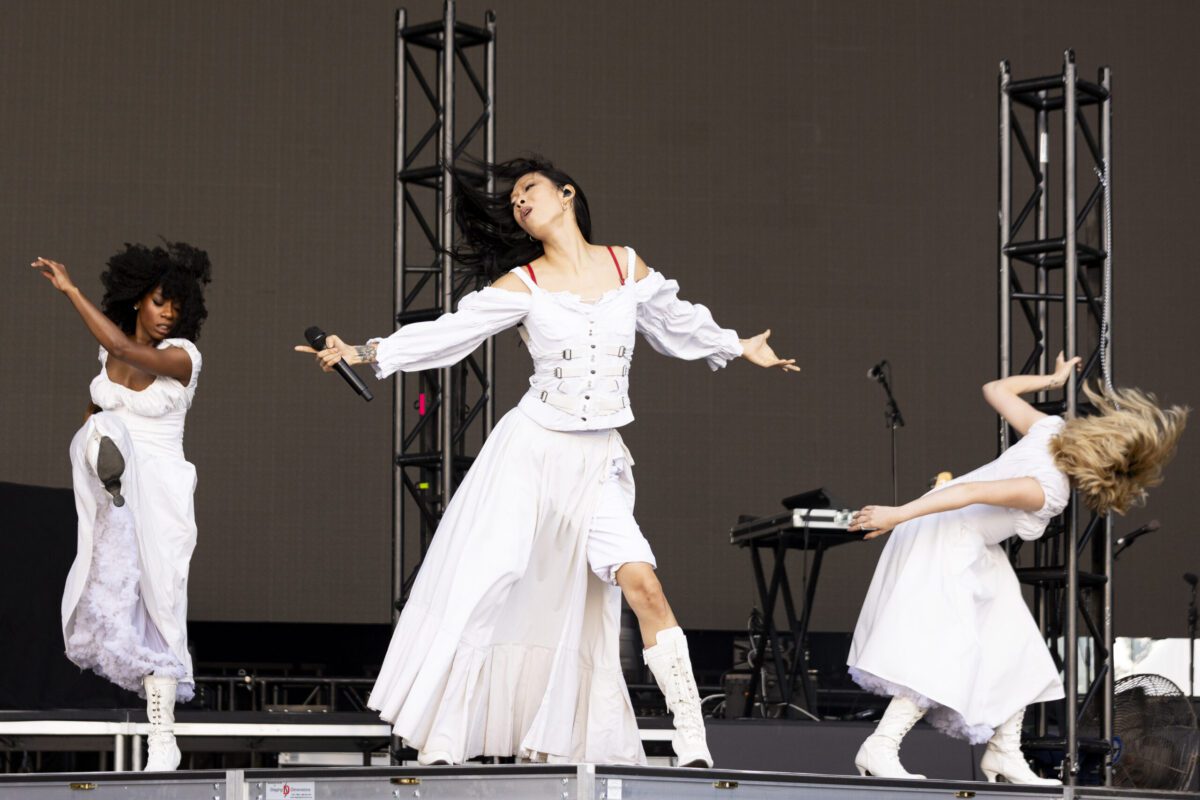
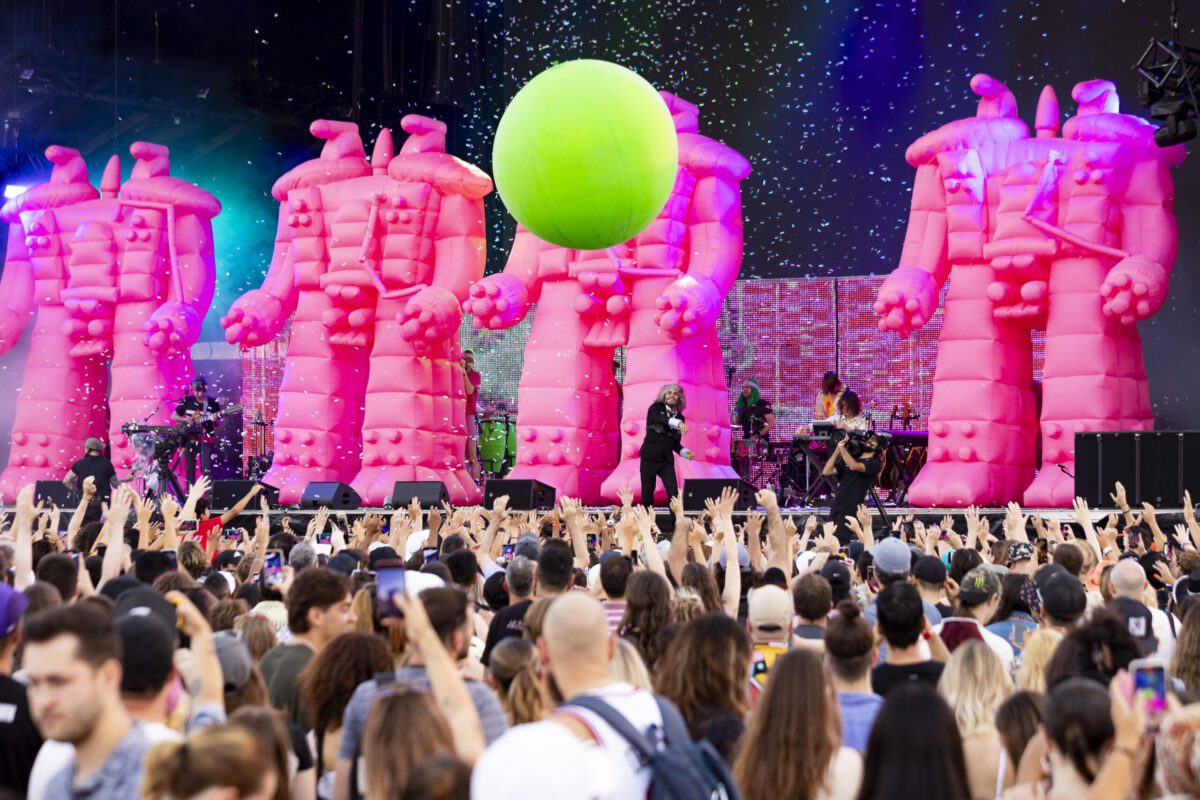
MUTEK 2023 | Cross-coverage, from Moon Apple to Tim Hecker
by Rédaction PAN M 360
MUTEK Montréal 2023 and PAN M 360, a combination that makes perfect sense! That’s why our team is focusing on it this week. Fans of cutting-edge electronic music and digital creation are in Montreal this week, so follow our team’s vibrant coverage through Sunday!
Experience 1
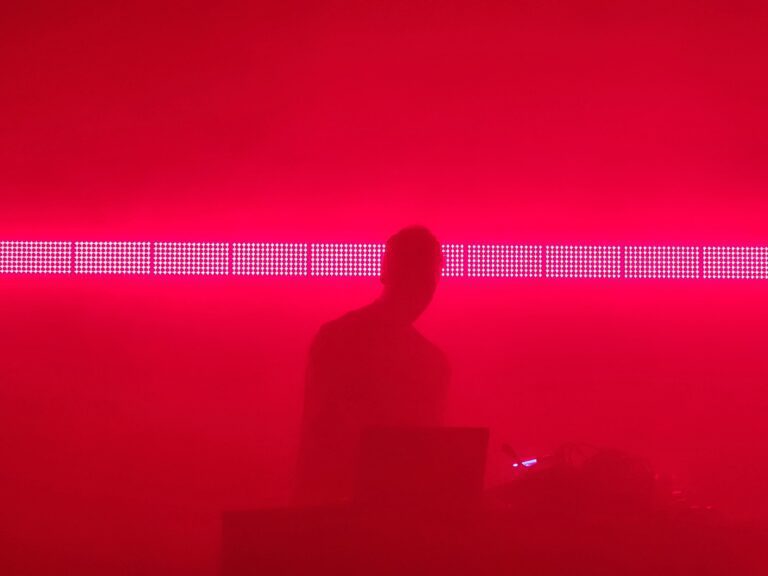
On Tuesday, May 22, Mutek Montréal 2023 took to the air on the Tranquille esplanade in the Quartier des spectacles. Outdoors and free? This is not outdoor programming made up of the leftovers from our indoor line-up, but rather a mix of internationally established artists whose current buzz here at home doesn’t yet justify paying admission. – Alain Brunet
Leon Louder
// Vivien Gaumand
With Leon Lounder, the audience wasn’t sure whether to listen with the body or with the head alone. On the one hand, the pulse was drowned out by a sound design built around insect sounds, commissioned by the Insectarium de Montréal. Here, harmony and melody were not parameters. Rhythm, on the other hand, was mostly created by sound phrasing of a certain length, repeated in loops. Later, low frequencies changed the texture and were coupled with short sounds, but repeated so rapidly that they created the effect of continuous sounds. Towards the end of the performance, a more harmonic passage with what gave the illusion of being synthesized voices came to confuse this entomological music. – Laurent Bellemare
Moon Apple
// Vivien Gaumand
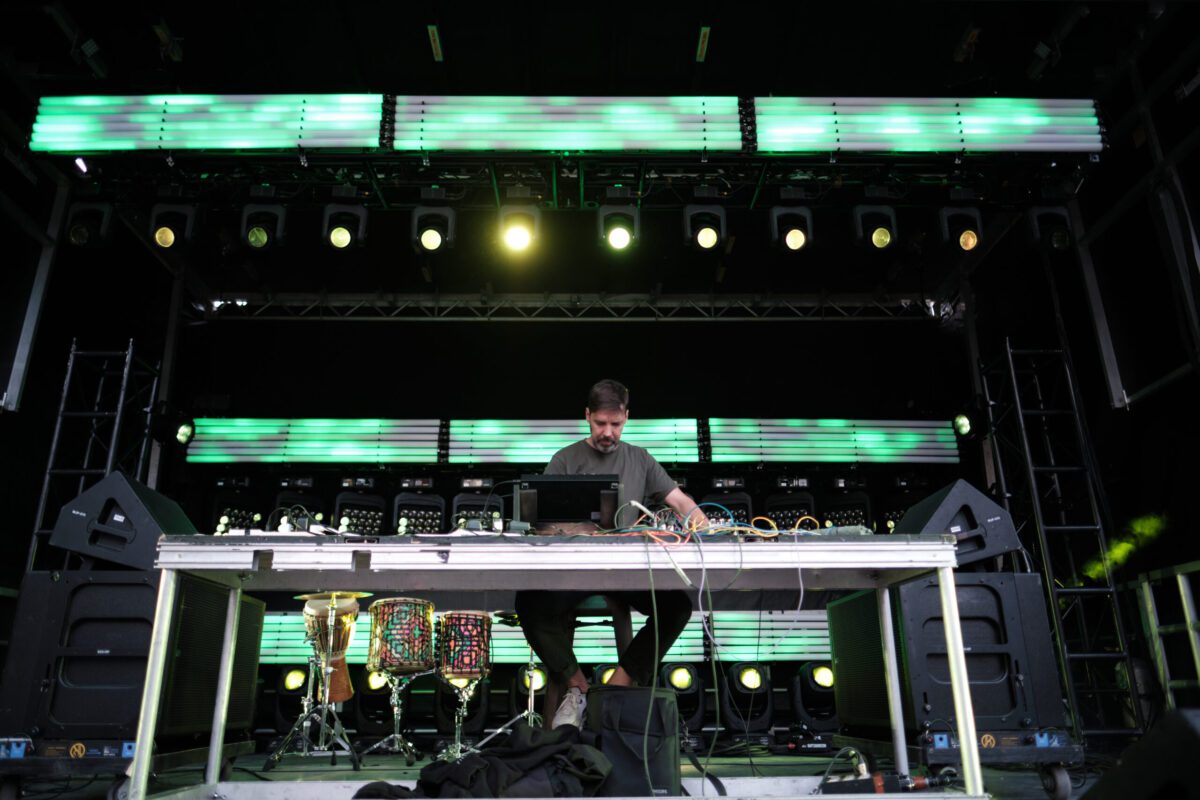
That said, the Expérience 1 series also features emerging artists who have yet to fine-tune their proposals, but who show interesting potential. Such is the case of Moon Apple, an adopted Montreal producer whose grandmother became a Buddhist monk, which inspired her pseudonym. Equipped with modular synthesizers, a loop pedal, and percussion instruments, the musician offers an organic sound filtered by various effects whose purpose could be ritualistic at times. She also sings and taps live on a digitized surface. A little clumsily, we noted, when the rhythmic pattern was combined with other pre-recorded sequences,
It presented a kind of ceremony whose purpose was to represent the Four Pillars of Destiny. Guests Dédé Chen, author, and performer, and Ahreun Lee, multimedia artist and musician, came to lend a hand to a Moon Apple symbolically addressing mythical creatures – at least that’s what it says on her biographical profile. This integration of melodic synth-pop into this multi-layered experience is interesting but still needs some care before it hits the bull’s eye. – Alain Brunet
Moon Apple’s music contrasted with the opening performance. The artist immediately immersed the audience in a harmonic universe of soft tones and ethereal vocals. Despite this delicacy, powerful attacks in the lower register quickly saturated the frequency range, creating a resounding yet soothing bath of sound. The musician from Seoul, Korea, incorporated some instrumental interpretation, notably with the rhythms she played on a digital pad before looping them. Unfortunately, these sequences were not synchronous, which even led the artist to abandon this technique towards the end of the performance. On the other hand, the highly processed vocals of the two guest artists added to the pop sound that must surely be delectable on the album. – Laurent Bellemare
Indus
// Vivien Gaumand
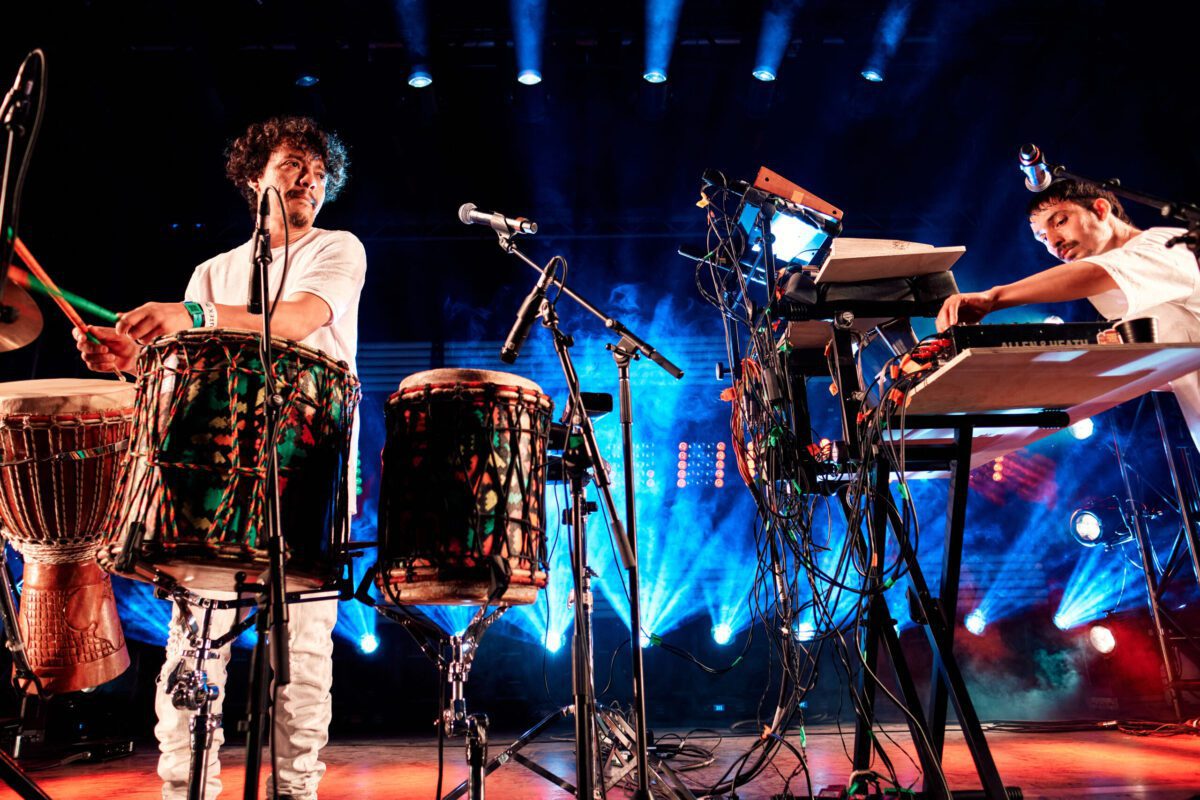
This Colombian duo, self-proclaimed “electro-folk”, was the act that brought the house down. From the very first strokes of the Tambora combined with the powerful electronic rhythms, the audience started dancing. The catchy music was interspersed with samples of voices singing choral songs, although in the end the rhythm and bodily performance outweighed any melodic or harmonic content. Decidedly, the marriage of traditional percussion with electronic music is a winning recipe, as Indus’ performance was undoubtedly the most energetic of Expérience 1. – Laurent Bellemare
Exclusive to the program, Colombian duo Indus made a splash on the Tranquille esplanade. Indus is made up of producer Oscar Alford and percussionist Andres Mercado, whose album of the same name did not go unnoticed in 2020. Indus’ appeal is based on the use of Afro-Colombian and Afro-descendant chants and rhythms (champeta, currulao, mapalé, etc.) at the heart of a rather pop electronic approach, in line with much of the genre’s dance-floor-oriented music. The vocals may occasionally sound a little out of tune (a problem with the monitors?), but the overall quality of the work made us forget about these minor discrepancies. Indus’ approach is solid and unifying, with warm percussive rhythms and traditional vocals blending well with the synthetic keyboards and other digital tools that make up the lutherie of this well-received tandem. Alain Brunet
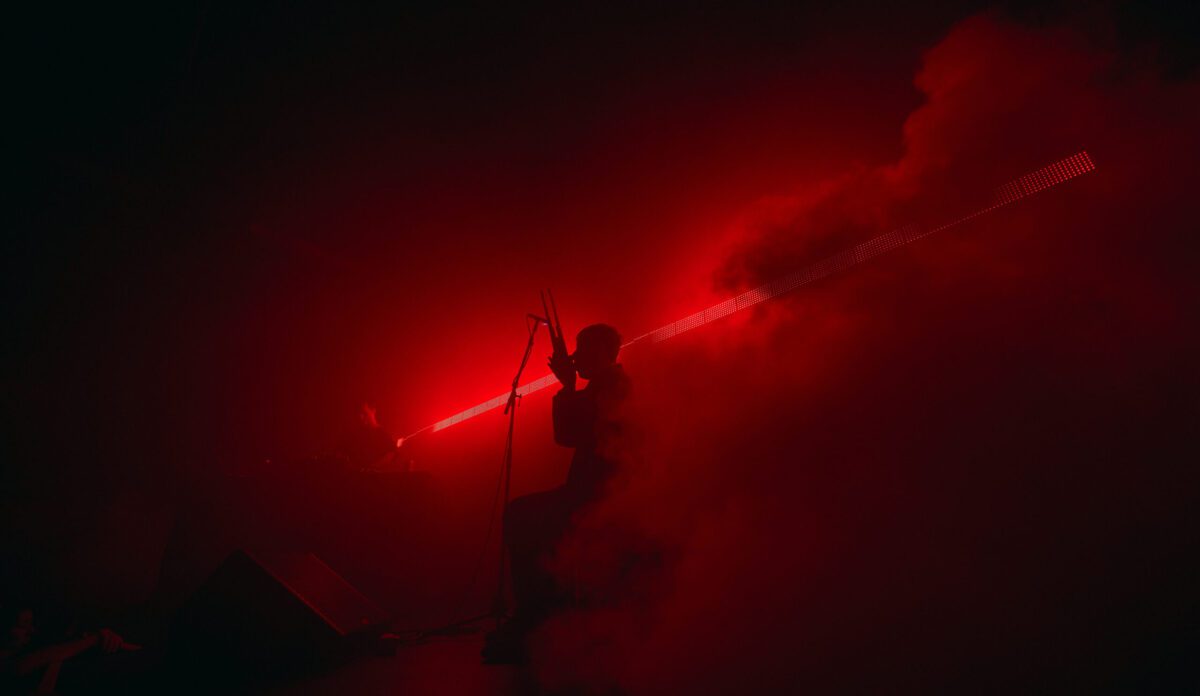
Opening event at New City Gas: Grand River and Tim Hecker
// Bruno-Aiello-Destombes
At New City Gas in Griffintown, the huge New City Gas club hosted the opening indoor program. Perfectly renovated (since 2012), this factory dating back to the Industrial Revolution (1847) boasts a surprisingly efficient sound system for the concert format.
The first artist on the program had never performed at MUTEK before but enjoyed a genuine buzz in MUTEK networks. And the buzz is perfectly justified! With origins in Italy and the Netherlands, Berlin-based Aimée Portiori, aka Grand River, offers marvelous superimpositions for fans of ambient music steeped in minimalism. She chooses to insert a few consonant chords and melodic or choral fragments as beacons for her brilliant explorations. In the vein of Christian Fennesz and Tim Hecker, Grand River’s electroacoustic proposals are laced with multiple tasteful synthetic filters. They are set to rhythms that are generally slow, sometimes faster, and more robust, but which have nothing to do with the binarity essential to the dance floor. – Alain Brunet
Grand River’s performance was one of those that operated by gradually densifying the musical material. With very little development, the various moments of the show were built on short melodic loops and an accumulation of sound layers. Rhythmically, we moved from total abstraction to pulsation. Moments of contrast between slow keyboard chords and background noise, or vocal sampling, occasionally extended the artist’s sonic range, plunging his audience more than once into a form of urban trance. – Laurent Bellemare
Tim Hecker
// Bruno-Aiello-Destombes
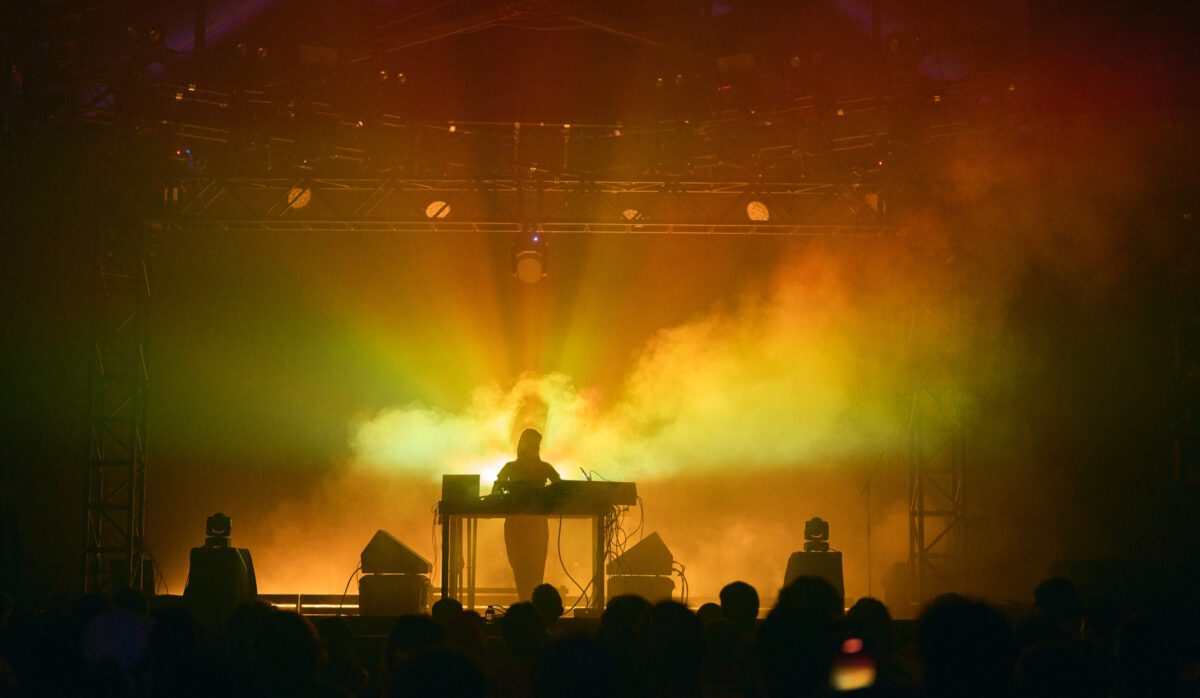
There’s no need to rehash the career of Tim Hecker, one of Canada’s most respected electronic composers. No Highs, his most recent album, is the expected extension of his most remarkable approaches. An ace of saturated frequency superimpositions, Tim Hecker has not been content to build these richly layered works despite their apparent linearity. His latest album is a long sinusoidal curve, so shallow that it can flatten out before resuming its roundness. Over time, the composer has added an instrumental dimension to his proposals: the bass clarinet is tangible on his new album, to cite just one example.
Hecker’s live performance is by no means an exact reproduction of his recent discography. The distortion effects may be more violent, the pulsations heavier (and wham in the plexus!), the quotations sometimes different, taken notably from the Anoyo and Konoyo recordings, which are largely Japanese-inspired. But these subtleties blend discreetly into the sometimes searing flows of this coherently performed concert. Pure Tim Hecker, no doubt about it. – Alain Brunet
From the very first notes of Tim Hecker’s performance, we could recognize the sound world of his 2018 album Konoyo. Frames of instruments belonging to Japanese Gagaku began a long session of ambient drone, always navigating between harmony and dissonance. The hichirki glissandi that so distinctly opened the piece “This Life” then came to color the abrasion, serving as a transition to a new passage. Considering that it was the music of No Highs (2023) that was in the spotlight, these nods to an earlier album created a subversive effect. The same goes for Fumiya Otonashi’s shô interventions, unfortunately, inaudible during the first part of the concert.
More generally, the audience was treated to a forced immersive experience, with low frequencies so intense you could feel them through your body. Fortunately, Tim Hecker’s music is fascinating, and we happily play along behind his analog and digital machines. – Laurent Bellemare
MUTEK 2023 | Satosphère 1 : Metaract et Iwakura
by Théo Reinhardt
The first Satosphère event of the MUTEK 2023 festival features a double program, with the audiovisual projects Metaract and Iwakura. The former is, according to MUTEK’s website, “an exploration of the duality between analog and digital”, and the latter, “a supernatural journey to rediscover the transcendence of nature.”
Photo credits : Ash KG
Metaract
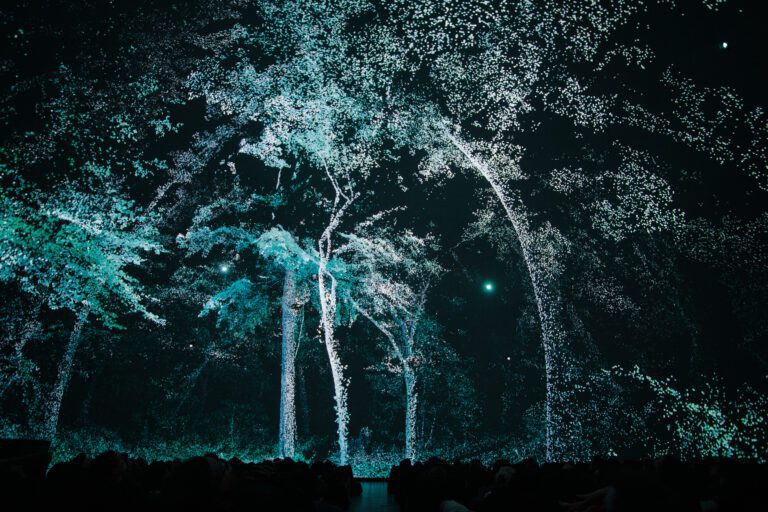
Metaract is the first of two presentations, created by Japanese artists Manami Sakamoto and Yuri Urano. It’s an immersive film focused on nature which, in the context of the SAT, certainly questions the relationship between the natural and technological worlds.
From a dust particle in nothingness, to a drop of water in a freezing river, to a lump of earth in a forest, we seem to be taken through all the states of matter, as if we were experiencing them in first person. Things move slowly, even if it feels like we’re crossing universe-scale time jumps in the space of 20 minutes or so. What’s more, the exploratory but still modest tone of this rather abstract representation of nature is reminiscent of the curious and avid lens towards nature shown in Terrence Malick’s films, in particular The Tree of Life (2011) and his recent documentary Voyage of Time (2016).
The music remains fairly calm, with ambient layers that place us in a space without beginning or end, with a few distant sounds of bells and chimes here and there. The most recurring image is that of thousands of tiny dots floating in nothingness, which can be infinitely small or large. There’s no real scale of reference here, but even the small seems immense when sitting down, head up, under the dome of the Satosphère.
At the end of the film, as low-frequency blasts mimic a living heart, the thousands of colored dots acquire some intelligence and form trees, before hatching, falling back into galactic chaos, and finally returning as trees, their final form. At least, for the time being.
Iwakura
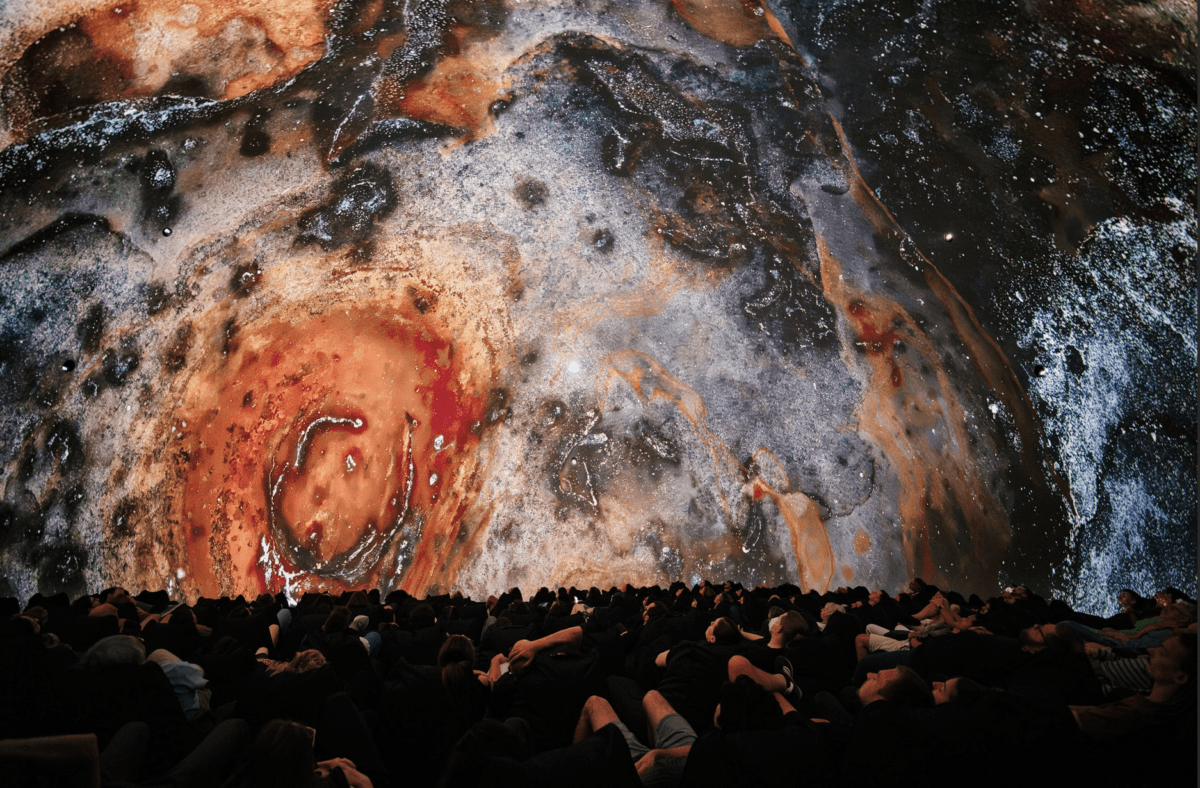
This second presentation, by artists Kazuka Naya, Ali Mahmut Demirel and Maurice Jones, is more abstract, more bizarre, more preoccupying and, above all, more psychedelic.
Born from what appears to be an obsession for geology, our journey begins by surveying very, very closely the walls of various caves, which merge into one another. The music here is dark, murky, calcified. It’s like being immersed in a meticulous, if not slightly fantastical, search for a fossil. But we won’t stop there. The journey will take us much further into the limbo of form, and we’re not sure we’ll be coming back.
As the images unfold, the rocky entities, now solitary in the void, follow one another, and their movement becomes increasingly supernatural: they collapse in on themselves, open out towards us in a tunnel that crushes and lengthens to infinity, at the same time hollowing out and unfolding in geometric, symmetrical excrescences, while we forget the music and all our attention is trapped in this geological black hole.
Eventually, we’re back where we started, with rock walls blending with waterfalls and trees, as the music builds in intensity, orchestration and sentimentality. Quite a journey. Have we reached transcendence? The sublime? Horror? A little of all three, maybe…
FORUM MUTEK DAY 1 | New horizons : digital creation and curation
by Elsa Fortant
At its inception, the MUTEK Forum was held 6 months before the festival. In 2018, the two events have been grafted together, offering a unique perspective on digital creativity. Programmed by Sarah Mackenzie and hosted by Claudine Hubert, the 9th edition is entitled “Future currents” and will be held all week long at Les 7 doigts de la main. MUTEK offers us the chance to delve into a wide range of contemporary themes: the relationship between culture, technology and the climate crisis; accessibility and inclusion within immersive technologies; the power of tech; art, governance and artificial intelligence; and the future of festivals. PAN M 360 reports on the first day.
Photo credits : Maryse Boyce
Opening talk – Festivals as radical rituals
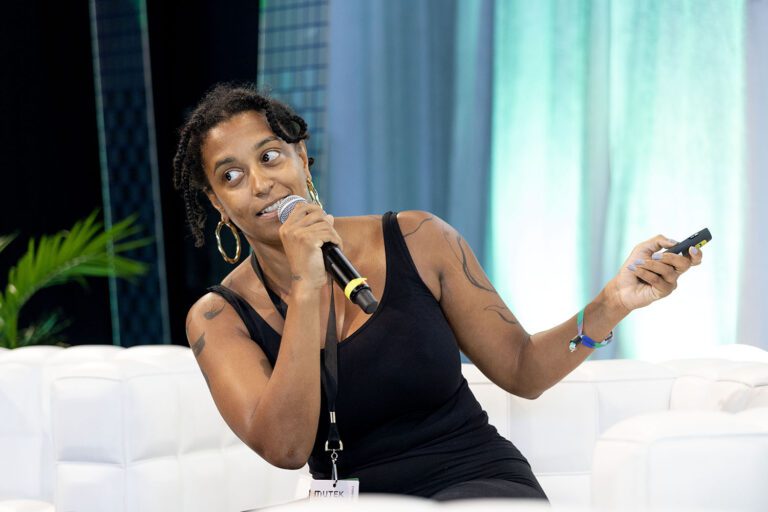
Frankie Decaiza Hutchinson – founder of Dweller and cofounder of Discwoman
As programmer of the Bossa Nova Civic Club in Brooklyn, Frankie Hutchinson had a front-row seat to observe the impact of the electronic music industry on the expression of black artists and people, i.e. a lack of space and visibility. It particularly struck her when an artist approached her to organize a special event for Black History Month. Why limit yourself to one event, one week, one month? So naturally, she ended up taking the lead and creating a space for electronic talent from black communities to express themselves, in the form of Dweller, a DIY festival, launched in 2018.
Quickly becoming a “ritual” offering the necessary space for a form of individual and collective catharsis, Dweller has grown to the point of going international with an event at the famous Berghain (Berlin) and programming headliners such as Jeff Mills. With this expansion comes questions: how do you grow without sacrificing the intimacy of your events? How can we develop our audience without losing our curatorial perspective? And, of course, how to ensure its sustainability and financing? At Dweller, financing is largely based on merchandising, and the community can meet and connect in other ways on a blog, Dweller Electronic, which has a political dimension. These are all interesting reflections for thinking about the development of independent events, imagining the future of festivals and their community roots.s, qui comporte une dimension politique.
Panel – Future Festivals : Forging new horizons
Maurice Jones, moderator; Jasmin Grimm, NEW NOW Festival ; David Lavoie, FTA; Naomi Johnson, imagineNATIVE Film | Media Arts Festival
Introduced by Maurice Jones of Future Festivals Lab, the aim of the discussion was to question the power of festivals. The discussion began with a round table on the challenges faced by festivals during the pandemic and the post-pandemic period.
David Lavoie of Festival TransAmériques was one of the 16 initiators of the open letter “Attention, festivals fragilisés” published in February 2023 in Le Devoir. The signatories joined forces to highlight their fragility and the issues they share, mainly the mental health of employees, the maintenance of events and their terms and conditions. The coverage of this letter enabled them to make their voices heard and initiate discussions with the government.t.
For Naomi Johnson, the priority was to pay the artists, which led to an evolution in the festival’s mission to become a content producer. In addition, experimentation with video-on-demand has enabled them to develop their audience. Naomi Johnson also laments the loss of institutional knowledge when there is a departure in the team, which makes the task of getting back to “where we were before” all the more difficult.
As for the NEW NOW Festival, the change was quite radical, as the annual event became biennial, the only way for Jasmin Grimm and her team to stay healthy. Like other festivals, they’ve had to contend with inflation, worker shortages and, above all, the climate issue. NEW NOW is held on the site of Europe’s largest former coal mine, Zollverein, in Essen (Germany). This historic site has been a UNESCO World Heritage Site since 2001. The site’s past and present use inevitably makes us reflect on the climatic consequences of yesterday’s industrial activities and today’s events. For this reason, the festival has taken up the theme of climate change and offered workshops on self-sufficiency to festival organizers.
A younger festival like NEW NOW has to deal with the bureaucratic issues associated with its heritage site. However, as with its counterparts, successfully bridging the needs of artists and communities is a challenge.
What about the death of festivals? As David Lavoie points out, institutions sometimes have to die, and we need to be able to address this issue if we are to foresee the future of festivals. That’s why the NEW NOW Festival has given itself a 10-year lifespan.
We’ll leave you to ponder.
An August 20 at Virée classique: Goldilocks and the Three Bears, Fauré, Monteverdi, Trio Débonnaire and more!
by Rédaction PAN M 360
The PAN M 360 team is very present at the Virée classique, presented by the MSO. Our contributors report daily on what they have seen and heard at the concerts presented in Montreal until August 20.
Three Choirs Come Together to Sing Fauré’s Requiem
Photo credit: Antoine Saito
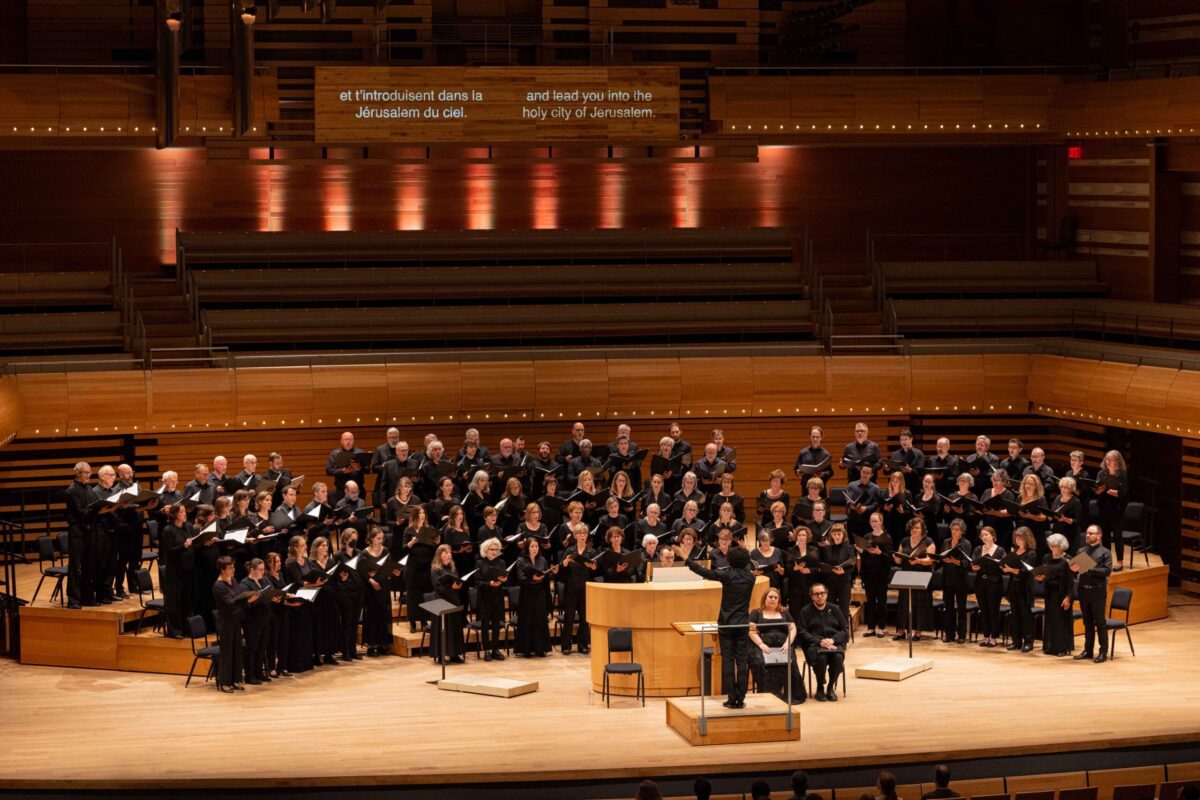
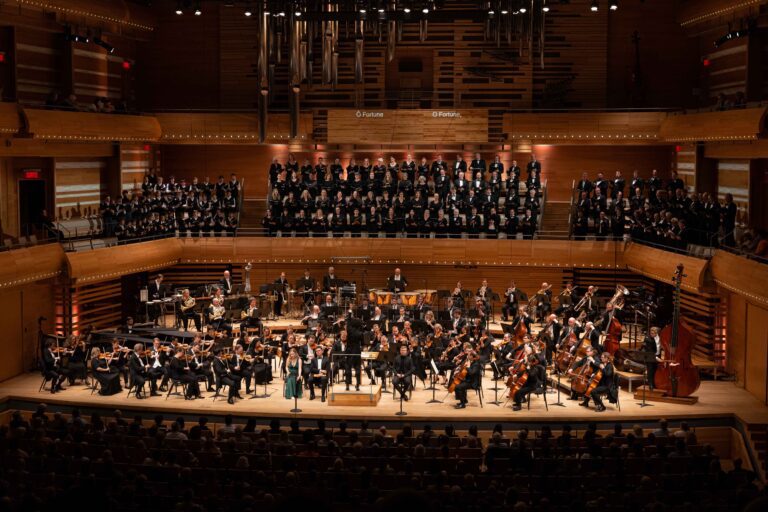
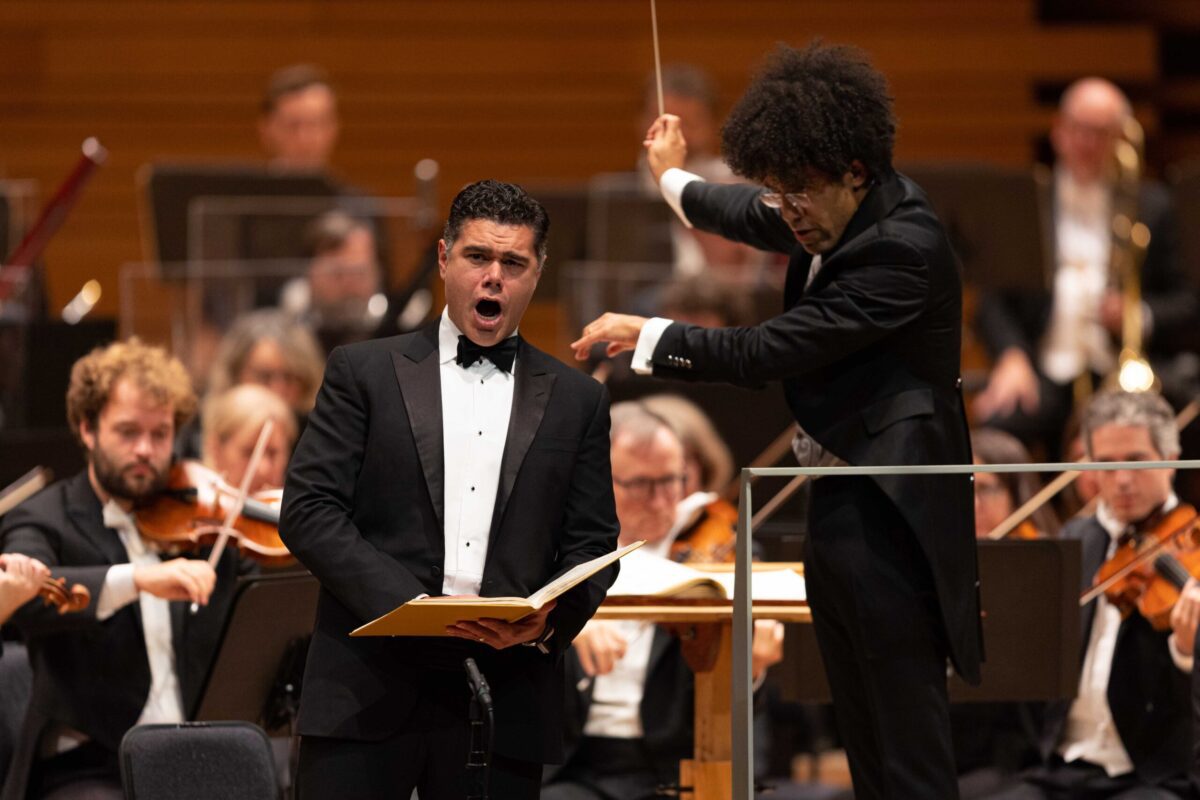
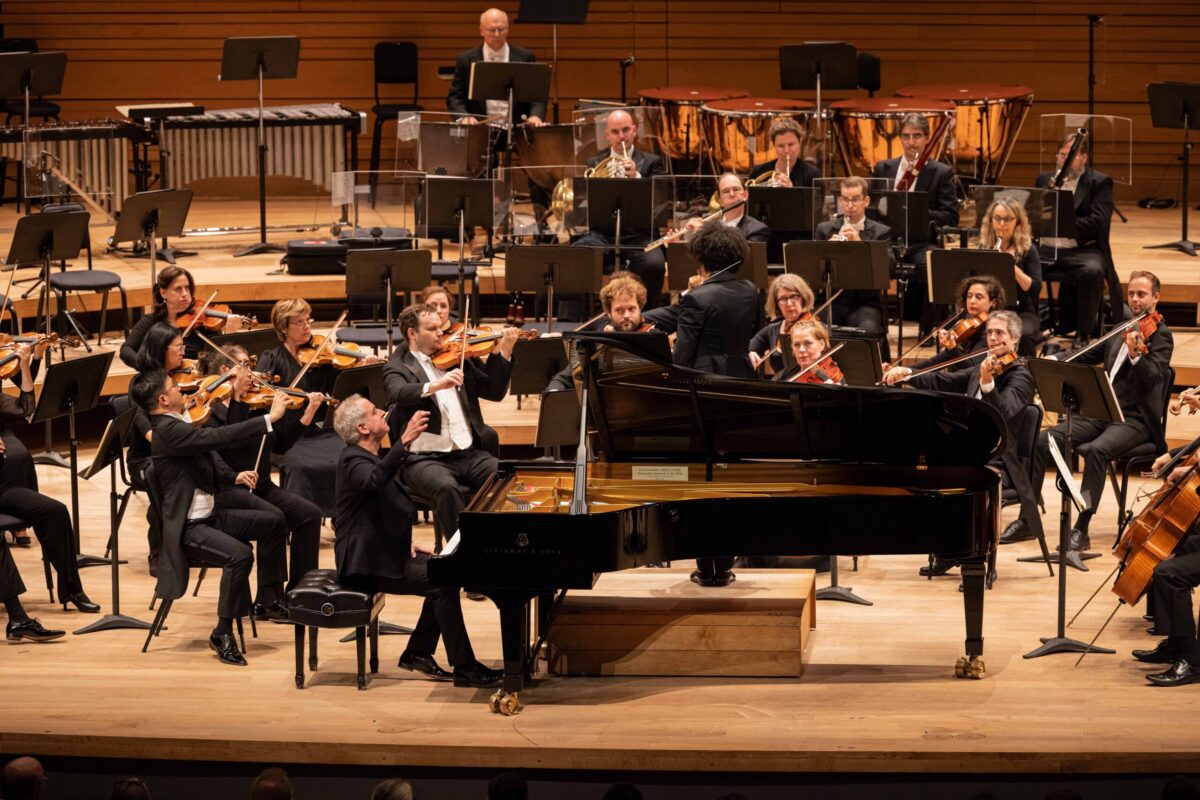
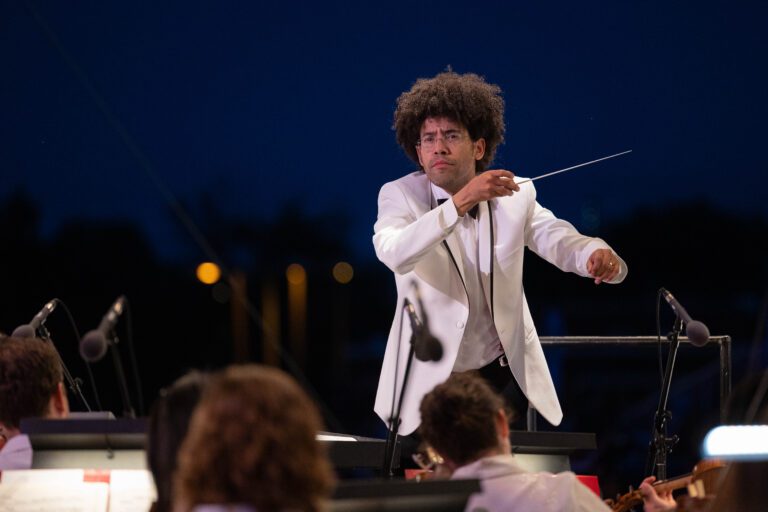
Under the baton of Rafael Payare, the OSM unveiled a nuanced interpretation of Fauré’s Requiem that resonated with luminous clarity and depth. Presenting this seminal work in collaboration with three amateur choirs and a concert organist, this afternoon’s performance aligned more closely to Fauré’s original intent, allowing one to hear the counterpoint more clearly than with full orchestral accompaniment.
The program began with François Morel’s Prière pour Orgue, a short piece for solo organ which briskly set a reverent but equally grave tone in the halls of the Maison Symphonique. It was in the silence that followed that the choir, composed of three sections, each with its own choir conductor, took to the stage with a performance of Fauré’s Cantique de Jean Racine. Often performed alongside his Requiem, this text setting was an early sign of the unique musical and religious vision Fauré had.
Fauré’s text settings marked a departure from the severity and drama of traditional musical settings of the mass, and perhaps nowhere was this better illustrated than in the “In Paradisum” movement. The conductor, the choir, and the organist merged together to craft a sublime ascent into the realms of paradise. The music floated, weightless and serene, as a sense of tranquil closure enveloped us in the auditorium.
Varun Swarup
Jeremy Denk, or how to link JS Bach, Ravel and Ligeti
Jeremy Denk is now considered one of the finest American concert pianists on the classical planet, and we were able to confirm this assertion at the Virée classique. What’s more, he’s also one of those virtuosos interested in intimately linking eras, as we were able to savour on the reconfigured stage of Salle Wilfrid-Pelletier on Sunday morning.
The program featured JS Bach, Ravel and Ligeti, composers from the Baroque, modern and contemporary periods respectively. First up was the Partita no. 1 in B flat major BWV 825, one of those “German suites” renowned for the contrapuntal genius of their creator, whose style had achieved its full identity by the time it was conceived, some two decades before the composer’s death – Partita no. 1 was premiered in 1731.
As for Jeremy Denk’s style, it can roughly be said that it is neither too delicate nor too abrupt. This centrism can also bear the defect of its quality, to the point of sometimes feeling a certain academic coldness in the playing of the Bach Partita played first. But perceptions change when the pianist plays Maurice Ravel’s Gaspard de la nuit, composed in 1908 and inspired by poems by Aloysius Bertrand. Divided into three “poems for piano”, the work becomes increasingly dense and climbs in intensity, particularly in the last one (“Scarbo”), where we can contemplate the full capabilities of the performer. We are then ready to absorb the piano studies IV (“Fanfares”) and V (“Automne à Varsovie”) by Hungarian composer György Ligeti.
Not so long ago, such a program would have been unthinkable: negative “social acceptability” would have repelled any concert company’s artistic management from putting forward such a combination, but this is clearly no longer the case. On the contrary, the program proposed by Jeremy Denk is now just what’s needed to feed music lovers properly in 2023.
Alain Brunet
Learning Music the Fun Way at Virée Classique
Photo credit: Antoine Saito
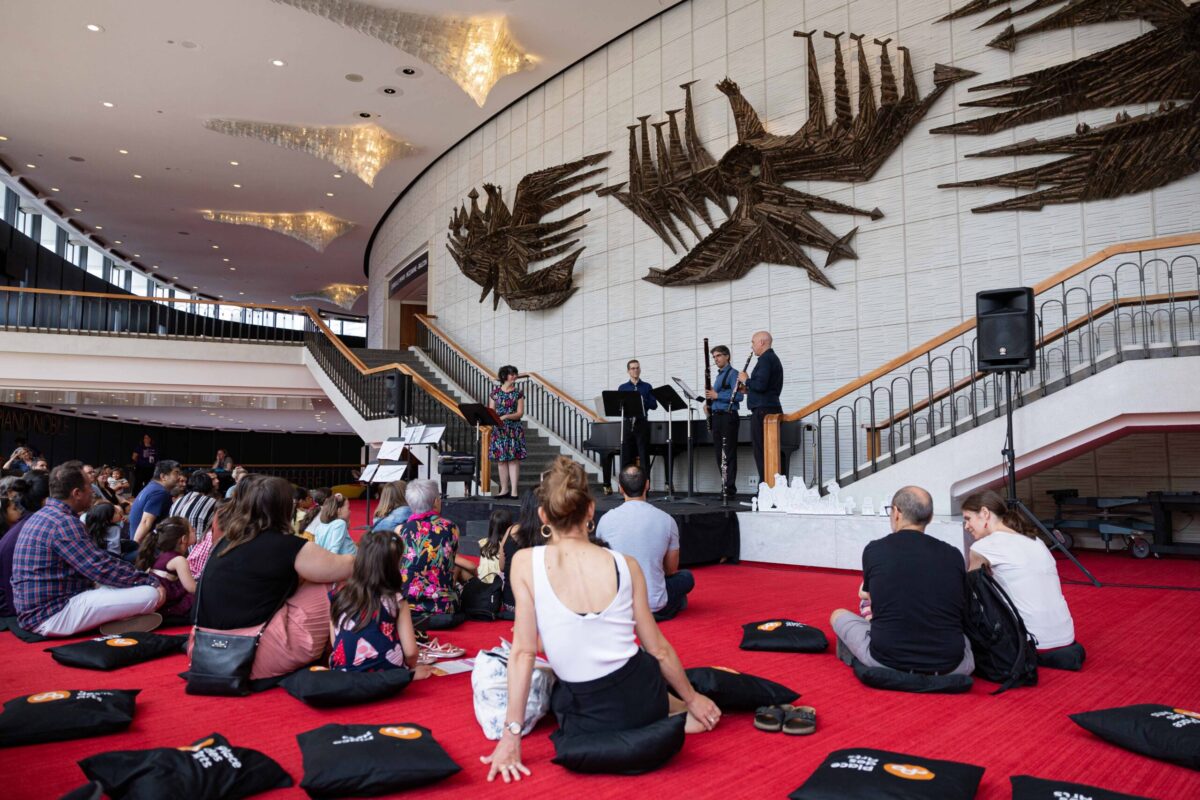
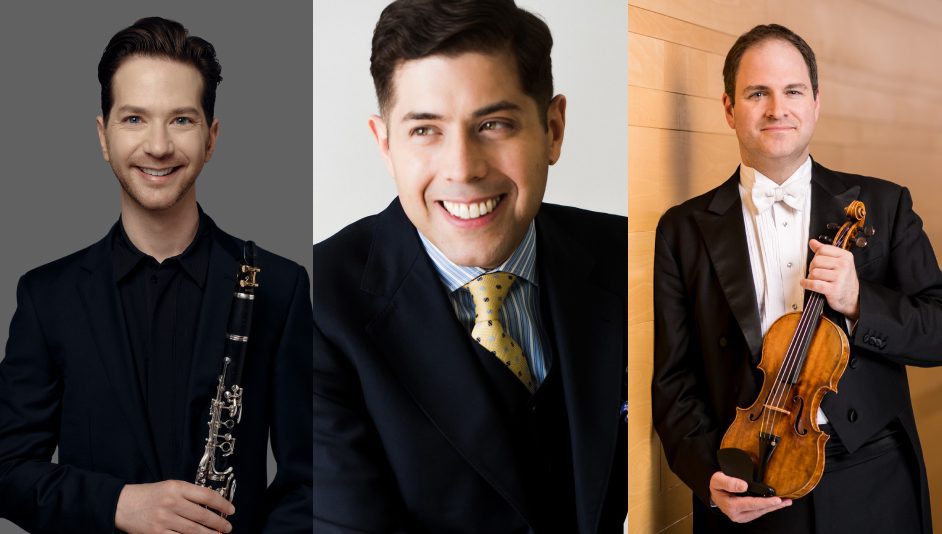
Programming for families and children is an integral part of the Virée classique. Each year, several concerts and activities for toddlers give the OSM the opportunity to showcase music through play, stories and tales. This year’s concert featured Les créatures fantastiques with Rafael Payare, as well as a series of activities with a musical mediation objective, such as the Enchanted Forest, which was a musical enigma combined with theexploration of the sets, or a number of participatory workshops where the audience composed with the ensembles, while discovering various instruments. On Sunday morning, in the superb Piano Nobile space in the foyer of Salle Wilfrid-Pelletier, children were introduced to the enchanting sounds of the orchestra’s woodwinds. Through the medium of the classic tale Goldilocks and the Three Bears, the musicians (Vincent Boilard on oboe, Alain Desgagné on clarinet and Mathieu Harel on bassoon) and guest actress (Gabrielle Marion-Rivard) taught the children how music can evoke specific objects, characters or scenes while introducing the orchestra’s instrument families.
Pieces by Jacques Ibert, Joseph Canteloube, Alexandre Tansman, Jean Françaix, Ange Flégier, Mozart and Jacques Hétu lent themselves to the game, sometimes illustrating the idyllic forest, sometimes reverie. The sound of the wooden trio was magical, and it’s certain that the families present enjoyed their little escape to the home of the three bears.
Alexis Ruel
Encounters with Inuit Throat Singing
The Les grands espaces project, in collaboration with the Société de musique contemporaine du Québec (SMCQ), was presented on Sainte-Catherine Street in a participatory format. Katia Makdissi-Warren, composer and conductor of the group Oktoecho, is behind this project, aimed primarily at young people. Ideally, the piece would have been conducted by a child in the audience, but only one young girl volunteered to do so, accompanied by her mother. The children seemed embarrassed and a little intimidated. Nevertheless, the result was very successful. The concept is to create a choral soundtrack, singing short, simple melodic motifs and adding body percussion, to imitate sounds of nature (rain, wind, owl, geese). Meanwhile, two women perform the katajjaq, producing the corresponding vocal patterns in this musical tradition. The idea is to open up a space for an encounter, where two musical traditions meet with the utmost respect.
Inuit throat singing is a competition between two women, but also a game. Those attending the workshop are treated to a demonstration and explanation of how to produce the sounds. The audience is curious and asks lots of questions, which the two singers on stage answer with great generosity. Les grands espaces is a project that provides an opportunity to encounter a musical tradition that has long been outlawed but has been enjoying a resurgence in recent years.
Elena Mandolini
A Breath of Fresh Air at Complexe Desjardins
Les vents de l’île de Montréal is a band made up of young people from several Montreal high schools, directed by Éric Levasseur. The pieces presented ranged from film music to the more classical wind band repertoire. The works presented were original, even daring (there was one slightly dissonant piece, performed with great confidence by the young musicians). The assurance with which the works were performed is to be commended. The sound produced by these young musicians was powerful, precise and assured. The ensemble’s sound was broad and its direction was remarkable for an ensemble of this level. The audience greeted the works with enthusiasm, and were treated to solemn, triumphant and powerful musical moments!
Elena Mandolini
The Entertaining and Charismatic Trio Débonnaire Takes Us On A Journey Through Time
One of the great successes of Virée classique’s free programming, Trio Débonnaire performed to a full house every time. A success that testifies to the complicity between its members. The ensemble is made up of Laurence Latreille-Gagné on horn, Simon Jolicoeur on trombone and their spokesman Frédéric Demers on trumpets. And yes, trumpets, because one of the great attractions of this concert is the overview they give of trumpets and mutes, thanks to the arsenal displayed on stage. With excerpts from Bach, Beethoven, Edith Piaf and the Beatles (and yes!), the audience is taken on an overview of the possibilities the trumpet has to offer. Frédéric Demers takes mediation to heart and strives to communicate his love of his instrument to the audience.
Two simple words can be used to describe this concert. Interesting, and above all, entertaining. Time flies, and the entertainment is at once charismatic, instructive and amusing. Place des Arts resonates with the warm, noble timbres of the horn and trombone supporting the melodic trumpet. The explanation and use of mutes is an excellent idea. However, we regret that the demonstration did not extend to the other instruments, whose use of mutes is just as important.
You’re transported through the ages, having a great time and learning, all in the blink of an eye!
Alexis Ruel
Monteverdi’s Vespers of the Virgin: Beauty and Contemplation
Photo credit: Antoine Saito
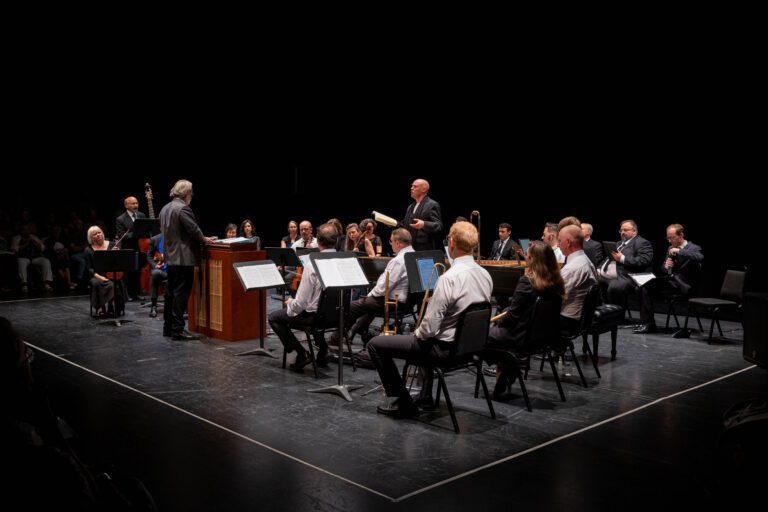
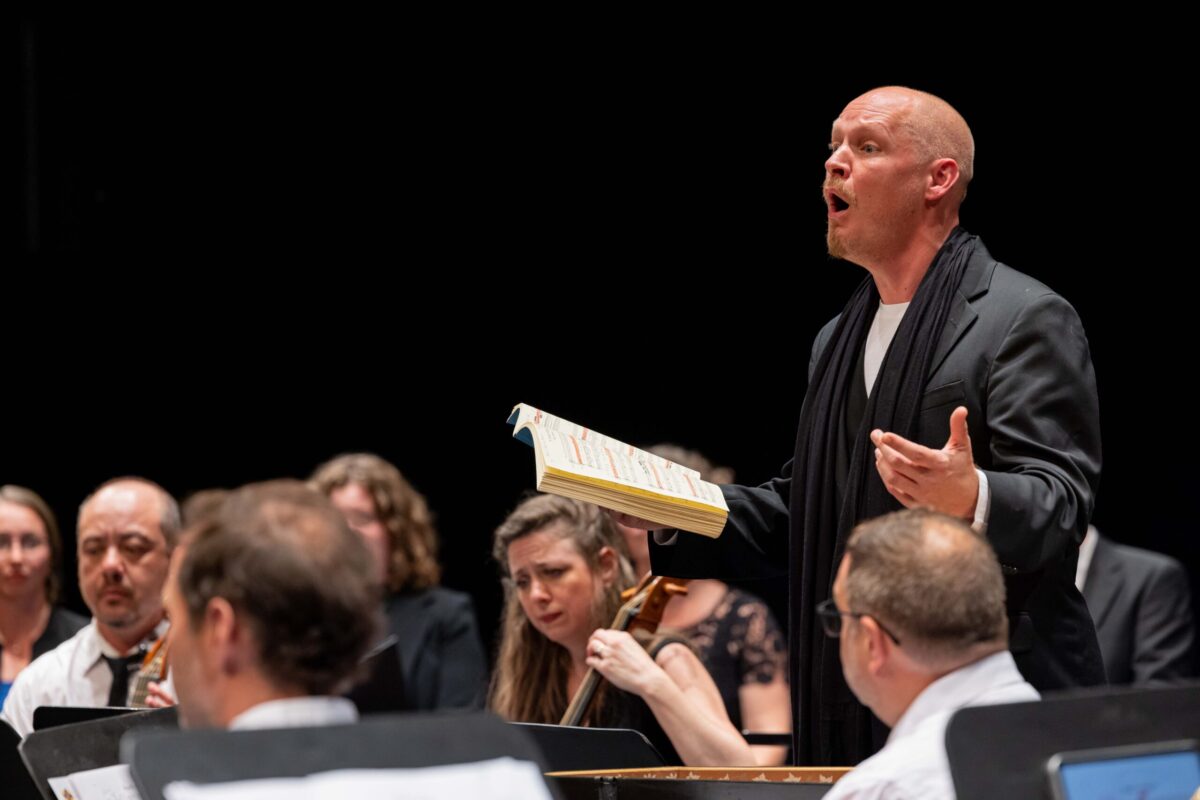
Some thirty musicians shared the stage at Salle Wilfrid-Pelletier to perform Monteverdi’s Vespers of the Virgin, but the space didn’t feel overcrowded. The number of musicians was kept to a strict minimum, and that was welcome. This enabled the ensemble, directed by Eric Milnes, to offer an intimate, delicate and luminous interpretation of Monteverdi’s work.
This composer is best known for his mastery of polyphonic art. In the Vespers of the Virgin, we are treated to majestic musical lines, enveloping basses and complex harmonies. The performers play with great sensitivity and know how to support the delicious dissonances present in the score. The music moves easily from major to minor modes, and you feel transported by it. One movement follows another, moving from a triumphant tone to a sorrowful one in a fraction of a second. In this interpretation, we have the opportunity to see and hear ancient instruments, such as the sackbut, dulcian, and lute.
The only downside to this interpretation is the acoustics. The sound is lost and muffled in this arrangement of the hall. This music, designed to be performed in a church, would have been even more beautiful if the sound could have resonated in the hall and all around the audience. Nevertheless, the ensemble knows how to use space and spatialize sound. Halfway through the work, the choir begins to rearrange itself to diversify the acoustics. Musicians and singers move backstage, to play in the space and offer new listening conditions to the audience. Despite the acoustic shortcomings of the venue, the ensemble’s sound is round and powerful. This is a moving and luminous interpretation of Monteverdi’s work.
Elena Mandolini
Dances of the Bohemian Countryside With the Orchestre Symphonique des Jeunes de la Montérégie
On Saturday and Sunday, the OSJM presented Dvořák’s 8th Symphony to the public and passers-by at Complexe Desjardins. A work reminiscent of Mozart passages, aspects of Beethoven and the folk tunes of the composer’s native Bohemia, it got young and old dancing and marked the end of the Virée classique in style on Sunday afternoon. Better suited to wind orchestras or harmonies, the Complexe was not very conducive to the symphony’s subtleties and nuances, especially during the second movement, with its slightly too voluminous acoustics and ambient noise. On the other hand, we admire the energy with which the orchestra overcame these obstacles in the first and last movements. The dancing rhythms of the third and fourth movements were perfect for the situation.
The orchestra takes us on an epic journey through the countryside, from sunrise to the celebrations that stretch into the night. We hear the birds and cicadas singing and imagine the forests and pastoral landscapes that lulled Dvořák throughout his life. We seem to share with him the pleasure of hearing the popular tunes and joys of his childhood. The OSJM enchants with its precision and ardour. A fine showcase for the next generation of musicians, it offers an encouraging and hopeful vision of the future of symphonic music in Montérégie and Quebec.
Alexis Ruel
Sortie 210: Destination Big Band for Destination Fun
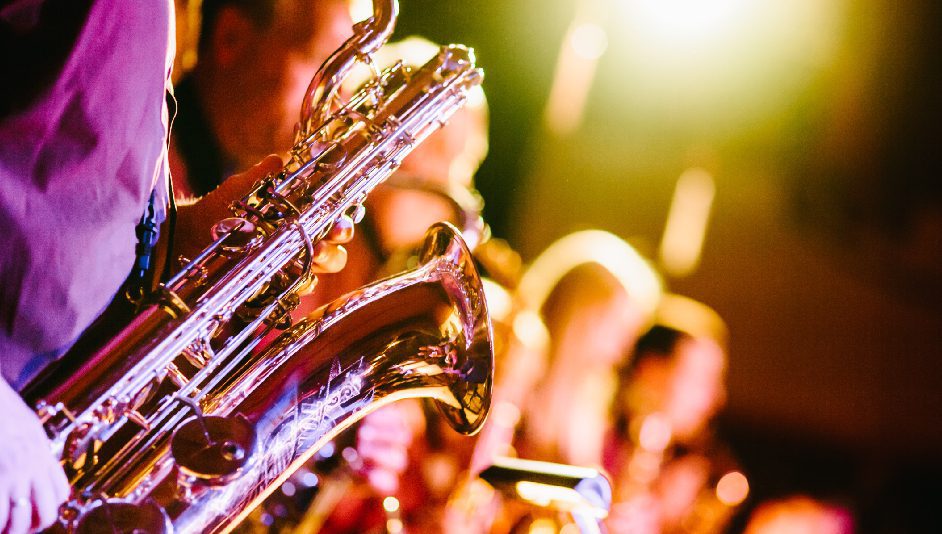
The final performance on the quiet Esplanade of the tenth edition of Virée classique concluded with the brassy sounds of Big Band Sortie 210. Founded in 1992, this ensemble brings together “professional musicians, music teachers, college and university music students and serious amateurs” from Victoriaville and the surrounding Bois-Francs region. Accustomed to musical events and several international festivals, the twenty or so musicians gathered on stage, directed by Guillaume Allard, delivered a thoroughly enjoyable performance in which everyone had a chance to shine. The program was eclectic. Not a string of great jazz standards, but a mix of genres and styles consisting mainly of hits from the classical and popular music repertoires, arranged for big band. So, for the opener, we were treated to a Toccata and Fudge (arranged around Bach’s Toccata in D minor); a Blues for Elise and a jazzy version of Brahms’ Hungarian Dance No. 5. Interspersed between these arrangements are pieces with different expressions. These include John Coltrane’s Central Park West, the only piece to be taken from jazz standards, with its muted colours and timbres, and Bar Talk, a wildly energetic piece which, contrary to its name, is not at all suited to “melancholy contemplation of a glass of alcohol”. As for the soloists, Dominique Rancourt’s performance on violin and Yvon Tardif’s on saxophone in the original composition Hot and Blues were particularly noteworthy for their rapport and complicity. Judging by the number of people tapping their feet and swaying their hips, Sortie 210 was a great success.
Alexandre Villemaire
An August 19 at the Virée classique : Schubert, Brahms, Gamelan, Wynston Marsalis, Fantasy Tales, Carmina Burana and More!
by Rédaction PAN M 360
The PAN M 360 team is very present at the Virée classique, presented by the MSO. Our contributors report daily on what they have seen and heard at the concerts presented in Montreal until August 20.
Payare Conducts Carmina Burana: A Powerful Evening
Photo credit: Antoine Saito
The Maison symphonique was packed to the rafters last night to hear the OSM and its choir perform Carl Orff’s celebrated Carmina Burana. The Petits chanteurs du Mont-Royal and three soloists, soprano Sarah Dufresne, baritone Elliot Madore and countertenor Nicholas Burns, also joined the orchestra to perform the work. The octobasse was also used in the first and last movements.
When the Wheel of Fortune begins to turn, it doesn’t stop. The same can be said of the OSM’s interpretation: once the famous “O Fortuna” has been intoned (at a tempo that’s almost too fast), the following movements follow one another with no time for breath. The orchestra, especially Payare, has energy to spare. The conductor literally danced on the podium. The percussion and brass are powerful, and the rest of the orchestra is solid. The chorus, for its part, enunciates the texts with remarkable clarity. The singers are precise, delivering a performance of exceptional quality. The soloists shone on stage not only with their great vocal qualities, but also with their stage presence and acting. Indeed, the soloists acted out the poems they were singing, sometimes giving rise to quite comical moments (think of the swan’s lament, performed by the countertenor).
The evening unfolds under the sign of power, strength and emotion. Listening to this Carmina Burana is like discovering it for the first time, so bold and solid is the interpretation. Time seemed to stand still for the duration of the concert, and we witnessed a great moment of music. The audience, who reserved their applause for the very end of the concert, cheered the orchestra at the end of the evening for several minutes. This afternoon’s performance is already sold out, which just goes to show how popular this concert is!
Elena Mandolini
Wynton Marsalis’ Trumpet Concerto
Photo credit: Antoine Saito
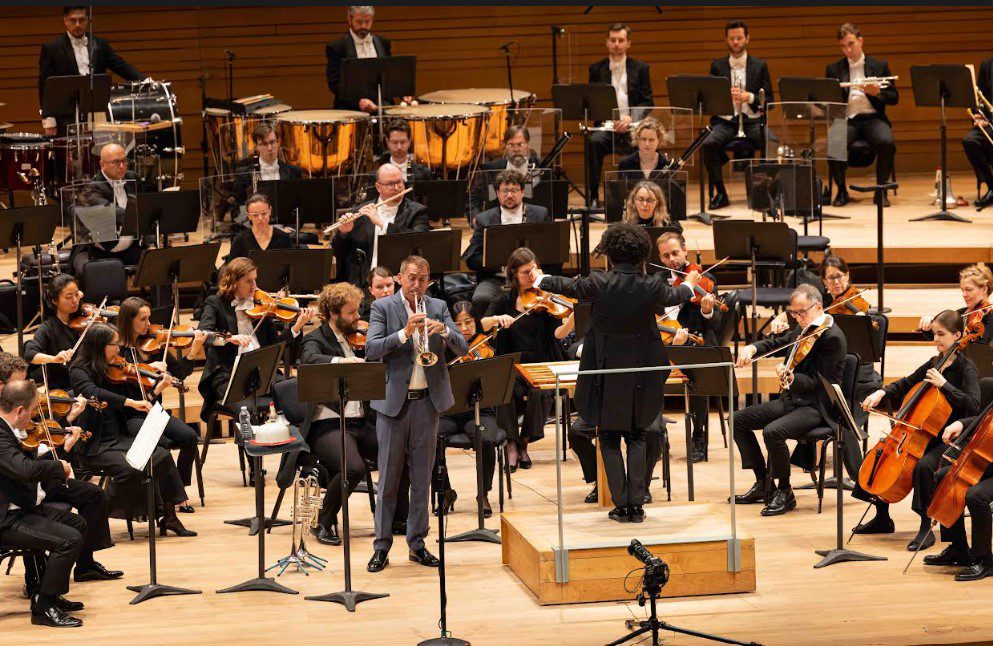
Although recognized as a pillar of co-contemporary jazz for almost half a century, Wynton Marsalis has always been associated with the classical world. The supravirtuoso has mastered the repertoire and codes since childhood, and his post-graduate studies at Juilliard propelled him into the ranks of the great classical interpreters, before he became an uncontested leader of acoustic jazz in the early ’80s. At the time, many disparaged his desire to link jazz with the world of “great music”, attributing to him instead a conservative approach. Four decades later, time has proven the director of the famous Jazz At Lincoln Center program, of which he is still artistic director, right: Wynton Marsalis has done far more than simply resurrect the hardbop and modal jazz of the 50s and 60s, and his career has involved a clear appropriation of modern and contemporary forms of Western classical music. This is what we were able to appreciate on Saturday in the Canadian premiere of his Trumpet Concerto, played by OSM principal trumpeter Paul Merkelo.
Divided into 6 movements, the work begins with a march built on modern harmonic frameworks and involving advanced techniques for the solo instrument, all based on a groove uncommon to symphony orchestras, interspersed with non-binary rhythmic sequences. It is clear that Maestro Rafael Payare and his musicians have perfectly grasped the orchestral challenges of exploring these intersecting universes and adopting greater flexibility in their execution. Ballad, the work’s second movement, is a rich evocation of the great jazz orchestras at the heart of the previous century, from George Gershwin and Duke Ellington to the great Broadway musicals. Dedicated to the legacy of the Latin trumpet, the 3rd movement is the most demanding of the Concerto, both in terms of instructions for the soloist and the orchestra. We continue with Blues, a slow movement that explores African-American sensibility in a symphonic context, followed by French pastoral with its impressionist allegiances, and concluding with Harlequin, which integrates all the colors put forward in the five preceding movements.
Paul Merkelo acquits himself extremely well, the advanced techniques provided for the soloist are equal to the composer’s demands, and the OSM’s support proves to be perfectly balanced, except for a few insignificant details in the interpretation. In short, a successful Canadian premiere! Now let’s hope that time will do its work and that the classical public will appropriate this new facet of serious music, as did this thousand or so music lovers, including jazzophiles obviously unfamiliar with classical forms. This Canadian premiere was preceded by a magnificent work by the late Montreal composer José Evangelista, inspired by the 50th anniversary of our metro in 2016.
Alain Brunet
Fiddler’s Tale: Wynton Marsalis, Take 2
A little later, on the reconfigured Salle Wilfrid-Pelletier stage, a second work by Wynton Marsalis was presented on Saturday. Fiddler’s Tale is an African-American adaptation of Stravinsky’s L’Histoire du soldat (The Soldier’s Tale), whose narrative is an encounter between a violinist and the devil. Set in modern America, Wynton Marsalis’s adaptation is entirely written out, but plunges its performers into a contemporary sound universe even closer to jazz than the composer intended in his Trumpet Concerto. Elements of primitive, swing, modern and contemporary jazz are interwoven with orchestral devices typical of contemporary chamber music. For this Stravinskian evocation, Marsalis used the same instrumentation as for L’Histoire du soldat: violin (Marianne Dugal), double bass (Eric Chappell), clarinet (Alain Desgagnés), bassoon (Mathieu Harel), trumpet (Stéphane Beaulac), trombone (James Box), percussion (Joshn Wink). Conducted by conductor Dina Gilbert, this work is accompanied by a real-time narration between the 9 tableaux, provided beautifully in English by Nantali Indongo. Interesting, but sometimes a little long-winded. Classical musicians are now better suited to jazz, but such a work requires a better mastery of its expressive codes, which was not always the case. Or one could question the integration of jazz and blues in this score. But all in all, Dina Gilbert’s direction gave this performance the unity and cohesion necessary for successful concerts, despite our reservations.
Alain Brunet
Soothing Follies
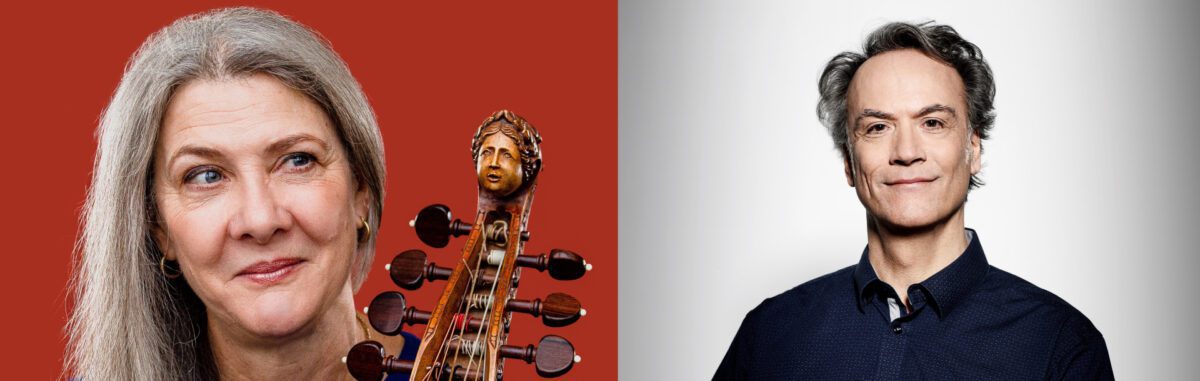
There was a special calm and serenity in the Piano Nobile to hear the performance of Sylvain Bergeron on archlute and Margaret Little on viola da gamba. The underlying theme was madness, and more specifically folia, the famous musical theme of the eponymous dance that first appeared in 15th-century Europe. Like the Dies Irae, folia has been reclaimed and used by composers of every era, from Antonio Vivaldi to Sergei Rachmaninov. The two comparses have thus put together a program in which each piece highlights the joint interaction of their instruments, as well as its individual value. Of particular interest was the solo viol piece A Soldiers Resolution by the English composer Tobias Hume (1569-1645), himself a soldier in the service of the King of Sweden, where each movement idiomatically translates an element of soldierly life (march, battle drum, retreat), or the multi-character Faronells divisions upon a ground by Michel Farinel (1649-1726). The folies d’Espagne by Marin Marais (1656-1728) concluded this musical journey, so typical of Renaissance music, which makes time stand still, transporting us to another era and another almost mystical experience.
Pedagogical, the two instrumentalists took the time on several occasions to explain a few facts about their respective instruments, such as how they work and how they differ from modern instruments, even inviting the audience to come and see them once the performance was over, bringing this crazy morning to a close in the most convivial of ways.
Alexandre Villemaire
Schubert and Brahms: Shadows and Light
Photo credit: Antoine Saito
The premise of the short chamber music concert presented on the Salle Wilfrid-Pelletier stage was very sombre. Indeed, the program spoke of resignation in the face of death, a resignation sometimes tinged with anxiety. However, the musical selections were full of light and moments of hope. No tears of sadness on this Saturday morning (but tears of emotion, perhaps…).
The concert opened with Jeremy Denk at the piano, playing Franz Schubert’s peaceful Impromptu no. 3 in G flat major. The introspective, meditative and melancholy character of this piece lent itself perfectly to the intimate ambience of the concert. Through light, calm arpeggios, a deep, tormented melody emerges. The pianist portrayed all these emotions brilliantly and clearly.
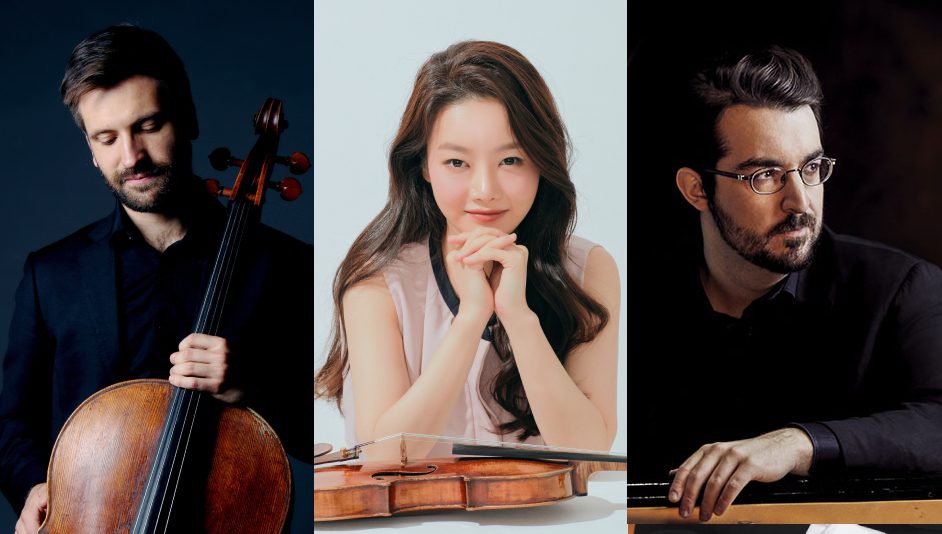
Johannes Brahms’ Piano Quartet No. 3 in C minor, Op. 60 then completely changed the tone of the concert. The atmosphere of contemplation was quickly transformed into a moment of musical frenzy. The energy and precision of the performers (Jeremy Denk on piano, Alexander Read on violin, Victor Fournelle-Blain on viola and Nicolas Alstaedt on cello) are to be commended. This quartet offers many technical challenges, with instruments exchanging melodies, great contrasts in nuance and rhythmic passages. Their performance is breathtaking. We hear all the drama, all the power and all the ardor of Brahms’ compositions.
The audience is clearly captivated by the music: the quality of listening is exceptional, and long moments of contemplative silence separate the end of the works from the beginning of the applause.
Elena Mandolini
Dutilleux, Bach and Kodály by Nicolas Altstaedt
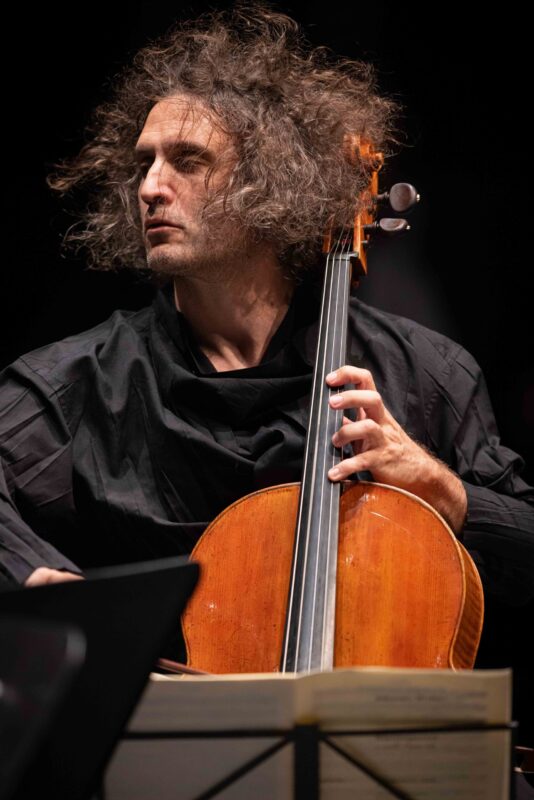
Unquestionably a master of his instrument, not only for its exceptional technical level but also for its expressiveness, German cellist Nicolas Altstaedt invited music lovers to the Piano Nobile for a performance of three works requiring the re-tuning of his instrument in order to extend its timbral and harmonic spectra. Like many of today’s classical artists, he bridged the gap between the Baroque period and contemporary music, wrapping an almost rigorist version of JS Bach’s Cello Suite no. 5 in C minor BWV 1011 in a work by Henri Dutilleux commissioned in 1976 by Rostropovich, Trois strophes sur le nom de Sacher (a great Swiss conductor dedicated to contemporary music) and the superb Sonata for solo cello, Op. 8 by Hungarian composer Zoltán Kodály.
The advanced techniques required for this immense sonata, now considered one of the great masterpieces for solo cello, are brought to the fore here by the soloist, whose playing is outstanding. A captivating concert from start to finish, with a few birds chirping – given the imperfect soundproofing of the PdA’s bay window. Totally tolerable under the circumstances!
Alain Brunet
La Virée Makes a Stop in Bali!
Photo credit: Antoine Saito
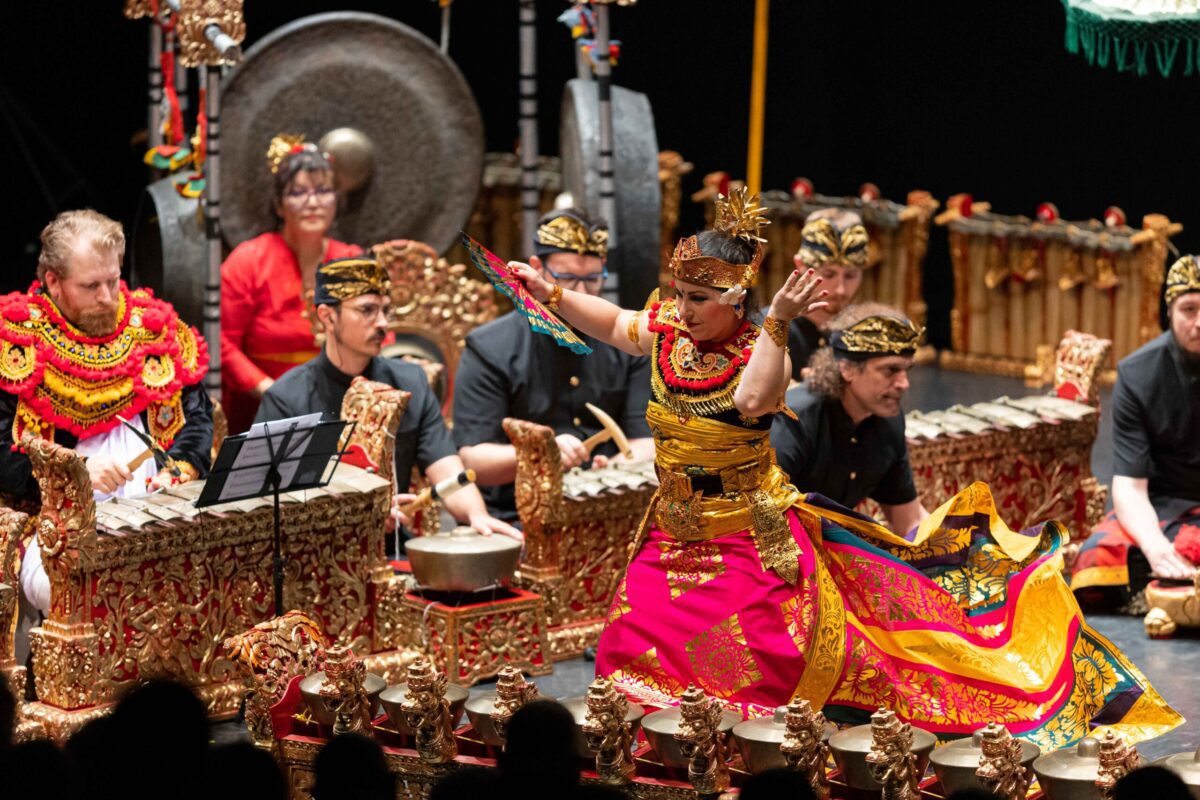
La Virée classique was enlivened on Saturday by the intriguing and harmonically rich sounds of the Indonesian gamelan. The Giri Kedaton ensemble offered a fascinating concert on the stage of Salle Wilfrid-Pelletier, but there was also a series of activities throughout the day that allowed the public to learn more about this lesser-known musical art form.
Firstly, Virée visitors had the chance to become part of the gamelan at an outdoor workshop. Participants of all ages were invited to try out the richly decorated percussion instruments, a gift from the Indonesian government in 1986, and create basic arrangements under the guidance of ensemble members. This was followed by a talk on the origins of gamelan and the different styles that exist, providing a clearer picture of what this music represents. Although of noble origin, it is nevertheless designed to be easily accessible, while allowing for virtuosity through different instrumentation and instrumentation.
This virtuosity was evident throughout the concert. The research behind Giri Kedaton is colossal, and the result of decades of experience with Balinese masters. You can feel how at ease the musicians are in front of their respective instruments. And not just one! Between each piece, the musicians reorganized themselves, settling behind new instruments or simply in a different section. Although the orchestra is organized in much the same way as the classical tradition, with a conductor, soloist and sections, there is no real hierarchy of roles. The musicians form a single whole, offering the audience a true spectacle.
The ensemble’s showmanship was on full display. The musicians, dressed in traditional garb, were having fun and it showed. Dancing also had its place during the concert, with two traditional performances by members of the ensemble. The female dancer simply stole the show, with a mystifying choreography based on intense yet elegant poses and expressions. The mask dance was equally intriguing, with its wordless story, but we regret that the stage layout was not adapted to the needs of the staging. A large part of the audience on the sides were unable to observe the entire choreography. But this did not detract from the quality of the music. Alternating between more traditional music and more contemporary works, the entire concert is marbled with rhythms that are both complex and accessible. Of particular note is O Bali by José Evangelista, founder of the gamelan workshop at the Université de Montréal and a leading figure in Balinese music in Montreal, who passed away earlier this year. A beautiful tribute.
Alexis Ruel
George Sand and Frédéric Chopin’s Epistolary Relationship Accompanied by His Music
Under the title Un hiver à Majorque : correspondances entre George Sand et Frédéric Chopin, BAnQ librarian Esther Laforce and pianist Jean-Christophe Melançon, winner of the Étoiles Stingray – Choix du public and Prix du jeune public at the OSM 2022 Competition, offered a reading, both textual and musical, with the question: “What did an author and a composer write about each other? Although this question was answered, the musical content was well constructed, but left us a little disappointed.
Opening the session, Esther Laforce reminded us that the epistolary exchanges presented were not the intimate correspondence between the two lovers, which had been destroyed, but rather letters sent to their friends in which they talked about each other. The relationship between George Sand – Aurore Dupin, Baroness Dudevant by her real name – and Chopin takes shape in letters addressed to Eugène Delacroix and Polish politician Albert Grzymala, among others. The pieces chosen serve as musical illustrations to the text of the letters read out by the speaker. But which pieces? We had no idea. No program, no visual aids to help us find our way around. Connoisseurs will no doubt have recognized the Prelude no. 15 in D flat major, known as “Raindrop”, but the other excerpts, performed with great accuracy by Melançon, are not. One would have expected to know the names of the pieces performed by the pianist.
We can certainly applaud Esther Laforce’s research, excellent contextualization and narrative, but we’d have liked to have more to sink our teeth into. In the end, we’ve learned about both, but we’d have liked to hear more about the famous stay in Mallorca and the move to the Carthusian monastery in Valldemossa, which comes at the end of the activity and is so intrinsically linked to the development and writing of the preludes. The vein is good, but would benefit from being widened.
Alexandre Villemaire
A UFO at Virée classique: humor and energy at Complexe Desjardins
The Complexe Desjardins stage is a fantastic idea. What could be better than listening to a concert while dining or shopping? The installation during the Virée classique was a great opportunity to hear talented orchestras in the background. But it was impossible to ignore the energy of Saturday’s lunchtime concert.
L’OVNI (Orchestre à vent non identifié) filled the Complexe space with their expansive sounds and eclectic repertoire. The musical setting of tales and stories that make no secret of their absurd humor was a success, thanks in particular to the variety of styles chosen and a solid brass section that gave the orchestra power. Full of contrasts, the works were delightfully frivolous at times, then imposing and weighty at others. It was hard not to notice the famous Dies Irae in the score.
Alexis Ruel
Journey Through Europe and Styles on the Harp
Matt Dupont introduced the audience to the fascinating and varied repertoire for harp. The Espace culturel Georges-Émile-Lapalme was perhaps not the best place to present a recital for solo harp, even if amplified. Indeed, the Espace culturel happens to be a very busy and noisy crossroads, so that the softer, lower passages were almost inaudible. Despite this, Matt Dupont’s presence on stage drew the listener in: after just a few notes, an attentive silence settled over the audience.
The program featured works from the 19th and 20th centuries, combining grand cascades of notes, virtuoso passages and humorous melodies. Dupont’s interpretation is fluid, graceful, assured and powerful. We are captivated and even hypnotized by the beauty of the music. Between each piece, the musician briefly introduced the work and its composer, a welcome addition to this short performance. Despite the inconveniences of the concert venue, the works and their interpretations were nonetheless appreciated.
Elena Mandolini
The “Little” Great Music of Obiora and Payare
Photo credit: Antoine Saito
The Ensemble Obiora, founded in 2021 by Allison Migeon, is Canada’s first music ensemble made up largely of professional musicians from diverse backgrounds, and took to the Maison symphonique stage to conclude its second year of participation in Virée classique. There has undoubtedly been a shift in the vision and scope of Virée classique over the past year. The fact that a young ensemble like Obiora is part of the programming, and that the conductor of the Orchestre symphonique de Montréal comes to conduct them to help them grow, testifies to Payare’s interest in giving visibility to other ensembles.
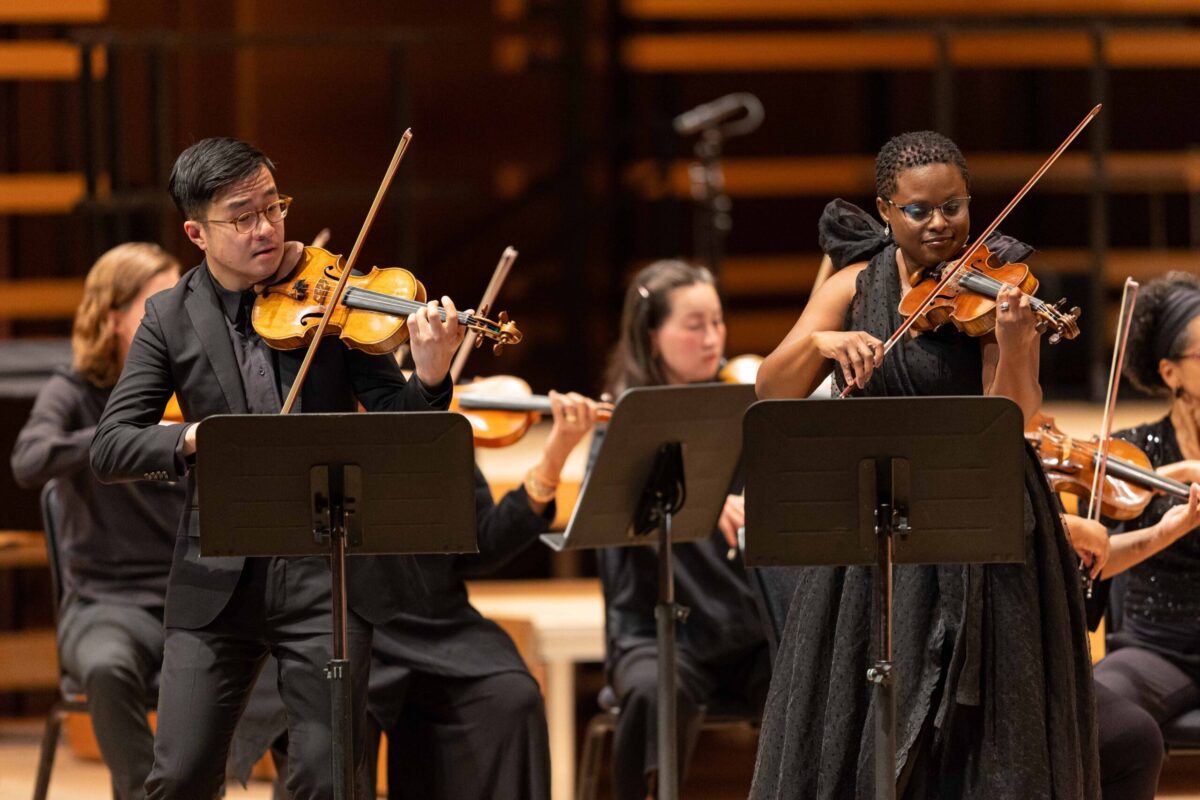
For the occasion, the conductor had chosen short pieces, but no less devoid of effects. It could be easy to fall into the easy way out with a universally recognizable piece like Mozart’s Little Night Music. Not so with Rafael Payare. Like a master goldsmith, he searches for precise nuances and dynamics, inviting the musicians to go right to the end of the musical lines to give complexity to this most famous work. The concert’s highlight, the Symphonie concertante pour deux violons no. 2 in G major by composer Joseph Boulogne, chevalier de Saint-Georges, born the son of a slave in 1745, saw OSM concertmaster Andrew Wan join Obiora concertmaster Tanya Charles Iveniuk in a most dynamic and electrifying performance. In a form inspired by the concerto grosso of the Baroque era, the two soloists engaged in a vibrant instrumental dialogue supported by the members of the orchestra, particularly in the cadenza of the second movement, in which all the freshness and vitality of the Chevalier’s music is expressed. The concert concluded with the romantic musical language of the Holberg Suite in classical style. In fact, after at least half an hour of bouncy, joyous music, we were treated to the most introspective moment of the concert in this suite, with a maudlin, pious Air. The evening ended on a festive note, to rapturous applause and a sense of pride both in the audience and on stage.
Alexandre Villemaire
Lightning Talk with Nantali Indongo
Nantali Indongo is the host of CBC Radio’s The Bridge. She is also known on the Montreal music scene for her 17 years with the hip-hop group Nomadic Massive. But for Virée classique, it’s her talents as a storyteller that will be put to good use. She will be narrating Wynton Marsalis’s Fiddler’s Tale, a tale of a talented violinist’s pact with the devil.
Nantali Indongo was short of time, having only twenty minutes to devote to the interviewer before having to go to the sound check in preparation for the Marsalis piece. A short, but nonetheless highly enriching interview on the blending of musical genres was held at the Espace culturel Georges-Émile-Lapalme. Wynton Marsalis is best known for his jazz work, but he also composes for more classical contexts. In Fiddler’s Tale, the jazz idiom is subtly integrated into the traditional classical score in a manner so fine as to be self-evident. The conversation quickly moves away from jazz and classical to hip-hop and rap. It was in fact a very brief and condensed history of these styles that was presented, proving that the Virée classique is the stage for musical encounters of all kinds.
Elena Mandolini
Movie Classics by the FILMharmoniqueOrchestra
The FILMharmonic Orchestra, directed by Francis Choinière, is a Montreal-based string orchestra specializing in the performance of film music. We know them for their ciné-concerts at the Maison symphonique or Salle Wilfrid-Pelletier, where the music is performed during the screening of a film.
As part of Virée classique, the FILMharmonique orchestra presented its favorite soundtracks. The pieces on the program are fairly expected: The Pink Panther, Cinema Paradiso, Schindler’s List and Lord of the Rings follow one another. But the orchestra also had a few surprises in store for the audience, including a medley of themes from the film Ratatouille, and La passion d’Augustine (the soundtrack for which was composed by François Dompierre).
The orchestra’s musicians put on a fine show. Their energy, and that of the conductor, is contagious. Many works end with a forest of bows suspended in the air. The evening’s soloists (an oboist, a flutist and a violinist) are excellent, interpreting the works with great sensitivity. It’s a pleasure to rediscover well-known pieces from the film music repertoire, in good spirits and good fun.
Elena Mandolini
Godwin Friesen in Recital: Delicacy, Suavity and Precision
Photo credit: Antoine Saito
For most of those present at this recital, it was the discovery of Godwin Friesen, winner of the OSM Competition 2022. What immediately strikes one about this young man is the combination of delicacy and firmness in his piano playing. This is first apparent in Joseph Haydn’s Piano Sonata in A flat major, Hob. XVI:46, velvety smooth and impeccably precise. From the classical composer, we move on to a Bach-inspired Prelude and Fugue in A major composed by the performer. This reveals the musician’s great intelligence, capable of updating the aesthetics of the German genius of the Baroque period, before serving up the main course, a very modern Sonata by Canadian composer Jean Coulthard (1908-2000). The young virtuoso concludes with Franz Liszt’s demanding Hungarian Rhapsody No. 6, a must in piano music for any performer with high aspirations. Here again, Godwin Friesen’s suavity rests on both the sobriety of his playing and his precision and brilliance at opportune moments.
Alain Brunet
August 18 at La Virée classique: Programming, Talks, Exhibitions, Schumann, Stravinsky, Mendelssohn and More!
by Rédaction PAN M 360
The PAN M 360 team is very present at the Virée classique, presented by the MSO. Our contributors report daily on what they have seen and heard at the concerts presented in Montreal until August 20.
Virée classique 2023: A Program Full of Surprises and Discoveries!
Virée classique is now in its 10th year. The program offers a space for storytelling and unexpected encounters. Program managers Marianne Perron and Ronald Vermeulen gave us an overview of the events on offer indoors and free of charge. They promised us a diverse and excellent tour (in fact, a marathon) from start to finish, but pointed out a few must-see events: performances by the Obiora ensemble, Carmina Burana conducted by Rafael Payare, Monteverdi’s Vespers of the Virgin and the Canadian premiere of Wynton Marsalis’ trumpet concerto.
This edition of Virée classique, an urban and accessible celebration of classical music, also features forays into so-called classical music from around the world. Of particular note are the gamelan series, and performances by the Oktoecho ensemble. A special place is also reserved for amateur musical practice. Several youth ensembles and non-professional musicians will take to the stage throughout the weekend.
These three days promise to be full of (re)discoveries and wonderful musical moments!
Elena Mandolini
Installations That Bring the Orchestra to You!
La Virée classique isn’t just about concerts in the concert halls or on stage. It’s the entire Place des Arts that comes to life, brought to life by the love of classical music from here and abroad! This cultural vivarium is sustained by an almost unstoppable stream of concerts from Friday evening to Sunday afternoon, as well as by activities dotted around the space.
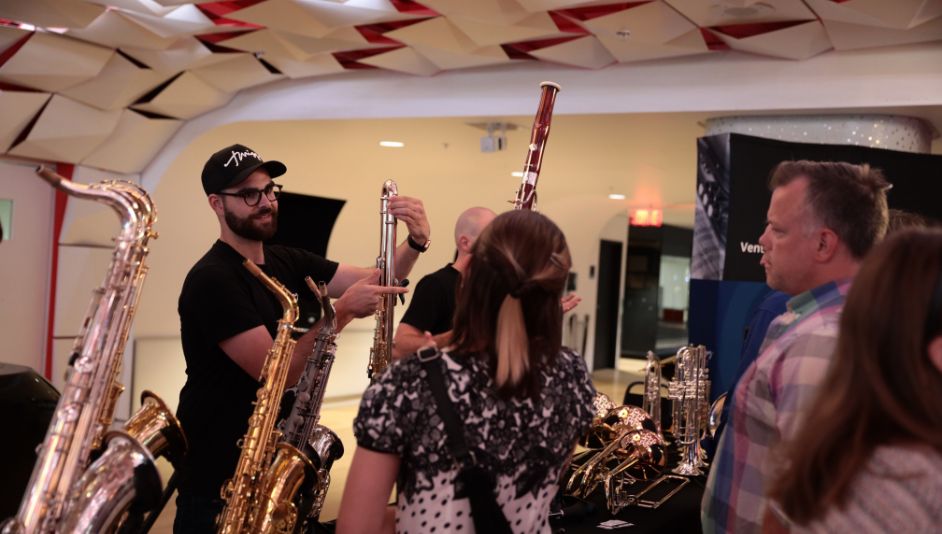
The Salon urbain, opposite the Maison symphonique, is home to a highly interesting exhibition that is making a comeback for the 2023 edition of La Virée. “Les instruments sortent de l’orchestre” is an opportunity to learn more about the instrumentation of a symphony orchestra. The booths are staffed by experts from specialized workshops, who are able to educate visitors on the particularities of each instrument family. There’s a fine array of wind instruments and a good demonstration of the violin-making process, as well as an amusing assortment of percussion instruments. Casavant Frères organs, meanwhile, celebrate the upcoming 10th anniversary of the Pierre-Béique organ at the Maison Symphonique.
Another installation of note is its section devoted to virtual reality experiences, at Espace Sainte-Catherine just to the left of the Place des Arts entrance. Two experiences are available: Partitura, where you take on the role of an orchestra conductor, and Innere Musik, which transports you to the heart of the Maison symphonique organ. There seems to be something for everyone, children and adults alike.
Alexis Ruel
Virée classique 2023 : Behind the Camera With Film Music
For those who are passionate or simply curious about the musical aspect of the 7th art, yesterday saw the presentation of a pleasant conference on the secrets (well or less well kept) of film music. Hosted by Marie-Claude Codsi, herself a composer and doctoral student on the subject, the 45-minute talk revealed a little more about the musical realm of Korngold, Herrmann (unfortunately absent from the presenter’s examples), Williams, Zimmer et al. The OSM space, located right next to the entrance to the Maison symphonique, was packed with an attentive audience. The host gave a rather succinct overview of the history of the medium. But Ms. Codsi made the most of the short time allotted to her, providing interesting anecdotes and even sharing a compendium of which I was unaware: a large book dating back a century (in truth, a copy, but still…) in which dozens of scores were listed according to mood, emotion or scenic situation (chase, fall, plane, night, etc.). It was used by the musicians who accompanied the screenings of the first silent films! Fascinating! Audiences also had the rare opportunity to see an example of an iconic film scene (here, the finale of Star Wars Episode IV) WITHOUT its music. Wow. For many, it was a revelation of the importance of this dimension of cinematic art. A few notions of Mickey-Mousing, Temp Tracks, Punch and Streamer rounded out a film music 101 course that showed viewers that this music, after more than a century of existence, has a lot of substance and deserves to be respected.
Frédéric Cardin
Melancholy Birds and Romantic Lyricism With Noémie Raymond-Friset and Zhenni-Li Cohen
Birds have made their nest at Place-des-Arts’ Espace culturel Georges-Émile Lapalme. Cellist Noémie Raymond-Friset, accompanied by pianist Zhenn-Li Cohen, introduced the first part of this hour-long concert prefiguring Rachmaninov’s Sonata for Cello and Piano. To open the concert, the two musicians performed Saint-Saëns’s Le Cygne with languorous, energetic and ethereal energy. With similar melodic lines and harmony, albeit more dramatic, they followed with Villa-Lobos’s Le Cygne noir, before concluding the first part of the concert with Pablo Casals’s Le chant des oiseaux, an arrangement of a Catalan folk song: a nostalgic lullaby. The pièce de résistance of the performance, Rachmaninov’s Sonata, contemporary with his famous piano concerto, was composed, as presented by Noémie Raymond-Friset, in the wake of a depression following the disastrous reception his first symphony had received. Sadness, anger, joy – all these raw emotions were put into the score by the composer, and were aptly translated by the duo of musicians through a rigorous, supple touch on the piano and expressive, energetic lines on the cello. We must salute Noémie Raymond-Fiset’s concentration in a performance setting less formal than that of concert halls, where the open aspect of the stage offers a slight distraction from the surrounding noise. At times, the setting made it difficult to appreciate the character of the piece, and we felt that the performers had to adjust the volume a few times. These minor details aside, the fine performance by Noémie Raymond-Friset and Zhenn-Li Cohen caught the eyes and ears of a hundred passers-by.
Alexandre Villemaire
A Musical Incursion Into the World of Words
Photo credit: Laurence Labat
Music and literature go hand in hand, and sometimes more often than you think. This is what Katerine Verebely, host and cultural columnist for Radio-Canada radio, points out in her listening club. Since two other sessions of this listening club will take place over the weekend, we won’t spill the beans to our readers who wish to participate in the near future. We’ll just say this: there are some great musical discoveries to be made at this listening club! Thanks to Katerine Verebely’s obvious passion for the subject, we’re discovering rare gems and well-kept secrets from the classical repertoire, past and present. Literature also takes pride of place. We (re)learn poems, stories and literary forms.
As the host so aptly puts it, the links between music and literature are like a thread that can be pulled endlessly, without ever running out. Come and discover this richness at Virée classique!
Elena Mandolini
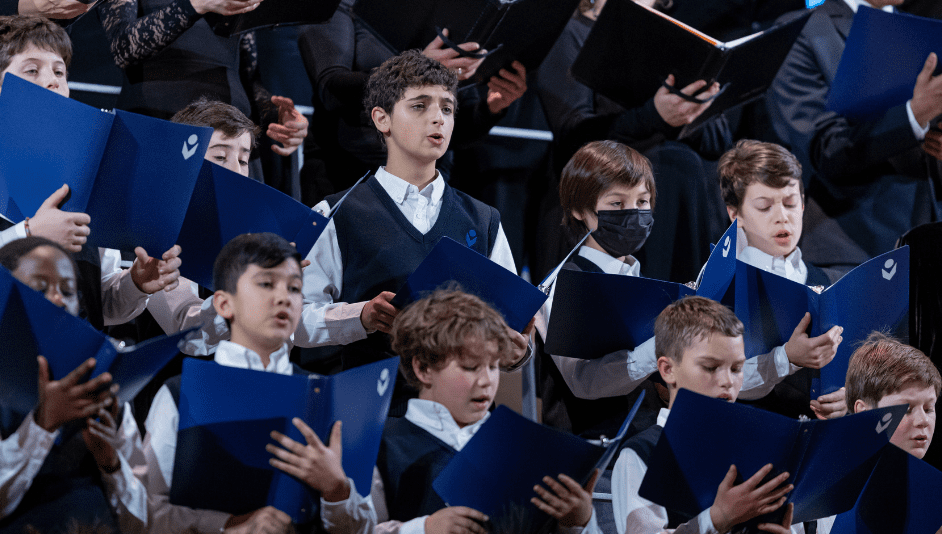
Les Petits chanteurs du Mont-Royal Take Us on a Journey!
A procession of some forty youngsters, ranging in age from eight to seventeen, offered spectators at the Esplanade Tranquille on Friday evening a truly remarkable experience. The Petits chanteurs du Mont-Royal, a youth education program offering advanced musical training to young people from all walks of life, explored South American choral repertoire with unity and cohesion that was out of this world, echoing their tour there earlier this year.
Their liturgical experience was immediately apparent, particularly in the precision of the melodic lines and the complex polyphony present in many of the works. The younger members shared the soprano and alto lines, while the older ones filled out the tenor lines. In addition to the predominantly religious repertoire, some of the popular tunes were performed to great effect, with some amusing surprises such as the imitation of instruments, accompanied by mimed gestures!
The relatively low volume of the voices created an atmosphere of contemplation for a varied audience, ranging from young families to more seasoned ears. It’s certain that the audience as a whole appreciated these angelic voices, which more than once impressed and even thrilled!
Alexis Ruel
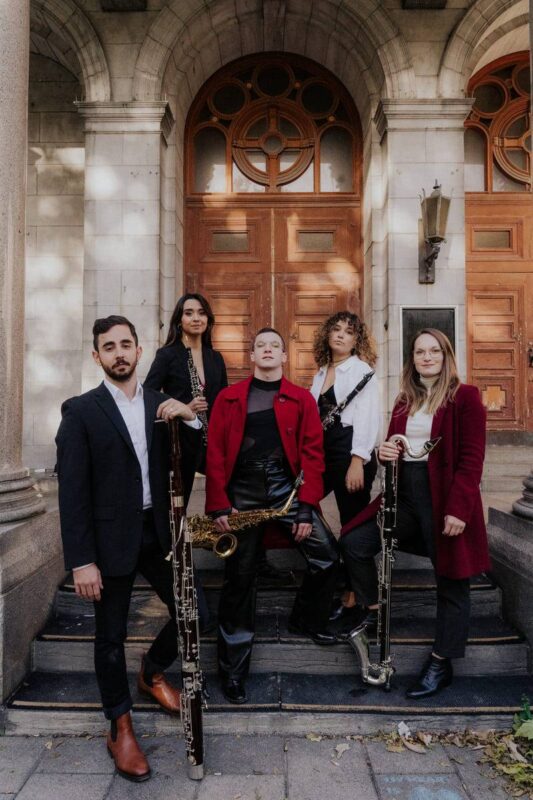
5ilience: A Wind Quintet Against the Wind
Quebec’s first reed quintet, the ensemble 5ilience inaugurated its participation in Virée classique with a modern and contemporary repertoire… in the wind! While there was no reason to fear that rain would be a spoilsport on the first day of Virée’s free outdoor programming, this was not the case as we passed through Sainte-Catherine at 7 pm. Instead, some nasty squalls got in the way, causing a few problems with instrument amplification and on-stage logistics. Hats off to Léanne Teran-Paul (oboe) and Mary Chalk (bassoon), who were solid despite the fact that their scores were somewhat disturbed, despite the ties that had been attached to their lecterns! Notwithstanding this untimely breeze, the musicians of 5ilience presented with conviction and aplomb five works offering a diverse panorama of the timbral palette that the ensemble can offer. Presenting new music, often contemporary, in a free program is quite daring, and the ensemble has succeeded in building a program that is both accessible, with pieces such as Danses galactiques (2022) by Simon Bourget, with its film-music-like language, or “Le pin” extracted from Marc Mellits’ Splinter cycle (2014), with its groovy character, which counterbalanced more cutting-edge pieces such as “Goat Rodeo” from David Biedenbender’s Refraction suite (2015), described by clarinettist Mariane Pellerin as “a mix of funk, dubstep and pointillism, dubstep and musical pointillism”. Her contributions, and those of Thomas Gauthier-Lang, saxophonist and artistic director of the group, were highly relevant and playful in presenting the various pieces. Definitely an ensemble to keep an eye on in Quebec’s musical landscape.
Alexandre Villemaire
Contrast and Light at the Maison symphonique
Photo credit: Antoine Saito
The first Virée 2023 concert at the Maison symphonique, Fairytale and Mozartian Poetry, featured two stylistically contrasting works whose orchestral refinement brought out the full acoustic and sonic splendour of the Montreal venue. The opener was Fairytale Poem, a symphonic poem by Russian composer Sofia Goubaïdoulina, which combines quivering textures with sparkling sparkles and dynamic contrasts ranging from barely perceptible murmurs (is there such a thing as 18 pianissimos?) to effusive fortissimos that remain reasonable, but impressive nonetheless. The Maison symphonique was made for this kind of music: you hear everything, everything, everything. And it’s spellbinding. Goubaïdoulina’s music delighted the audience with its prismatic play on light and, above all, its flourishing woodwind lines (a specialty of the composer born in 1931).
The main course was of a completely different stylistic order: Mozart’s solar Piano Concerto No. 25, K 503, in C major. Pianist Jeremy Denk came bouncing onto the stage, looking genuinely happy to be there. So much the better. If the opening bars seemed to lack a little clarity and reveal one or two doughy digital passages, the sunshine inherent in this work regained its dominance from the four-note motif exchanged between soloist and orchestra, a motif – the detail is worth knowing – that some say anticipates that of Beethoven’s 5th symphony. From that point on, the terrain was clear. The central andante, imbued with solemnity, created a scene of a sun star gradually revealing itself and offering the prospect of a future filled with promise. The final Allegretto enshrined this optimistic vision, drawing us into a radiant harvest where the fruits of previous promises could be fully reaped. Denk played with joy and spontaneity, characters to which an attentive OSM and a complicit Rafael Payare added their technically applied participation.
Frédéric Cardin
Dramatic Stories and Captivating Music
Part of the charm of La Virée classique is that the programs are short and sweet, but tonight I wished the show kept going. It was a truly enchanting evening of chamber music at the Piano Nobile thanks to the exquisite musicianship of Olivier Thouin, Todd Cope, and François Zeitouni, on violin, clarinet, and piano respectively. Together they navigated a captivating repertoire, weaving together the rich narratives of Milhaud, Stravinsky, and Srul Irving Glick.
With his warm demeanour, Olivier explained the selections and gave us a sense of what to listen for in the movements. The repertoire was very accessible, and the band did well to bring out the playful folk-like aspects of Milhaud and Stravinsky’s compositions while also showcasing their virtuosic prowess, bordering on devilish at times. The highlight of the evening was of course Stravinky’s Histoire du Soldat. This timeless tale of a soldier’s Faustian bargain was brought to life so vividly that perhaps the actors would have been superfluous. The only frustration there was that each movement ended so dramatically it was hard to contain our applause. Glick’s vibrant The Klezmer’s Wedding saw Todd Cope taking more of the lead. The mood was dramatic and thoroughly festive, much like a wedding, and it was a fitting tribute to a Canadian icon of classical music.
Varun Swarup
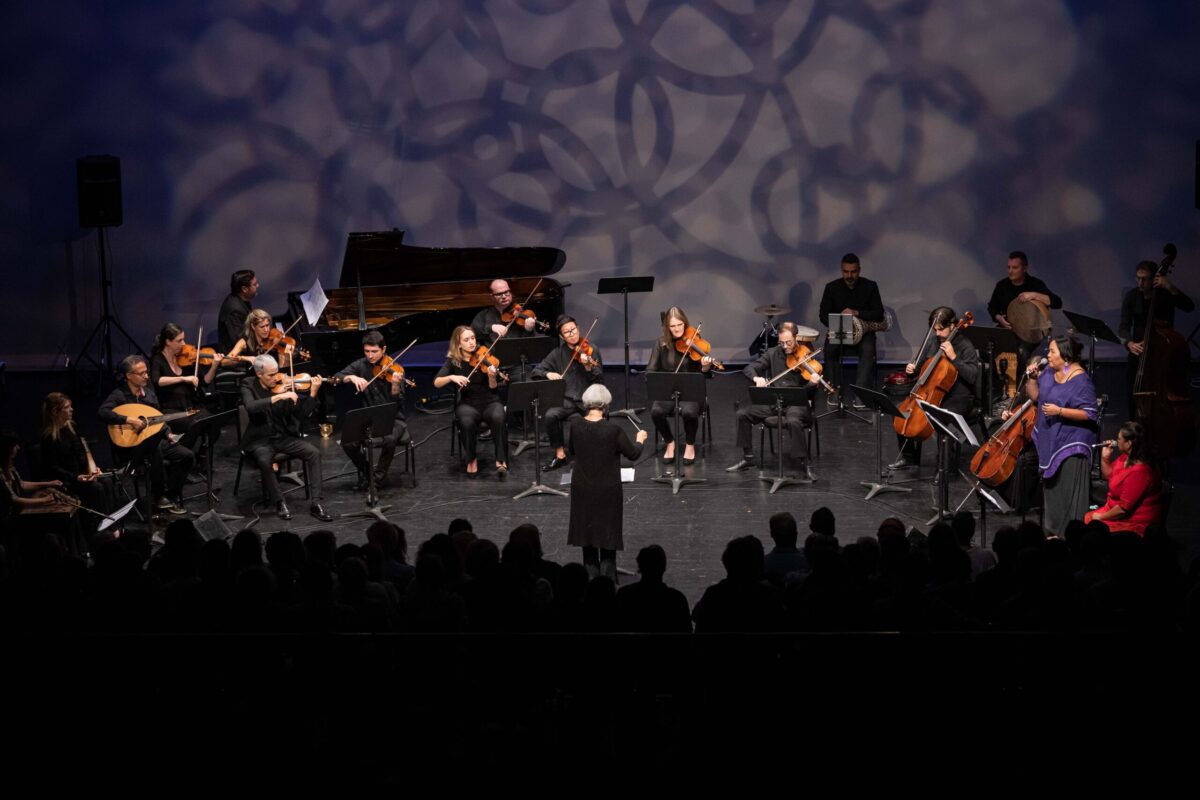
A Concert for Memories: Oktoecho at Théâtre Maisonneuve
Photo credit: Antoine Saito
An ensemble with multiple influences and sources of inspiration, OktoEcho is a master in the art of surprising, moving and enchanting audiences. As soon as you entered the hall, you could feel the special touch of the music that was about to be played. The audience was on stage, almost in a circle around the musicians, creating an almost intimate atmosphere, eliminating the classic concert barriers between stage and audience. The ensemble is made up of a kanun (a Turkish plucked string instrument), a kamânche (a haunting Iranian instrument akin to the violin), an oud (origin of the guitar), two percussionists and a string section (violins, violas, cellos and double bass), was conducted by Katia-Makdissi-Warren, OktoEcho’s artistic director and founder. The orchestra was joined by two Inuit throat singers.
The concert was breathtakingly precise. Everything seemed perfect. The sounds, timbres and modes used transported the audience to the lands of the Middle East. The rhythms also contributed to this impression. Alternating between driving grooves and meditative mantras, often within the same piece. The influence of Arabic and Middle Eastern music dominates in this configuration of the ensemble. Jazz influences can also be felt in certain pieces, both in harmonics and structure. We are also witnessing a blending of origins. At several points, the instruments seem to imitate each other. This blending muddies the waters, giving way to a fascinating unity.
The most captivating aspect of the show, however, is the place that Inuit throat singing occupies in the orchestra and the score. Their incorporation into the ensemble’s music is done with an apparent respect that manifests itself in the authenticity of the contexts. To give an example, one work is devoted entirely to the fundamentally playful aspect of throat singing. The two singers and the percussionists play together, imitating each other, answering each other, exchanging and meeting for a brief moment, which ends in an endearing laugh. The third work presented, devoted to singing, remains the most gripping of the concert, demonstrating all the virtuosity of the singers and the orchestra around them. An unforgettable concert!
Alexis Ruel
TheSchumanns’ Music in the Spotlight
The stage of Salle Wilfrid-Pelletier at Place des Arts was transformed into a small, intimate room to accommodate a short chamber music recital. Bleachers were set up on the stage for the occasion. Charles Richard-Hamelin on piano, Bomsori on violin and Dominique Beauséjour-Ostiguy performed Three Romances for violin and piano and Trio for piano and strings, no. 3, by Clara and Robert Schumann respectively. The audience is transported to 1850, as Robert becomes increasingly ill and Clara ends her career as a composer. Despite this tragic premise, there is much light, tenderness and life in the pieces on the program.
Unfortunately, the acoustics were not optimal, so the sounds were somewhat muffled. However, nuances were not lost: the softest passages and most subtle pizzicati still reached the audience’s ears. The pieces performed are already well known, but the interpretation by the three musicians was so breathtaking and sensitive that we listened to them as if for the first time. The Romances and Trio are musically complex pieces, and the performers were able to illustrate all the changes of tone, all the energy and all the colours concealed in these works. The musicians are exceptionally talented, and listening to them is particularly captivating.
Elena Mandolini
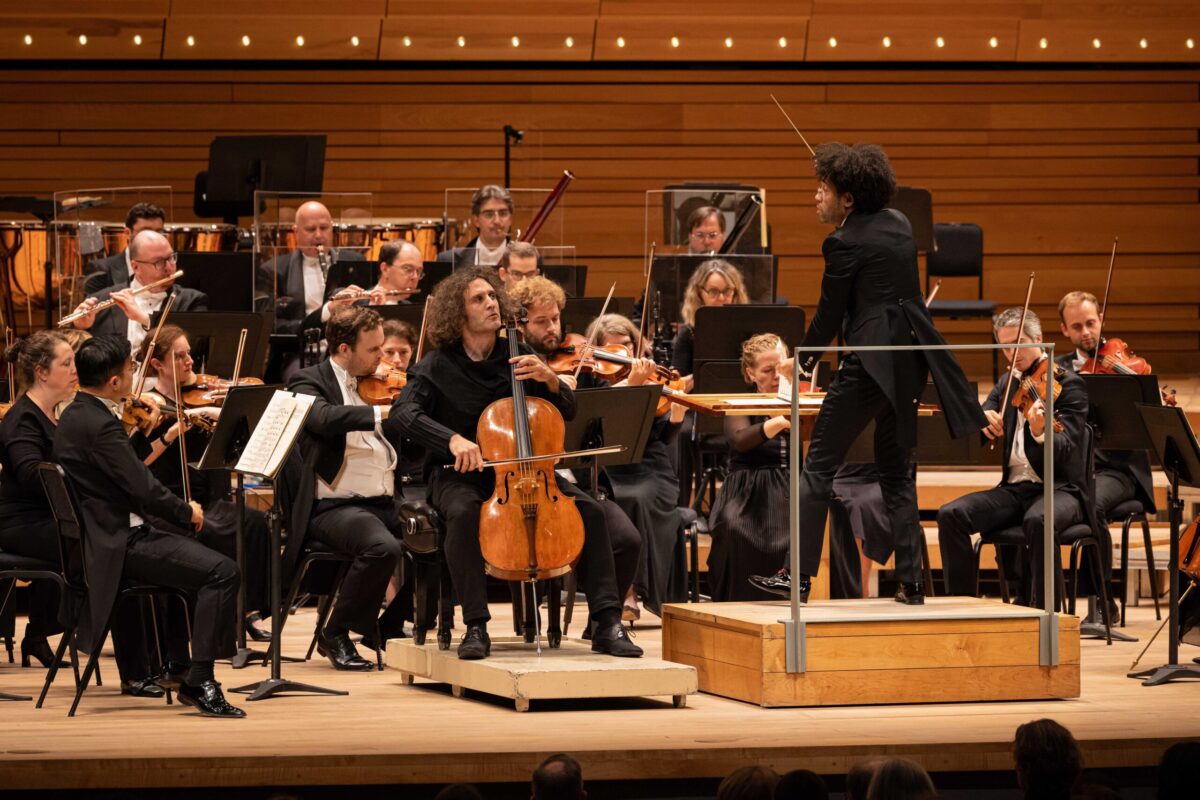
A Dazzling Payare Accompanies an Introspective Alstaedt
Photo credit: Antoine Saito
Rafael Payare had a practically packed Maison symphonique to conduct Tchaikovsky’s Variations on a Rococo Theme with cellist Nicolas Alstaedt and Mendelssohn’s Symphony No. 4 “Italian”. And this just hours after conducting a concert with pianist Francesco Piemontesi.
For the Variations on a Rococo Theme, guest soloist Nicolas Alstaedt delivered a performance of great virtuosity and velocity, giving each of the seven variations a different, nuanced character. Where we were taken aback – apart from the occasional ringing cell phone – was in the profound interiority of Alstaedt’s playing. When he plays, he enters a world of his own where he physically breathes and exults in the music: this is a quality in itself, provided you keep it under control. Indeed, at one point we had the impression that the soloist had forgotten that there was an orchestra with him.
In contrast to Tchaikovsky’s lyricism, this was followed by a dazzling symphony by Mendelssohn, in which Payare brought to life the characters and images of Italy that the composer painted in his music. The Tuscan sun, the joviality and good humour of the Italians and their great religious faith, the village festivities – all these elements were transposed onto the stage by a Payare who almost danced on the podium! More than the music itself and the Venezuelan conductor’s direction, what was beautiful to watch was the look and smile on the musicians’ faces as Payare took each section and drew them into the story and its energy: an energy that doesn’t go unnoticed, and which shone through in the audience, judging by the thunderous applause that followed.
Alexandre Villemaire
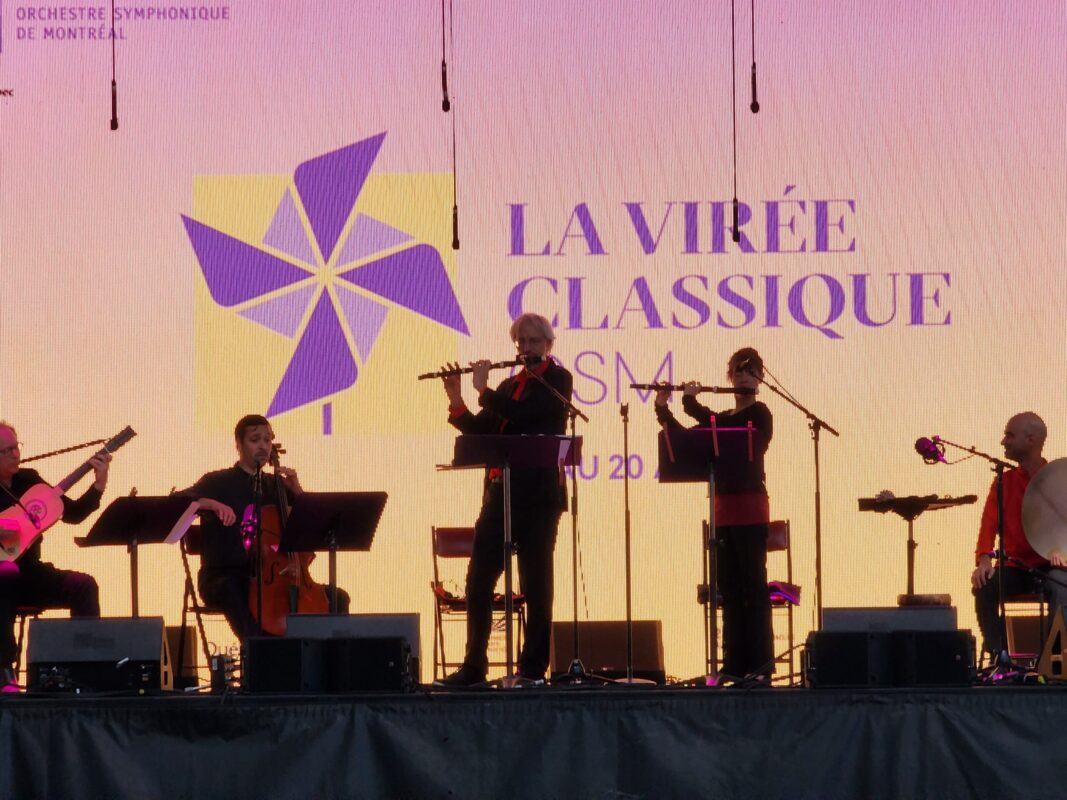
Matthias Maute, flutist, artistic director, conductor and founder of Ensemble Caprice, performed at the Esplanade Tranquille in front of an attentive crowd in a themed concert with a reduced formation: ancient flutes and strings, frame drum and darbouka. The oriental influence on European music at the time of the Renaissance was clearly felt, as Europe became the center of musical creation, and it was an opportunity to immerse oneself in this blend of a distant era, a blend perfectly mastered to the delight of the music lovers present, most of whom were attentive.
Opening Concert of the Virée Classique: Precision and Intensity
by Rédaction PAN M 360
The tenth edition of the Virée classique, the classical music festival presented by the Orchestre symphonique de Montréal, kicked off on Wednesday evening with a concert on the Esplanade du Parc olympique. With remarkable precision, Rafael Payare and the orchestra transported the audience through famous opera arias and more. The evening was hosted by Magalie Lépine-Blondeau, spokesperson for the Virée classique. Together, they offered a remarkable, accessible and highly enjoyable concert.
Bomsori, violin. Photo credit: Antoine Saito
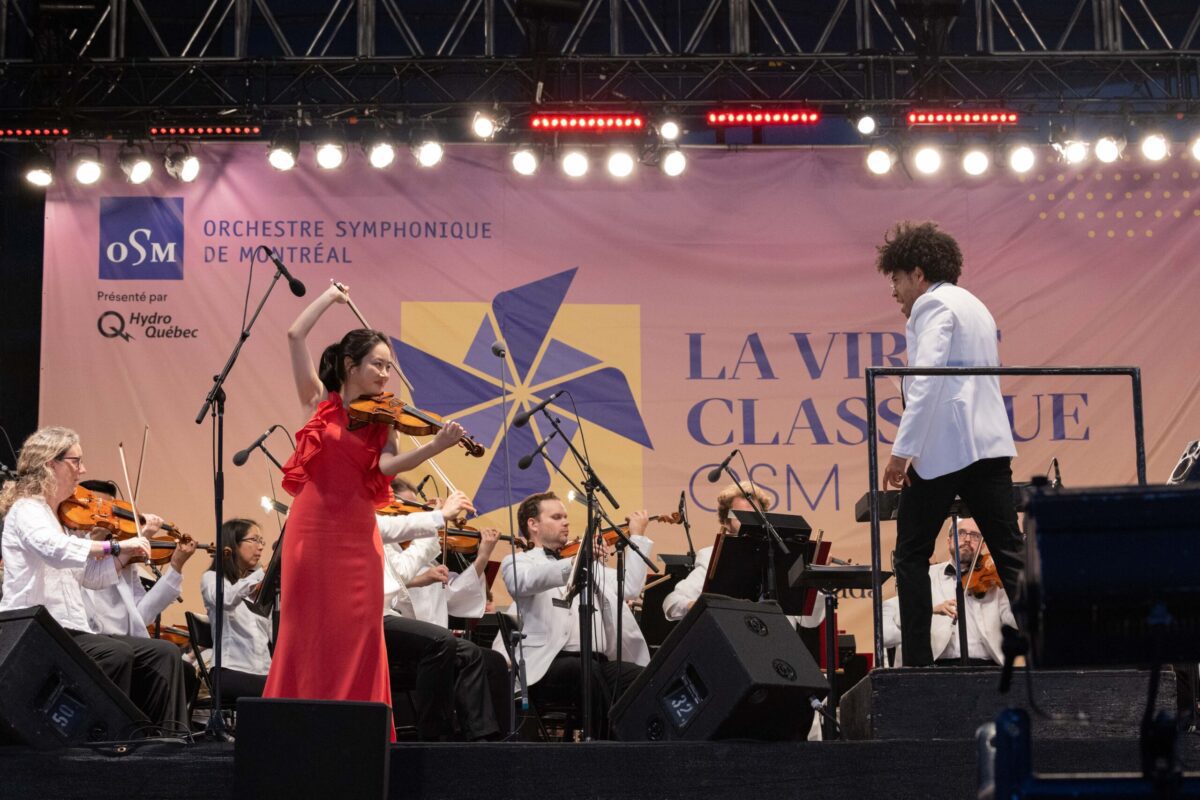
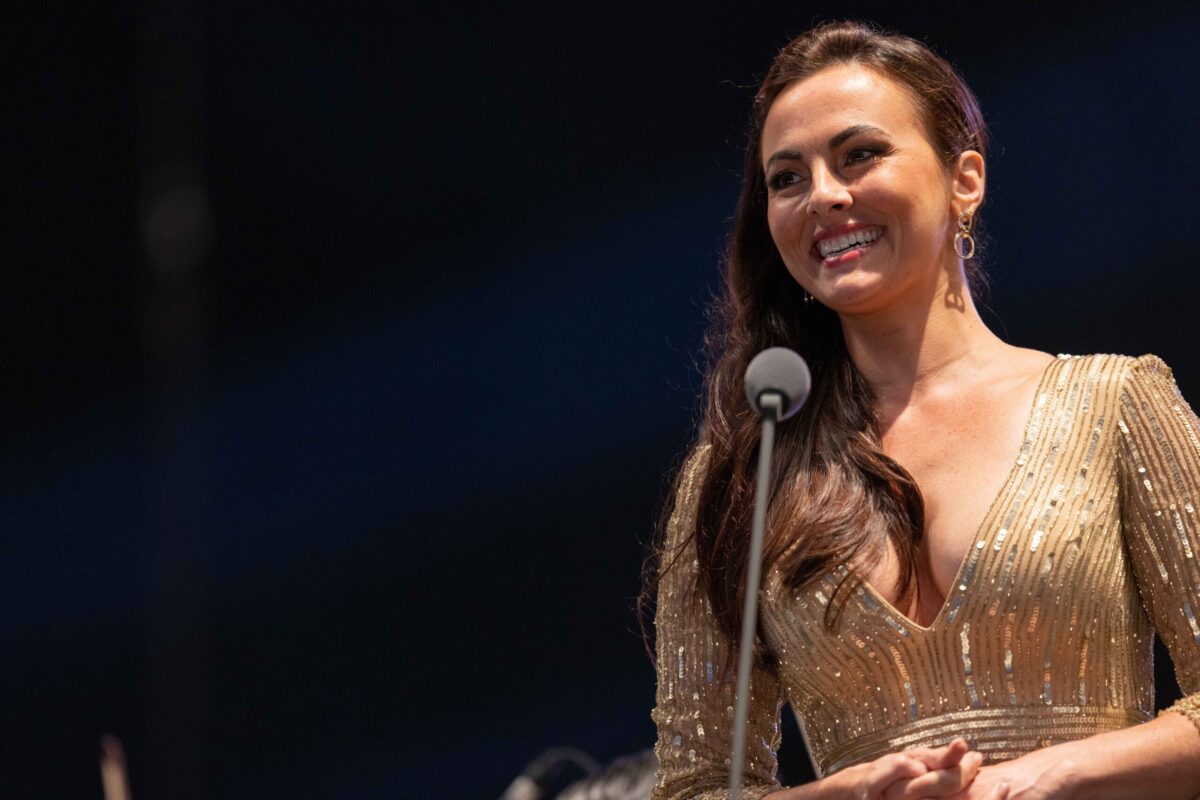
The audience travels to charming Seville, with excerpts from Rossini’s Barber of Seville, followed by George Bizet’s famous Carmen. Franz Waxman’s Carmen Fantaisie for violin and orchestra, performed with brilliance and virtuosity by solo violinist Bomsori, presents a number of technical challenges which she overcomes with ease. The piece is inserted between the two opera excerpts, echoing the arias sung by guest mezzo-soprano Isabel Leonard. The latter charms the crowd with her warm timbre and theatricality. The remarkable clarity of the lyrics, in both Italian and French, is to be commended, while her acting effectively conveys the emotional complexity of the characters she portrays.
Isabel Leonard, mezzo-soprano. Photo credit: Antoine Saito
Modest Mussorgsky’s Pictures at an Exhibition is decidedly different in tone. It moves away from opera and into a more figurative, even descriptive style, evoking the passage through the halls of a museum or salon. It emanates a nobility and majesty that is evident from the very first, well-known theme that structures the work. The brass section’s performance is to be acclaimed for its precision and clarity. The orchestra reserved a final surprise for the audience, with an encore of Wagner’s celebrated Ride of the Valkyries. Its exemplary interpretation made it the highlight of the show.
The technique and execution behind the concert were impressive. We applaud the accuracy of the timbres through the amplification, as well as the fascinating work of the cameras in the orchestra, offering a different perspective of the musicians. On the downside, the sensitivity of some of the microphones on stage meant that we could distinctly hear pages turning, chairs creaking and bows falling. However, it’s this same subtlety in the recording that allows you to hear the orchestra’s softest nuances, even from several meters away. The disadvantages are quickly forgotten after all that!
Despite this minor detail, the concert was both exhilarating and entertaining. The tunes were familiar and the themes already familiar, but the interpretation was so exceptional and precise that it was as if we were rediscovering these classics. This is where the Orchestra really shone. It communicated all the love that it and its conductor have for music.
The Virée classique promises to be exceptionally vibrant!
Elena Mandolini and Alexis Ruel
Osheaga Day 3: Kendrick Lamar, Fred Again.., Milk & Bone, Julia Jacklin, Beabadoobee, Preston Pablo, Central Cee, Japanese Breakfast, FOALS, Tom Odell, and Saint Levant
by Rédaction PAN M 360
There might have been over 92 different acts at this year’s Osheaga, but our writers jumped between many of the shows to give a concise and creative review of our experience. So without further ado, here is what we saw and heard on the final day of Osheaga…
As an added bonus, we suggest 3 perceptions of the Kendrick Lamar show by our three writers from thee generations.
Kendrick Lamar: authoritative and dominant
Photo by Tim Snow
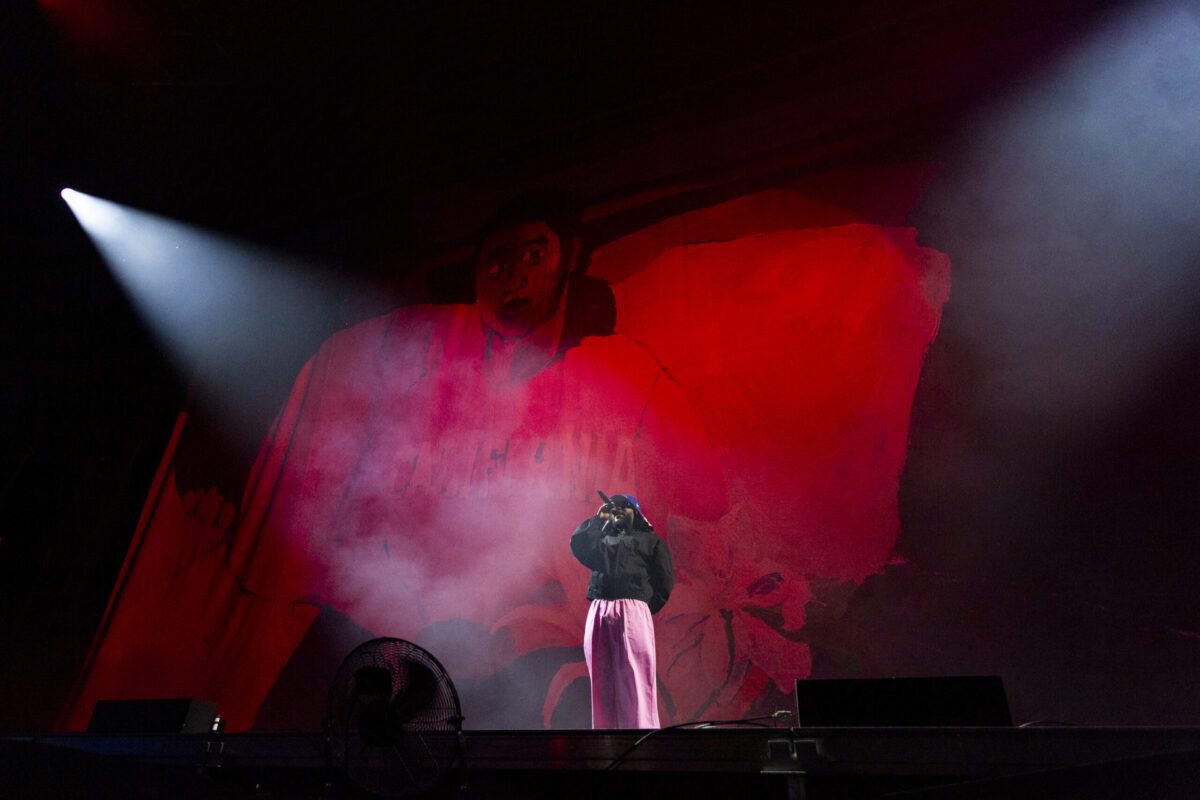
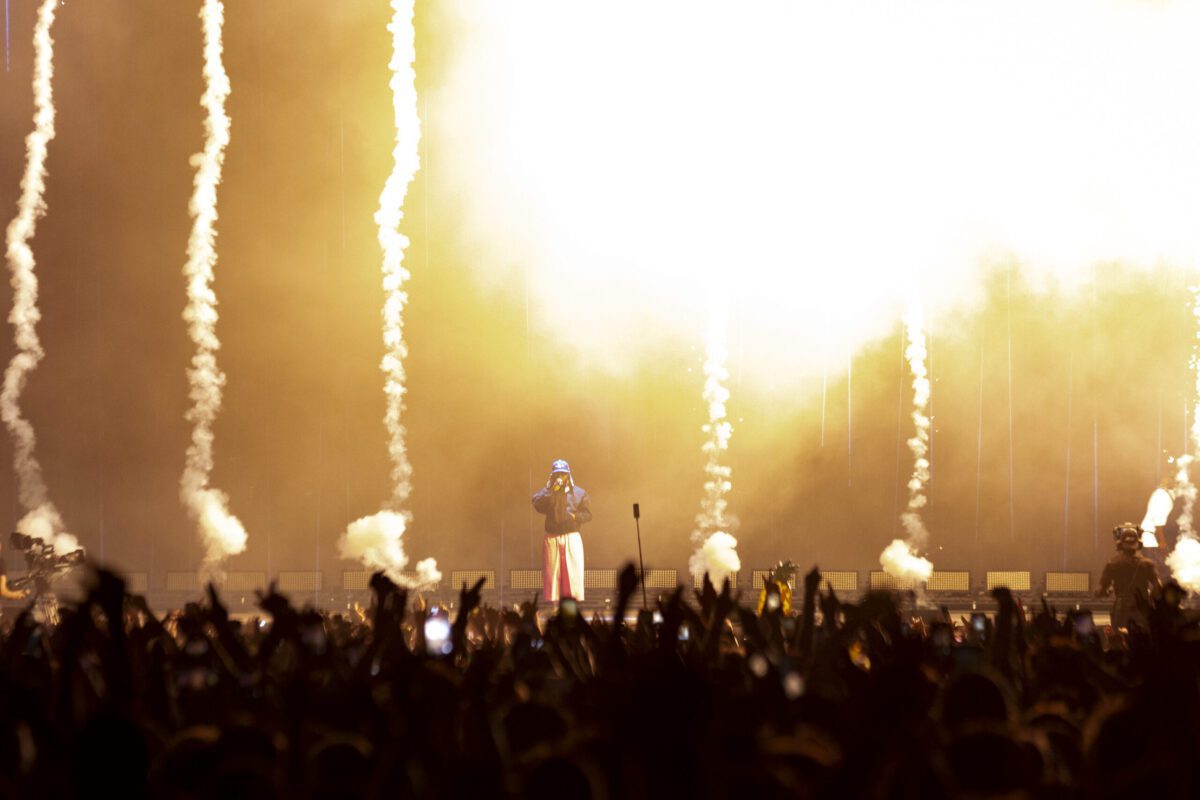
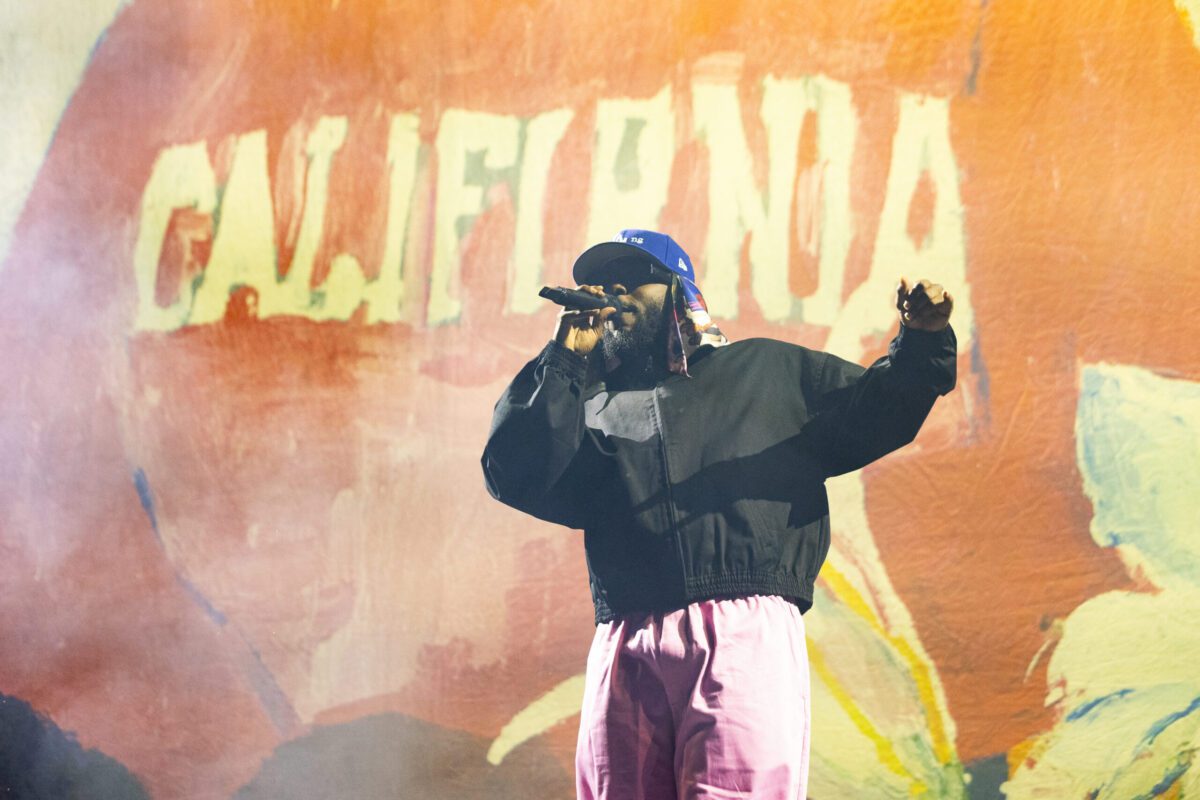
Is it possible to have better event than one of the hip-hop scene’s most popular artisans of the last decade to close the 2023 edition of Osheaga? I firmly believe not. Right after Fred Again.., the long-awaited moment arrived and Kendrick Lamar made his entrance on the main stage on the first notes of “N95,” one of the excellent titles of his most recent album, Mr. Morale & The Big Steppers. After his first track, the Californian rapper stood in silence like a king under the imposing “Olé!, Olé!, Olé!” crowd. Behind him, a curtain art canvas is revealed, which will be replaced three times during its performance. During his concert, he was only accompanied by dancers who are added as the concert progresses. On stage, Kendrick Lamar isn’t the most energetic, but his skill and poise make him a captivating artist.
During his roughly hour-and-a-quarter stint, the Compton MC delivered a selection of several pieces from his latest project as well as his greatest hits from his discography, even going back to 2011 for “A.D.H.D” and 2012 for certain titles of Good Kid, M.A.A.D City. One of the best moments of the evening was when the 36-year-old artist asked the festival-goers to turn on their phone flashlights for “LOVE.” For almost every track, the crowd responded present and accompanied the rapper. At my side, we find people of all ages, proof that K.Dot is unanimous across the different generations.
“You could have chosen to be anywhere tonight, but you decided to be here, thank you,” supported the rap veteran at the end of his concert. The people present at the festival had been entitled to a moment of anthology and a near-perfect offer from Mr. Duckworth to conclude the festival. – Jacob Langlois-Pelletier
Photo by Tim Snow
Like many in the crowd, this was to be my first time witnessing the Cali rap god, Kendrick Lamar, so it’s safe to say that right after Fred Again.. ended his set next door, the anticipation was real. The instrumental piano and funk guitar took the stage until Kendrick busted out of the darkness, diving into “N95” and then “ELEMENT.” He was sporting shades, pink track pants, and a black hoodie, behind a painted canvas backdrop that shifted between his set. We also got a few old numbers like “A.D.H.D,” and a crowd favourite, “King Kunta,” off the excellent To Pimp A Butterfly.
Kendrick’s flow was unmatchable, but the crowd near me attempted to rap every line during a song like “Swimming Pool (Drank).” Another stand out was when he freestyles for a few minutes before faking out the crowd and jumping into “Money Trees,” followed by “Bitch, Don’t Kill My Vibe.” Kendrick has general charisma on stage, but he did seem a little less energetic than I was expecting. Still, his backup dancers, which had a menacing presence to them, did add to the narrative story of the show. Kendrick also decided to end his set 15 minutes early, with “Savior,” but I mean, he’s Kendrick goddamn Lamar, so he can do what he wants. – Stephan Boissonneault
Photo by Tim Snow
In his critical and self-critical reflection, in his poetic form, in the context of his brilliant and subtle message, at the antipodes of Manichaeism, Kendrick Lamar wanted to elevate on stage his recent proposal, embodied by the recent album Mr. Morale & the Big Stepper. Literally denser and magnified by his exemplary flow, Kendrick Lamar took this state of creation a step further, opting for scenic minimalism to present an all-too-brief closing show, concluding almost 15 minutes before curfew. While the end of the Osheaga program may have artistic merit, it is hardly appropriate for a mass event where over-conceptual proposals reach their limits.
Some will see it as a stroke of genius, a brilliant counter-proposal for the final headliner of a festival of this size. Sunday evening at Parc Jean-Drapeau, in front of a huge crowd. The visionary rapper from Compton, the most influential of the last decade, didn’t win unanimous approval this time, even if he may have delighted the majority. Let’s see: Each of the pieces on the program was interspersed with (too) long pauses, as if presenting tableaux from a total opera, staged in the Romantic era, before modernity. A few huge frescoes painted on fabric occupied the back of the stage, evoking the themes raised in this performance – flashbacks to the artist’s trajectory, reflections on his milieu of origin, his family, his violent neighborhood, the state of his identity, the future of this identity, his existential anxieties despite the fame he had acquired.
A troupe of male dancers with beards and smoked glasses to match their employer, dressed in overalls and stylized workshop aprons (Louis Vuitton, sors de ce corps), choreographed the poetic states of the master Kendrick, himself dressed in Nike shoes, baggy pink 3/4 pants, a black fabric jacket, an LA Dodgers cap and a scarf encircling all but his face. The giant screens on the side reflected only the activity filmed on stage, i.e. the rapper himself and the movement of his dancers circulating around scenic objects.
The performance of classics from his previous albums to the latest certainly pleased everyone, the new tracks certainly didn’t disappoint, and the covers were relevant (“Nosetalgia” by Pusha T, “Sidewalks” by The Weeknd, “Never Catch Me” by Flying Lotus). In all, 21 tracks, most of them inspired and… Musically, we preferred once again to activate pre-recorded sequences and modulate everything in real-time. A defensible choice, it must be said, in the manner of the world’s most eminent electronic producers. But… a real-time instrumental performance can also be part of the experience in 2023, so the choice to withdraw it must be compensated for by a significant immersion. This was perhaps not the case at Osheaga.
This artistic choice may well be totally seductive in an appropriate venue for this type of immersion, and we can imagine very different perceptions from the full version of this Big Steppers Tour but… outside, in front of a sea of fans? That’s a different matter. Without 3D special effects, new-style lighting, or multimedia projections, such aesthetic frugality in such a festival context, however brilliant, may disappoint the expectations of many. Which was the case. After 60 minutes, we saw quite a few people move on to other stages in action on the Osheaga site. The majority of fans stayed put, many of them leaving in a daze, even though they all warmly celebrated the great hip-hop vintages of Kendrick Lamar, in full possession of his powers, imperial despite our concerns. – Alain Brunet
The electro prodigy Fred Again.. is a real eye-catcher
Photo by Tim Snow
Over the past few years, the name of Fred Again… has been on the lips of all electro music fans. Before his concert in Osheaga on Sunday evening, I considered myself indifferent to his art, sometimes struggling to understand the huge enthusiasm surrounding him. So, I headed close to the stage with a curious ear, and I have to admit that I left frankly amazed by the genius of the producer, DJ, and singer-songwriter from London.
Throughout, Frederick John Philip Gibson alternates between his keyboard and his MPC. The basis of his music is short sound samples from songs or dialogues of completely unknown artists or people with which he creates loops. Moreover, the videos of the excerpts used are shown on giant screens during the concert. Then, the Briton adds his own voice as well as many layers and textures using his various instruments. Thus, the majority of the titles they play in concert are generated in real-time and the public attends their creation. The avenues of Fred Again… are multiple and his music explores house, garage, pop, and even R&B.
On stage, the 30-year-old artist gives everything and finds himself completely sweaty. From start to finish, the crowd was extremely boisterous and captivated by the star’s actions. The festival-goers were delighted by the best compositions of the artist like Delilah (“pull me out of this”) and Angie (“I’ve Been Lost”). At Osheaga on Sunday, Fred Again.. transformed Parc Jean-Drapeau into a veritable dance floor and managed to create an unforgettable moment. – Jacob Langlois-Pelletier
Central Cee, A British star in the making
Photo by Tim Snow
Around 6:20 p.m., it was the turn of the young British star Central Cee to take over the Mountain Scene. Over the past year, the rapper has enjoyed an unprecedented rise and is now one of the stars of UK drill’s rise to international popularity. Judging by the impressive mass of festival-goers gathered for his performance, his arrival was eagerly awaited.
Before its rise, a DJ took care of warming it up with many hip-hop hits. Fifteen minutes later and after the presentation of a presentation video, the Londoner made his entrance to the shouts and applause of the crowd. Dressed in a burgundy coat and a diamond chain around his neck, the 25-year-old artist debuted with Loading. On stage, Central Cee deploys a destabilizing assurance, skilfully cutting up each of his words and stringing together long verses with a frantic pace. No need for a vocal track to support him, the Briton puts on the different pieces and it seems so easy. Down the stretch, the young star offered her best tracks such as Sprinter and Doja, not forgetting her version of LET HER GO by Passenger.
The people present knew the artist’s titles by heart and shouted over his various titles. No doubt, it was probably one of the best crowds at the festival. – Jacob Langlois-Pelletier
The Cult of Beabadoobee
Photo by Tim Snow
Beabadoobee, a young alternative indie pop superstar, finally got her chance to play Osheaga’s main stage, as she cancelled her date at the last minute for Osheaga 2022. This year, the fans were craving old and new, and we’re mostly greeted by songs from her 2022 album, Beatopia. Bebadoobee’s music is pretty poppy, but there are a few trickles of grunge and shoegaze in her music, and her voice is as soothing as honey on a hot summer’s day.
The heat was a little unbearable as I and many fans were trying to take shelter, and Beabadoobee herself even mentioned the sweltering sun once or twice. Every couple in the crowd hugged each other for dear life during the song “the perfect pair,” and sang in unison with Beabadoobee, real name Beatrice Kristi Ilejay Laus. Two fans proposed to Bea on their phones, as the camera swang between them, but Beabadoobee brushed it off, laughing saying “That’s totally cool, but nah” – Stephan Boissonneault
FOALS, not so typical after all
From Oxford, England, where the radio heads are bred, FOALS is a rock and electro band typical of its generation. Frontman Yannis Philippakis is a fine singer, and this quartet offers inspired melodic hooks, imaginative arrangements and multi-referential passages that testify to a certain taste. FOALS’ recent studio experiments integrate synthetic bass and other stylistic elements of dub and house, without distorting the original proposition, which is closer to indie pop/rock. Nothing memorable on the Vallée stage, but a fine band nonetheless. – Alain Brunet
Japanese Breakfast: The Woman That Loves You
Photo by Frédérique Ménard-Aubin
I’ll admit that 2017’s Soft Sounds From Another Planet, was the last album of Japanese Breakfast’s that I listened to in its entirety, but after witnessing half of her set at Osheaga, I now know I have to check out the latest one, Jubilee. Frontwoman Michelle Zauner came out in a Barbie-themed hot pink skirt and top before banging the stage gong to signal the beginning of the psychedelic indie pop show. This wasn’t the only time she banged the gong, in fact, she hit it multiple times between songs for more atmosphere.
There is something quite mesmerizing about Zauner’s stage presence. She almost goes into a sort of trance, hypnotizing the audience, but breaks character for a bit of levity every now and then. The most energy came at the start of the set when she played two old hits, “The Woman That Loves You,” and “In Heaven,” from her debut album, Psychopomp, which put her on the indie map. – Stephan Boissonneault
Preston Pablo, a breath of fresh air on the Canadian pop and R&B scene
Photo by Benoit Rousseau
Have you ever wondered who was the voice behind the hit “Flowers Need Rain”? If so, you are certainly not alone, because the title of Preston Pablo reached in 2022 the first rank of the most searched songs in Canada on the Shazam platform. On the rise in the pop and R&B scene, the Canadian had the task of kicking off the last day of concerts on the Green Stage.
Supported vocally by his own tracks, the singer-songwriter was bursting with energy and delivered sunshine to the festival-goers present. Preston Pablo’s romantic and warm leads were very well received by the crowd. The 21-year-old artist offered his best tracks such as “For Keeps,” as well as a cover of Justin Bieber’s “Sorry.” “Montreal, I love you!” he said several times, smiling.
After a little over thirty minutes on stage, Preston Pablo wanted to end his performance in style with his most popular song to date, “Flowers Need Rain.” Due to a problem with the sound system, the young man first asked the public to sing with him before offering an acoustic version of the song. When the technical problem was solved, he was able to redo his title properly. Thus, the people present were treated to three different versions of his greatest hit, and no one seemed to complain about it! – Jacob Langlois-Pelletier
Tom Odell: a pure reincarnation of pure romanticism
The hypersensitive piano singer, the gifted melodist classically trained, the vulnerable and passionate interpreter… here’s a profile that’s been around for at least half a century: Nina Simone, Barbara, Elton John, Billie Joel, Carole King, Tori Amos, Fiona Apple, Patrick Watson… There are so many, and here’s another one on the Rivière stage, relatively unknown in North America, though… at the end of PM Sunday, there were several hundred who knew by heart the songs of Englishman Tom Odell, a pure reincarnation of extreme romanticism but with updated signs of pop culture. The 32-year-old counter-tenor singer-songwriter is known for his magnetism and expressiveness. His use of all the compositional clichés of the piano and pop band song is soon forgotten, clichés that he coats with a creative sheen that clearly sets him apart. Less predictable than it sounds! – Alain Brunet
Julia Jacklin Doesn’t Ignore the Tenderness
Photo by Frédérique Ménard-Aubin
Right after an electric set by the brotherly rap duo, Armani White, the Green Stage welcomed the presence of Australia’s Julia Jacklin, a show I anticipated to be full up, but was graciously surprised with the empty space on the grassy floors. Perhaps this is because much of the Armani White crowd was looking for something more danceable (something the programmers could have anticipated) and wasn’t prepared for Jacklin’s melancholic indie rock. Still, the ones of us who did stay and arrived slowly were in for a beautiful, but forlorn treat.
Most of Julia’s songs are about lost love or existential dread, something very different than what you expect to get at a festival where most people are on uppers. It was hard not to feel broken when her powerful voice crooned during the song “Pool Party” or even “Lydia Wears a Cross.” I was, unfortunately, alone and felt like I needed a hug from a faraway friend. It’s good, but rare, to feel something real at a show and Julia Jacklin’s set, though short, was all about the real feelings that make us human. – Stephan Boissonneault
Milk & Bone mastering their craft at Osheaga
Photo by Benoit Rousseau
After Canadian rapper TOBi left the nearby stage as the crowd chanted his name, the bar was high for Milk & Bone. Let’s just say that the electro-pop duo rose to the challenge brilliantly!
The two singer-songwriters arrive on stage for their third career appearance at Osheaga (already!). Laurence Lafond-Beaulne is completely dressed in white while Camille Poliquin is in black. At several points during the concert, they come face to face and look at each other while performing their songs. While one sang, the other added different sounds and textures using a drum machine. The chemistry between the two women is real and splendid on stage.
On Sunday, the crowd was able to dance to many excerpts from Chrysalism, the duo’s latest opus released last year. Milk & Bone also pleased their fans with their greatest hits. It was during Daydream that the crowd got the loudest. The duo gave an excellent performance and the festival-goers seemed to get everything they expected from them. Jacob Langlois-Pelletier
Saint Levant: evident appeal from the first few bars
Photo by: Frédérique Ménard-Aubin
Marwan Abdelhamid aka Saint Levant is the son of a French-Algerian woman and a Serbian-Palestinian man. A native of Jerusalem, he lives in the US, having completed a bachelor’s degree in international relations at the University of California, Santa Barbara. The singer and rapper is fluent in Arabic, English and French, and his appeal is evident from the very first bars. His offering includes oriental violin (with quarter tones), darbouka, saxophone and his Arabic-inspired songs also incorporate Western flavors of soul-pop, hip-hop and EDM.
At once engaging, entertaining and sensual, Saint Levant has quickly established itself on social media, to the point of securing a major bill at international festivals, in this case the Green Stage at Osheaga. Thousands of newly-conquered fans, mostly from the Arab-Maghrebi community, were on hand to cheer him on, and also to applaud guest Zeina, who grew up in Montreal and whose career is also taking off. – Alain Brunet
Osheaga Day 2: Billie Eilish, Lil Yachty, The National, Adekunle Gold, L Teez, Pelch, Baby Keem, Matt Maltese, Peach Pit …
by Rédaction PAN M 360
There are over 92 different shows at Osheaga this year, but our editors jumped from show to show to give a concise and creative account of our experience. Without further ado, here’s what we saw and heard on day two of Osheaga.
Billie Eilish, Imperial, Remarkable, Memorable
Photo by: Tim Snow
Billie Eilish was headlining the day on Saturday, and for good reason! It seemed to his cheering audience that every moment of his highly anticipated performance was designed to remain forever etched in the memory of festival-goers, who can consider themselves blessed to have been able to witness such a memorable performance, to say the least. Not to say eligible for legend.
So to speak, the moments of the anthology were linked one after the other! The singer did everything in her power to deliver interpretations as powerful as each other, the power provided by her completely insane energy on stage or by her deeply felt emotions and words of real depth. One of the highlights was when she sat on the edge of the stage to perform “What was I made for?” and she cried a few tears in front of us. The intensity kicked up a notch afterward as she didn’t ask, but ordered the crowd to sing “Oxytocin” with her.
Perhaps the biggest surprise of the show was when she polled the audience about their knowledge of Armani White’s song “Billie Eilish,” and he appeared on stage before the crowd could even respond, performing the title. Total amazement!
The title “Happier than Ever” closed the show, during which Billie used all the energy she had left. Fireworks, jets of flames, everything was in place so that no one would forget Billie Eilish’s visit to Osheaga in August 2023.
– Arielle Caron
The sensibility and authenticity of Pelch
Crédit photo : Benoit Rousseau
At the beginning of the afternoon on Saturday, a good crowd of curious people had gathered in front of the Green Stage for the performance of the singer-songwriter Guillaume Pelchat alias Pelch. For those who don’t know him, the 23-year-old Quebecer offers pop ballads performed in English and has a rough voice reminiscent of Lewis Capaldi or even Dermot Kennedy at times. In April 2022, Pelch released Looking Around, a six-song debut EP where one of his strengths is revealed: taking his listeners on a journey through different emotions.
In Osheaga, the young man performed his most popular songs such as “How Many Kids?” and the one that made him known on social networks, the poignant “Yellow Shirt.” To the delight of the crowd, the artist also took the opportunity to play many unreleased tracks that will be found on his next project, including “Hometown,” a piece through which he expresses his love for his small hometown, Sainte-Julie. One of the highlights of the show is certainly when Pelch brought his little brother Gabriel on stage to sing “Last Night,” his most recent title being dedicated to him. The crowd was able to discover that Pelch is not the only one in his family to have a superb voice!
– Jacob Langlois-Pelletier
Matt Maltese, a name that (finally) rings a bell
Photo by Tim Snow
Matt Maltese, originally from England, is a name that does not necessarily ring a bell at first glance. However, those who are familiar with the TikTok app are probably very familiar with his song As the world caves in, which got a lot of popularity on the app. It was only at the end of the show that we were able to hear this title, giving festival-goers the chance to discover the artist beyond this one. The melancholy atmosphere of his work, combined with a chilling vocal power, made us feel like we were in the final scene of a coming-of-age movie.
– Arielle Caron
L.Teez, high-quality Montreal rap-jazz
Photo by: Osheaga
Around 4 p.m., it was Montreal artist L.Teez’s turn to take to the small stage of the Sirius XM sessions. For the record, Lee Terki was born in France to an Afro-Chinese Montreal mother of Jamaican origin and a Parisian father of Algerian Kabyle stock. As a child, he moved with his family to Quebec. In October 2022, two decades later, L.Teez unveiled Studio Blue, an excellent debut album mixing rap, jazz and soul.
Accompanied by singer Lea Keeley, a bassist, a drummer and two keyboardists, L.Teez offered a near-perfect rendition of his latest project. On a frankly well-executed jazz framework, the artist demonstrates an effective flow, especially as he slaloms easily between singing and rapping. The more the performance takes off, the more people come to the stage, a sign that his music is frankly interesting and attractive. Halfway through his set, L.Teez took the time to express his pleasure at being able to find himself on a festival stage. “I’ve been coming to the festival for several years, I’ve seen my best shows there. I am completely grateful to be on the other side to bring you this spectacle,” he said. L.Teez is a well-hidden treasure of the Montreal scene and well worth discovering!
– Jacob Langlois-Pelletier
Peach Pit keeps us in suspense until the end
Photo by : Frédérique Ménard-Aubin
Given the nature of the music of the indie-rock group Peach Pit, we can say that we did not expect the group to start their concert with a complete rock’n’roll instrumental sequence and that the singer launches into the crowd – despite the signs prohibiting crowd surfing. Endowed with a striking stage presence, the group maintained an incredible energy throughout the performance. If we expect a quiet little show listening to their music, Peach Pit makes sure to keep us in suspense from start to finish.. – Arielle Caron
Adekunle Gold conquering North America
Photo by : Frédérique Ménard-Aubin
In the early evening, a sizeable crowd eagerly awaits the arrival on the stage of Nigerian star Adekunle Gold. On my right, a festival-goer proudly wears a sweater from the artist’s native country, while on my left another wears the colors of Brazil. We already knew it, but here is yet another proof that the afrobeats music of the man we nickname AG Baby rallies the different communities. Unfortunately for the fans present, it was necessary to wait until 5:05 p.m. to see him appear on stage due to technical problems, his arrival being scheduled for twenty minutes earlier.
As she entered the stage, the applause and mostly female cries were unleashed.
The 36-year-old offered several tracks from Tequila Ever After, his new album he released to his audience just over a week ago. “It’s the album of the year, go listen to it!” he said. Signed to Def Jam Recordings, the artist has the looks of a real rock star on stage, displaying remarkable ease. He has a soft & relaxed voice and his music is tinged with pop, R&B, highlife, afrobeats influences. The conquest of North America is launched for Adekunle Gold and he will be back in Montreal next October.
– Jacob Langlois-Pelletier
On stage, the many faces of Lil Yachty
Photo Credit: Tim Snow
Earlier this year, rapper Lil Yachty surprised many with his album Let’s Start Here, a psychedelic alternate narrative one would never have expected from him. As soon as this project was released, his fans immediately embraced his new style. Saturday night, we could expect a different performance from what the artist from Atlanta knew how to accustom us to, and that’s exactly what he served us.
With a full band and two supporting singers, the first half of his 60 minutes was dedicated to his latest opus. In front of captivating visuals and with his voice tinged with autotune, the 25-year-old artist transported Montrealers into a whirlwind of emotions. The crowd responded, singing several of the verses. But it was rather in the last stretch of his performance that the people present made themselves heard, while the rapper interpreted his most popular titles such as “One Night,” “Get Dripped” as well as his collaboration ISpy with KYLE. Shortly before the end, Lil Yachty even sang “Poland,” his title which had ignited social networks in October 2022. All in all, festival-goers were treated to a performance as diverse as it was passionate from a pillar of the “SoundCloud generation”.
– Jacob Langlois-Pelletier
Baby Keem, sharp and merciless
Photo by: Tim Snow
Before Billie Eilish arrived on the main stage, Californian rapper Baby Keem came to the next set. In 2018, he released his debut album The Sound of Bad Habit, followed by DIE FOR MY BITCH in 2019 and the excellent The Melodic Blue. Over time, the 22-year-old artist has proven that he is much more than just the cousin of mega-star Kendrick Lamar, the one who will be the headliner of the third and final day of the festival.
Upon entering, the artist made a strong start with his hooligan title. “It’s the first time I’ve been in Montreal,” he said. Alone on stage, Baby Keem was simply accompanied by instrumental sequences and effective visual effects. The rapper delivered an honest, no-nonsense performance that was sure to please his fans. In many of his tracks, he does a lot of vocal inflections and plays around with changing his intonation, and it’s been noted that he was able to do all of that on stage as well. People near the stage were visibly enjoying themselves, those die-hard fans knowing all of the artist’s tracks by heart, while those farther away waiting for the pop star’s arrival seemed more hesitant. However, his successes ORANGE SODA and lost souls were able to move the vast majority of festival-goers present.
Before leaving, Baby Keem mentioned that this concert was the last of The Melodic Blue era and that the release of a new project was imminent. No doubt, we will be listening! – Jacob Langlois-Pelletier
The National, interest… national!
crédit photo: Tim Snow
Unfortunately, I missed part of The National’s show – the main downside of the festival was the distance between some stages. As soon as I arrived, I immediately wanted to join the crowd who were experiencing an exceptional moment. All eyes were on the singer, who put on a theatrical performance, almost making us feel like he was performing in a musical and not Osheaga. If the music of The National provokes deep emotions when listened to through headphones, the effect is greatly amplified when the songs are played before our eyes, and when we are surrounded by thousands of people all equally affected by the effect that the group gives us. It’s a feeling that’s hard to describe, that you only experience a few times in a lifetime, and that The National has managed to create. – Arielle Caron
Cults… on the road to master their rocky paths
crédit photo: Tim Snow
Cults is also a group whose songs have exploded on TikTok. Some were therefore known, but their appearance, like that of Matt Maltese, was an opportunity for Osheaga festival-goers to discover this group. The group offers captivating music, in which the many sounds pile up on top of each other, creating an atmosphere bordering on mastery. Unfortunately, it seemed at times that the sound wasn’t suited to this, which made their usually appreciable aspect somewhat unpleasant. But festival-goers still seemed to like the performance, as did the band who pointed out that it was the best festival they had played. – Arielle Caron
Osheaga Day 1: Altın Gün, BBNO$, Rina Sawayama, The Flaming Lips, Soccer Mommy, JPEGMAFIA and Joey Badass
by Rédaction PAN M 360
There might be over 92 different acts at this year’s Osheaga, but our writers have been jumping between many of the shows to give a concise and creative review of our experience. So without further ado, here is what we saw and heard on the first day of Osheaga…
Altın Gün
Photo by Benoit Rousseau
One of the first shows of the day came from the trippy stylings of Turkish psychedelia band, Altın Gün, who was playing much of their new album, Aşk, which turned out to be a lot more synthy than the crowd was expecting. Still, there was enough wah, phase, and tabla drumming to make your head spin, and the vocals by Merve Daşdemi and Erdinç Ecevit Yıldız were droney and pleasing.
The bağlama, or plucked Turkish guitar, rang true throughout the winds and got the crowd swaying and rhythmically moving. Though we were in a park on the corner of Montreal, for much of Altın Gün‘s set it felt like stepping into a Turkish bazaar. I think Altın Gün would have faired better opening for someone like The Flaming Lips, but their set was still thoroughly enjoyable.
– Stephan Boissonneault
BBNO$
Photo by Frederique Menard Aubin
From the moment BBNO$ took the stage at Osheaga, his charisma, uniqueness, nerve, and talent could not have been more apparent. (Initially) dressed in a sheer white set that effectively left him delivering his quirky west-coast bars in boxer briefs and a toque, BBNO$’s set was equal parts comedy show and lighthearted, youthful rap concert. At one point, he pulled out a cookbook and announced that he would give it away to whoever was “going the hardest in the crowd”—though not before reading a recipe for zucchini parmesan salad aloud—right before diving into hit, after hit, after hit.
After an AV interlude depicting Justin Trudeau spilling the beans about an unreleased track, BBNO$ triumphantly returned to the stage to deliver it, now wearing a frilly white bonnet and diaper, complete with an oversized safety pin. Despite (or maybe because of) the get-up, he strutted around the stage with the confidence and ease that has become such a hallmark of this young performer. Another highlight was when he pulled up a young audience member named Zachary, who was peaking on something and had already lost his voice. Regardless, he absolutely committed to performing not one, but two songs alongside BBNO$, utterly exhausting himself in the process. In the end, BBNO$ tossed the cookbook to his first real estate agent—I guess it pays to know people.
– Lyle Hendriks
Soccer Mommy
Photo by Tim Snow
Nashville-based indie rock outfit Soccer Mommy is nothing if not consistent. The heart-wrenching vocals and delivery of Sophia Allison are the most immediately captivating part of this group, and she didn’t disappoint in a live setting. Whether it was the gut-wrenching anthem “Shotgun,” off the new album Sometimes, Forever, old classics like “Your Dog,” or even their latest, a cover of Sheryl Crow’s iconic summer number “Soak Up The Sun,” there’s a unique pathos to Soccer Mommy that leaves you with chills as you watch it unfold before you.
While Allison may not always have much to say between songs, you never feel left out of her mind once the next track starts. Though the grinding melodies would sometimes clash, each and every moment felt refined and rehearsed to perfection, something of a rare occurrence in the gritty, DIY style that Soccer Mommy is so firmly cemented within. With soaring rhythm guitar that perfectly straddles the line between grunge and glamour, cinematic, shoegaze-y lead lines that accentuate every track on a thematic level, and bonafide vulnerability on each song, Soccer Mommy gave us everything we could want and more.
– Lyle Hendriks
Rina Sawayama
Photo by Tim Snow
I had no idea who Rina Sawayama was, but I can say I am now a fan after witnessing her set on the Mountain main stage. It was alternative pop mixed with contemporary RnB, sometimes sounding like Destiny’s Child or even someone like Lady Gaga. Rina’s a very powerful vocalist, but the true highlight of the show was the choreography and general set up of the show. Rina had three costume changes (one that involved a red corset and bullwhip during the song “This Hell”) and was jokingly ruthless with the crowd, constantly saying she would not come out for an encore cause the crowd’s energy was lackluster. She of course did and brought back the dancers after poking more fun at the crowd.
Her backup dancers (only two of them) were sweaty profusely from being pushed down, thrown, chained to a wall, and caressed by Rina. The dancing story felt like an abusive relationship between a throuple and was just as captivating as the music. Her guitar player is also a virtuoso, who only took the limelight a few times with a face-melting solo. This was a show fit for the main stage.
– Stephan Boissonneault
The Flaming Lips
Photo by Tim Snow
The Flaming Lips have over 15 albums, but nostalgia was in the air when they played their 2002 hit album, Yoshimi Battles the Pink Robots in its entirety for their Osheaga set. From the opening song “Fight Test,”—which kind of sounds like a Cat Steven’s song, because he’s actually featured on it—four giant, inflatable pink robots took the center of the stage as the band played the songs. It was a fantastic and loud set, as the frazzled, long-haired lead singer, Wayne Coyne, sang in his bubble, looking like a jet pilot fried on LSD.
Whether he was on psychedelics or not during his set remains to be seen, but he did go on many tangents about a few of the songs, the clouds, summer, and the general story of Yoshimi. This could just be an again rockstar coming to grips with his mortality and running out of live-show banter. It was cool for the first five songs, but he did tend to repeat himself a bunch as the crowd was hungry for the hit “Do You Realize.” Still, The Flaming Lips once again proved why they are one of the contemporaries of hair-brained psychedelia.
– Stephan Boissonneault
JPEGMAFIA
Photo by Frederique Menard Aubin
JPEGMAFIA is one of if not the most, intriguing, exciting, and downright weird acts in Hip-Hop today. You didn’t need to look far to sense the crowd’s excitement leading up to Peggy’s set. Whether it was the people behind me chain-vaping DMT or the throng of concertgoers cheering for JPEG in between songs from Bicep, who played next door, it was clear that this was about to get crazy. And what a show it quickly became.
When the man himself emerged, he was draped in shadow and a durag, dramatically backlit against his retro PlayStation-inspired logo. Moshpits, moshpits, moshpits. Open the pit. Then open it somewhere else. Combine the two—wait for the drop, and charge. Thrashing about in the centre of the chaos was akin to being a spinach leaf in the blender—only none of us minded being macerated in the process. In the next hour, Peggy covered virtually every era of his catalogue, whether it was his first released track (an acapella cover of Carley Rae Jepsen’s “Call Me Maybe,”) the unbelievably aggressive “1539 N. Calvert” off Veteran, or new bangers off his latest project, Scaring the Hoes with Danny Brown. Despite his violently aggressive delivery, tirelessly chasing demons with every song, Peggy actually came off as rather sweet and genuine in between songs, thanking everyone for being a fan and indulging himself in little jokes that give us a look at one of the genre’s more enigmatic figures.
Joey Bada$$
Photo by Frederique Menard Aubin
It was hard to follow up on the intensity of JPEGMAFIA, which the group I was with, was still recovering from the vicious moshpits, right as Joey Bada$$ took the next door stage. “Do you have some fuckin’ Joey Bada$$ fans here tonight or what?” Jo-Vaughn Virginie Scott screamed into the mic before jumping into “Temptation” off the album ALL-AMERIKKKAN BADA$$. We mostly watched from the bleachers to the right of the stage, exhausted, and I wasn’t feeling too much of the auto-tune, but the straightforward rap tracks from Joey Bada$$ were electric as all hell. Judging by the crowd, Joey Bada$$ played everything they wanted and more.
– Stephan Boissonneault
Opening photo by Tim Snow
The OM At the Foot of the Mont-Royal: An Evening of Music, Sharing and Dancing
by Elena Mandolini
Two hours before the start of the concert, the best seats were already taken, in front of the stage set up at the foot of the Mont-Royal. The atmosphere was festive and family-friendly: small groups gathered around a picnic on this wonderful early-August evening. A group of percussionists, made up of high-school students and their teacher, provided pre-concert entertainment, moving through the crowd to provide lively Brazilian rhythms.
Comedian and host Katherine Levac was the evening’s presenter. She took on the role of the unaccustomed concertgoer, announcing that she didn’t really know what was going to happen. She appeared after each piece performed by the orchestra, which somewhat broke the concert’s rhythm, but her interventions were funny and rhythmic, keeping the audience attentive. It has to be said that this concert at the foot of Mont-Royal aims to break the traditional mould of the classical concert. Yannick Nézet-Séguin even invited the crowd to get out their cell phones to film and share the 3rd movement of Dvorak’s 7th Symphony (an obvious nod to his public dissatisfaction last May, when a ringing phone interrupted the Philadelphia Symphony Orchestra concert he was conducting).
Nézet-Séguin took to the stage with Bernstein’s “Mambo” (from West Side Story). The repertoire chosen for the evening was far from clichéd, revolving around the theme of dance and nature. Jean Coulthard’s Kalamalka musically illustrated the beauty of Canadian lakes and wide-open spaces. With this choice, the OM continued its tradition of including a piece composed by a woman on the program of every concert. Next, the last two movements of Dvorak’s 7th Symphony were danceable and still somewhat imbued with nostalgia. André Mathieu’s beautiful Rhapsodie romantique was then performed with Alain Lefèvre at the piano. Lefèvre is a specialist in Mathieu’s work and interpreted this piece with strength, power and, at times, theatricality. Finally, the OM invited the crowd to dance to the tunes of Marquez’s Danzonno. 2. The audience was ultimately spoiled by the surprise arrival on stage of Ariane Moffatt, who performed La vie en rose as an encore.
The OM offered a concert in which both classical music regulars and newcomers could find something to their liking. The evening unfolded in good spirits, with smiles on everyone’s faces.
Krule World: Archy Marshall & band unleash jazz punk melancholy over Théâtre Beanfield
by Stephan Boissonneault
The air outside is humid and wet, and the sun is just coming into view after a 20-minute rainstorm an hour before. It’s uncomfortable and a little off-putting as we crush a few park beers, two joints, and for a few, a handful of mushrooms—perfect for the King Krule show. We all packed into the doors of Théâtre Corona, sorry the now Théâtre Beanfield, which seems to have changed in name alone as the decor is the same and the bright “Corona” sign is still hanging from the building’s outdoor walls.
The opener is Jerkcurb, a one-man melancholic loop indie machine led by South London’s, Jacob Read. He approaches the stage in a retro-paneled bowling shirt and leads the crowd through a rather slow, droney guitar, but atmospheric soundtrack about the weirdness of life. It’s a bit Americana at times but in a dreary underwater haze. His vocals could be louder, but Read has many different singing voices that can ensnare you and transport you to his little universe; a seedy strip mall where loners escape existence, or following a bonafide rockstar, depressed as all hell.
Jerkcurb started the melancholic vibe at the King Krule show
Jerkcurb could do well with a live drummer, but he definitely gives me the courage to find his album, Air Con Eden, which is suited better alone, over headphones on a rainy night. It seems like Jerkcurb and King Krule were schoolmates and neighbours in a past life and Read deeply inspired King Krule, real name, Archy Marshall, who says “We wouldn’t be here if it wasn’t for Jerkcurb,” during his set.
As King Krule, and his five-piece band, who requested no photographers in the middle of the pit because “King Krule [didn’t] want to see cameras,”—a security guard has no problem telling us—take the stage, saxophonist/vocalist, Ignacio Salvadores, lights some incense and revels in a drag of a clove cigarette. The lights are dark for most of the opener “Perfecto Miserable,” anyways, and there are only brief moments when we see flashes of Archy’s face. Next is another track from 2020’s Man Alive!, “Alone. Omen 3,” a jazzy, dark, sometimes discordant song about losing one’s identity.
After a song from The Ooz,the lights finally light the stage and we all see its backdrop. The nightmarish trees and cube land, the abstract cover of King Krule’s latest, Space Heavy. He bursts into the album opener “Flimsier,” a song full of existential dread and doubt, and enough watery chords to give you whiplash.
King Krule swoons
But Archy makes it all look so easy, giving a slight one tooth grilled-smile to the crowd before mumbling something droll into the microphone with his deep voice, and then repeatedly smacking his head like an unkempt caveman, to rile up the crowd. He’s unbelievably cool, without falling into the general definitions of the word.
The first half of the King Krule set is more of a gloomy lullaby, but right as the thick, punk-tinged bass kicked in for “Stoned Again,” the floor loses their collective shit—shuffling from side to side like manic crustaceans and moshing for the song’s outro, which sees Archy violently swing his guitar in a haze and drop it on the stage floor, grappling and screaming into the mic.
People may call King Krule’s vocal style low, scratchy, and baritone, but songs like “Stoned Again,” convey just how much control he has over it, flipping from a post-punk ramble to a hushed growl. He could easily lead a punk band in the vein of someone like Fontaines D.C.. Yet he creates new gritty songs like “Hamburgerphobia,” a devastating song about eating a hamburger in the park and dissociating, which on the Space Heavy sounds like a dark hallucination, and live is pure unharnessed punk rock madness.
The pit opens up again during the build of “Easy Easy,” as the floor waits for the exact moment to crash into each other like thick bone-headed dinosaurs looking for mayhem. It’s a sweaty affair and continues with another jazzy deep-cut banger like “Rock Bottom,” which in the official music video, Archy dedicates to a “Mr. Read.” It sounds like Jacob Read, i.e. opener Jerkcurb, had a profound effect on King Krule’s upbringing and really pulled him out of the dirt as a young man. We don’t really get the true meanings of songs from mysterious songwriters often, but on this Montreal night, the dots are connected.
Post-punk bliss during “Easy Easy”
King Krule’s set is 20 or so songs long, full of a few deeper cuts and of course the hits; the perfect setlist for any diehard or new fan of his Krulian jazz-rock, post-punk psychosis. The encore is “Out Getting Ribs,” a song that contributed to his newfound fame in 2013, when he was just a fresh-faced 17-year-old boy, with praise from the likes of Beyonce…
King Krule is no longer a secret phenomenon like 10 years ago. He’s now a household name, who could easily headline the big festivals, but still chooses to grind out on the city circuit, perhaps due to anxiety, disbelief, or even care. Either way, we’re lucky to have him during this weird era of human life.
Photos by Stephan Boissonneault
Subscribe to our newsletter
Gérez votre confidentialité
Nous utilisons des technologies telles que les cookies pour stocker et/ou accéder aux informations des appareils. Nous le faisons pour améliorer l’expérience de navigation et pour afficher des publicités (non-) personnalisées. Consentir à ces technologies nous permettra de traiter des données telles que le comportement de navigation ou les ID uniques sur ce site. Le fait de ne pas consentir ou de retirer son consentement peut avoir un effet négatif sur certaines fonctionnalités et fonctions.
Functional
Always active
The technical storage or access is strictly necessary for the legitimate purpose of enabling the use of a specific service explicitly requested by the subscriber or user, or for the sole purpose of carrying out the transmission of a communication over an electronic communications network.
Preferences
The technical storage or access is necessary for the legitimate purpose of storing preferences that are not requested by the subscriber or user.
Statistics
The technical storage or access that is used exclusively for statistical purposes.The technical storage or access that is used exclusively for anonymous statistical purposes. Without a subpoena, voluntary compliance on the part of your Internet Service Provider, or additional records from a third party, information stored or retrieved for this purpose alone cannot usually be used to identify you.
Marketing
The technical storage or access is required to create user profiles to send advertising, or to track the user on a website or across several websites for similar marketing purposes.