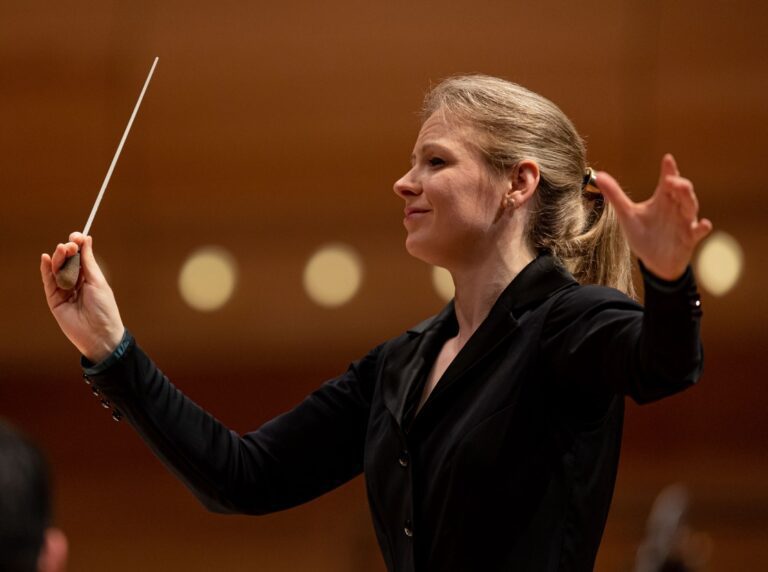
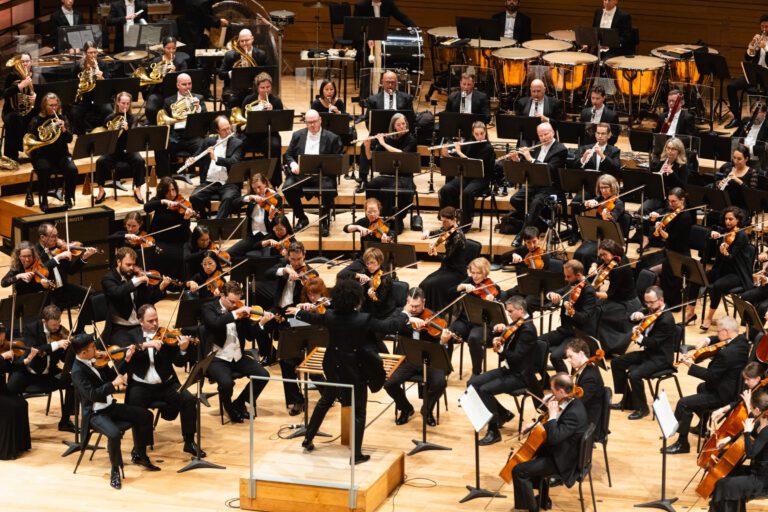
It was a very colorful evening at the Maison symphonique on Wednesday, September 27. On the program: Blurr is the Color of my True Love’s Eyes, the concerto for percussion and orchestra by Quebecer Nicole Lizée (performed for the first time in Quebec), and Gustav Holst’s famous Planets. On the podium was Gemma New, a young New Zealand-born conductor currently at the helm of the Hamilton Philharmonic. The latter showed great qualities, with precise, nervous conducting and a personal commitment that went beyond her little dance steps. Her delicate physique vibrated in tune with her solid mastery of discourse and nuances, well followed by the musicians.
Lizée’s Concerto, which you are invited to get to know better by reading the interview I conducted with the composer just a few days ago, is a magnificent, organized chaos. A work bursting with ribbed textures and colors, it derives as much from the soloist’s impressive assemblage (marimba, tubular bells, xylophone, drums, synthesizer, guitar! and a host of other weirdos) as from the orchestra itself. The basic matrix is a series of constantly changing, but perpetually repeated orchestral motifs, in the style of the American minimalist school (Glass, Reich), over which, or between which, the soloist struggles to bang and clap and color the sound space in every conceivable way (He hits a guitar and, elsewhere, Brian Manker’s cello, the orchestra’s first chair!). Perhaps the balance needs fine-tuning (in the rendering? In the writing?), as some of the soloist’s interventions were occasionally lost in the orchestral mass.
Despite the bursts of timbre and sonority coming from the orchestra, the Concerto’s overall framework is pulsating, even groovy, throughout (some 30 minutes). We nod pleasantly as if we were in a tank spitting out bouncy bass. Fortunately, Lizée’s is infinitely more subtle, if resolutely felt. Let’s talk about the soloist: Colin Currie. It was he himself who premiered the work last year and who revived it here. The pleasure of the performance lies as much in the sounds he creates with his vast instrumentation, but also in the sometimes frantic runs he has to make between the parts of the set-up (placed on either side of the conductor)! Respect.
This is certainly a milestone, I think, in the still occasional repertoire of great percussion concertos. Nicole Lizée and her Blurr is the Color of my True Love’s Eyes will go down in history. I loved it, and the audience gave a long round of applause for the artists who took to the stage.
The crowd was made up of a large number of young people, which was great to see. They were obviously from high school bands or music programs, as they were attentive and frankly impressed.
In the second half, we were treated to Holst’s lively Planets.Gemma New resumed with the same energy, launching Mars, the War Bearer.Perhaps a little too hastily, as the first few seconds seemed to veer towards loss of control.Fortunately, things settled down very quickly.The young conductor convinced the orchestra to shine, with many dynamic shifts and nuances of color and texture.I have very little to say that would bring substantial downsides to this exciting performance.
I was with my son, and we had a lot of fun. That’s how we like our symphony evenings! The concert will be repeated in its entirety on Sunday at 2.30pm.Bring your teen, especially if he or she loves film music!
Salle Bourgie | Opening Concert of the Dover Quartet: String Quartets Through the Ages
by Rédaction PAN M 360
The Dover Quartet is in Montreal, and offered on Wednesday evening a masterclass in the art of string quartet composition through the great musical eras, with Haydn, Florence Price and Shostakovich on the program. A journey through time that teaches us a great deal about the evolution of chamber music, with a formidably virtuoso ensemble.
The Dover Quartet enjoys an excellent international reputation, and it’s easy to see why. Haydn’s Quartet in G minor, Op. 74 No. 3, more commonly known as “The Cavalier” because of its galloping last movement, is performed with lightning precision. We applaud the virtuosity in the speed and the sensitivity in the largesse of the slower movements.
The concert was animated by contrasts. In the Haydn, it was the contrast between fast and slow movements. Florence Price’s String Quartet no. 1 in G major contrasted with the way it was composed. Whereas Haydn’s classical tradition built the quartet essentially around a virtuoso first violin and three other supporting instruments, Price gives a more balanced treatment to each instrument. The counterpoint is much more developed and complex, even overly so at times, but is marked out by interesting harmonic ideas. The beauty of Price’s music lies in its particular motifs, often inspired by music of popular origin. The second movement is absolutely fantastic in this respect, with a pizzicato passage reminiscent of a walking bass.
Shostakovich’s String Quartet No. 9 in E flat major once again changes the fundamental structure of this musical form. Superimposed motifs, sometimes in tune, often out of tune, create a palpable tension. The ensemble wonderfully reproduces the intensity and violence of the emotions that the composer transcribed onto the score. In a cloud of resin and horsehair, the Dover Quartet ended this work brimming with introspective, unsettling creativity.
With a masterful touch, the Dover Quartet demonstrated all the virtuosity, lyricism and intensity that the string quartet repertoire has to offer. The quality of the ensemble’s sonorities are works in themselves. We look forward to seeing them live again!
Olga Kudriakova and the Chapelle historique du Bon Pasteur : Sharing Great Music and Resilience
by Frédéric Cardin
Yesterday afternoon was back-to-school day at the Chapelle historique du Bon Pasteur. Oh, of course, not at the Chapelle historique. Repairs to the building following the fire on May 25 haven’t even begun yet. Instead, programming and administration for the 2023-2024 season (at least) will take refuge in the Canadian Centre for Architecture’s Salle Paul-Desmarais. And so it was yesterday that this season “in exile” was inaugurated with an exceptional recital by an artist also in exile, Ukrainian-born pianist Olga Kudriakova.
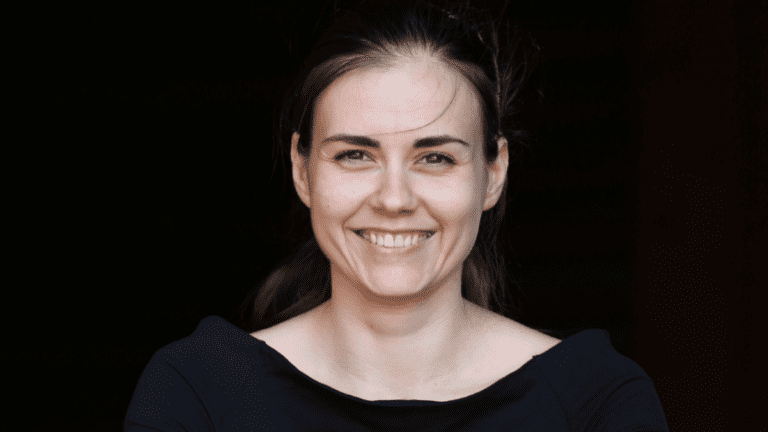
Kudriakova arrived in Montreal in August 2022 with her (Russian) husband and luggage, fleeing the war and repression in Ukraine. The young lady was already at the height of her career when the Russian invasion began: a teacher and concert performer, she already had several competition prizes up her sleeve and a reputation that was beginning to spread. She had to leave everything behind when she fled, but not for long. As soon as she arrived in Montreal, she was noticed quickly and decisively began to take her place in the cultural metropolis’ artistic ecosystem. So much so that, barely a year after settling into her new home, the lady is admired by an ever-growing number of music lovers and has been invited to give the inaugural recital at la Chapelle, a noble cultural institution if ever there was one here. She even graces the cover of the autumn season program.
What’s more, she is extremely dynamic: she has set up a foundation to support the musical education of young Ukrainians who had to interrupt their studies because of the war, and she has just helped to create a new recital space called Dissonances Studio, which will offer renewed classical concert experiences by subscription. In the style of friendly 19th-century salons and in an unconventional space, curious onlookers and music lovers will be able to bring their own food and drink and attend concerts in a relaxed and open atmosphere. The small size of the space means that contact between artists and audiences will be very intimate. The initiator of the project, Mathieu Baribeau, has been dreaming of this for over 20 years. So he invested his own money to put the place in order and buy a beautiful Bechstein D282 piano. In short, Olga Kudriakova knows how to surround herself and get noticed!
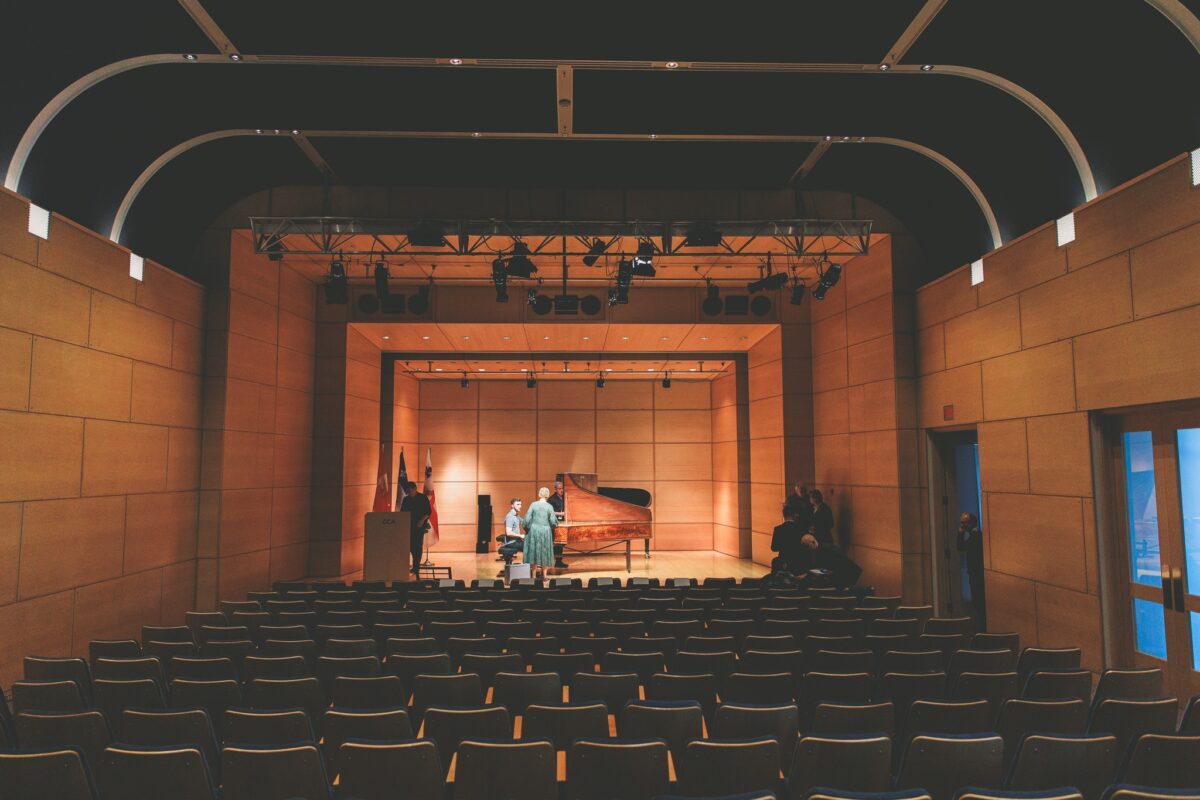
Two exiles, then, la Chapelle and Olga Kudriakova, whose destiny made them partners in resilience in a concert that was utterly memorable. As regulars of the Chapelle, we were initially delighted to enter the Canadian Centre for Architecture’s Paul-Desmarais hall, a room of beautiful classical rectangular configuration, with a beautifully wooded stage and a warm amber colour. The Fazioli piano, rescued from the fire, sits proudly and, from the very first notes, sounds magnificent (meticulously restored by the indispensable Oliver Esmonde-White).
And let’s talk about the notes! An all-Romantic program, a reservoir of delicate textures and powerful sonorities, was in the spotlight. Schubert’s four Impromptus D.899 got the ball rolling. My concert companion, a connoisseur of the work, was taken by surprise by the limpid, almost Baroque vision of the interpretation, stripped of too much roundness. I’m already under Kudriakova’s spell because I know that this clarity of discourse is a particularity of the young pianist and that she never forgets the emotional charge of the music. Then the miracle happens: a musical architecture drawn with a fine point is imbued, subtly, with a delicate blanket of emotions, simply because we understand perfectly where each phrase is heading and what it wants to express. There are very few (extremely rare) technical flaws in the newly Montreal-based artist’s fingering, so much so that it’s a delight to listen to all those superb pearled notes percolating through the auditorium’s sound space. Especially since the acoustics are so good. We applaud warmly.
This is followed by the Prelude from Wagner’s Tristan und Isolde, in a transcription by Ernest Schelling, an appetizer that serves as a textural buffer between the preceding Schubertian flutterings and Franz Liszt’s monumental, tempestuous Sonata in B minor, S.178. Once again, Kudriakova’s technical clarity and her remarkable mastery of the discourse of the works she plays transform a musical performance into a moment of communion, where even the most profane of spectators would manage to follow the Lisztian convolutions without getting lost! With her perfectly balanced skeleton, the pianist inserts a spiritual substance, sonic muscle and palpable emotional flesh that amaze the senses of the large audience (the hall was packed, even almost twice as big as the Chapelle).
I predict that the hall in question will quickly be adopted by the public. In fact, once the Chapelle has returned to its usual quarters, we can only dream of regular seasons of chamber music in due form, as a legacy of this new collaboration! Up until now, it has mainly been used for conferences. I think this use will have to be musically fleshed out for a sustainable future.
If I were morbidly cynical, I’d say that Olga Kudriakova’s presence in Montreal is perhaps the greatest gift Vladimir Putin and his stupid war could have given us. Otherwise, what possible reason could there have been for such a great and beautiful artist to move here? But now that this has happened, let’s give her immense talent our unstinting support and help her reach her full potential. Olga Kudriakova is one of the great new-generation pianists on the planet today. I dare to declare it. I put my reputation on the line. That’s just the way it is.
Les Violons du Roy at the Maison Symphonique: An Ode to the Seine and to France… in Italian
by Rédaction PAN M 360
Les Violons du Roy kicked off their Montreal season on Sunday afternoon at the Maison Symphonique. It was the third performance of this concert, after the first two at the Palais Montcalm in Quebec City, and a work of a very particular form.
La Senna festeggiante is a serenade, a form straddling the divide between (pagan) cantata and opera, which praises France through a sometimes subtle, sometimes less so, allegory built around three characters embodied by the three soloists: soprano Robin Johannsen, mezzo-soprano Ana Reinhold and bass Alex Rosen.
These soloists were fantastic, transporting the audience to the banks of the Seine with enchanting duets from the female voices, and powerful arias from Rosen, reminiscent at times of Italian bouffes. The orchestra was also of high quality. Behind the minimalist direction of conductor Jonathan Cohen, who was often busy on the harpsichord, the musicians’ hard work and rigour were evident. With a smaller orchestra than we are used to hearing at the Maison Symphonique, we may regret the rather low volume, which evokes the atmosphere of a salon of the period, but which is ill-suited to the hall. As for the score, it is typical of Vivaldi. The structure of his melodies is clearly recognizable, as are a few borrowings from his earlier compositions. The references to the French music of the period, notably in the French overture, are also noteworthy.
Les Violons’ forthcoming season augurs well. We hope to find them in a more intimate and suitable setting for their next concert, but we can only congratulate the ensemble on a superb performance!
Camille Léon – Pop Montreal 2023
by Rédaction PAN M 360
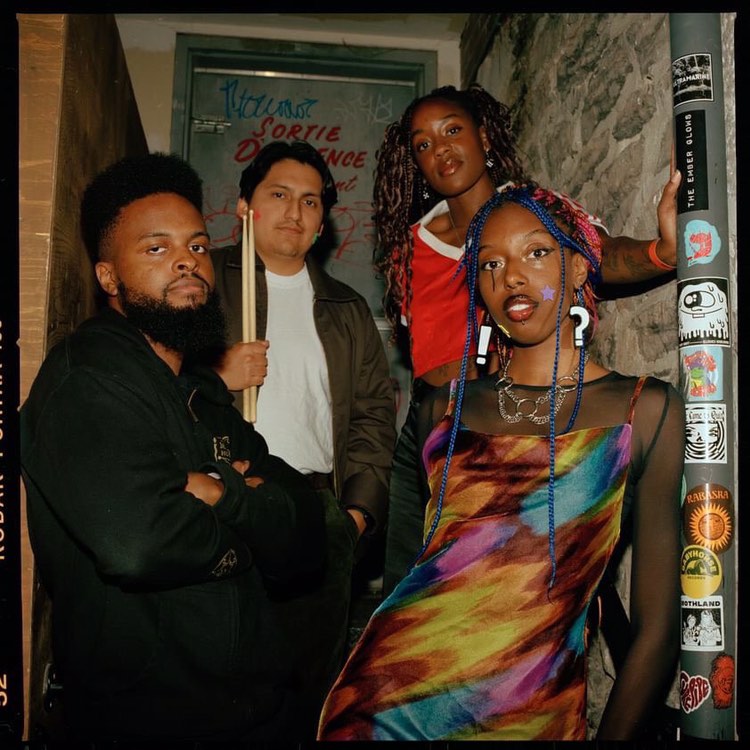
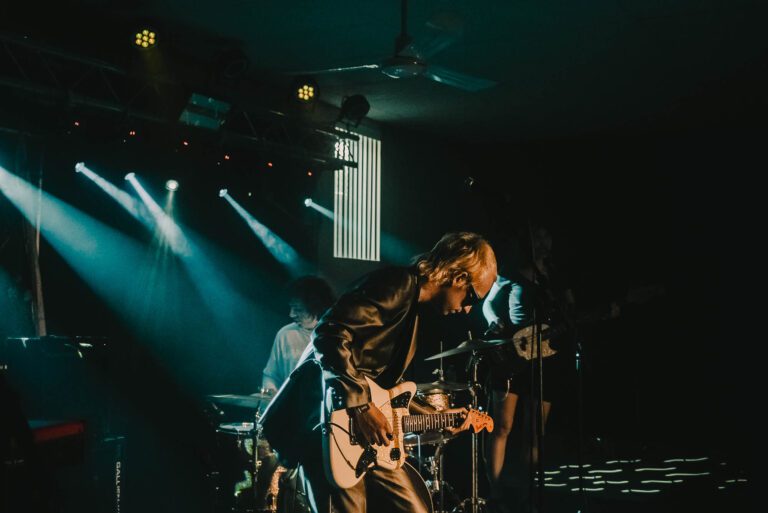
Camille Léon’s music transcends genres, traveling between new wave, rock, and grunge, all incorporating groove. She first introduces herself alone with her guitar and we are immediately captivated by her incredibly deep voice.
She is then joined by three musicians, including a keyboard player who also lends her voice, and whose contrast with that of Camille highlights her incredible vocal abilities. In addition to her own compositions, the singer performed a well-known cover of “Sweater Weather” by The Neighborhood, in which she took up the drums and made the cover more grungey. Yet it was the guitarist who stole the show with his soulful guitar solo.
Rare Morton Feldman to inaugurate the new Espace Kendergi in Montreal
by Frédéric Cardin
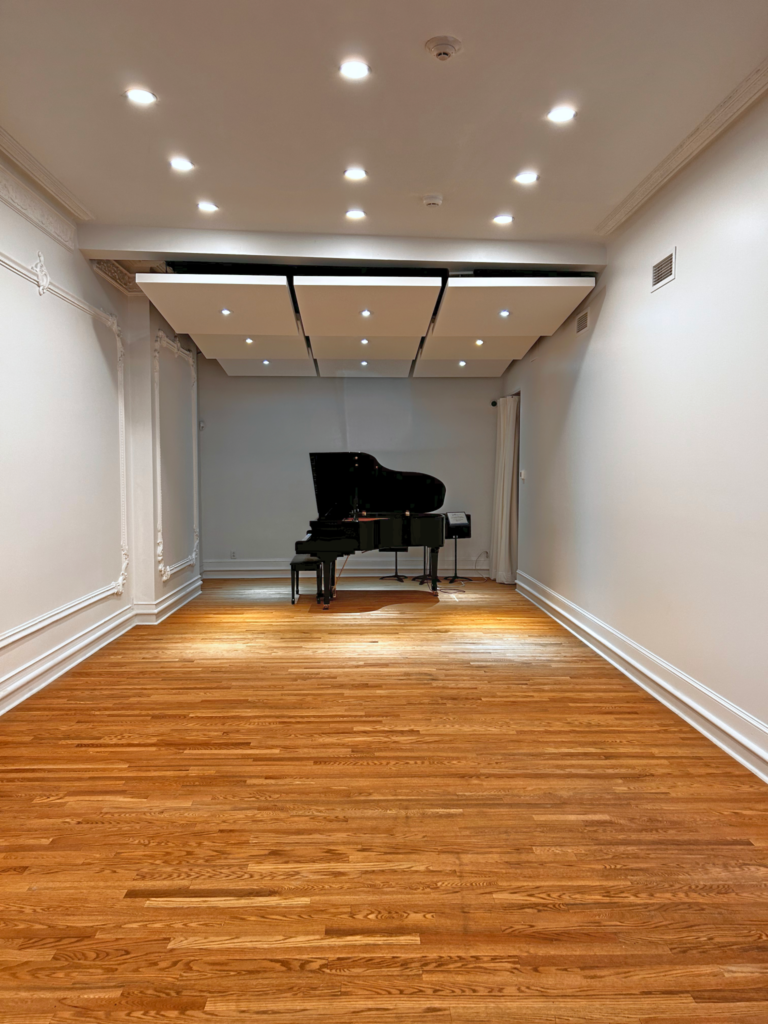
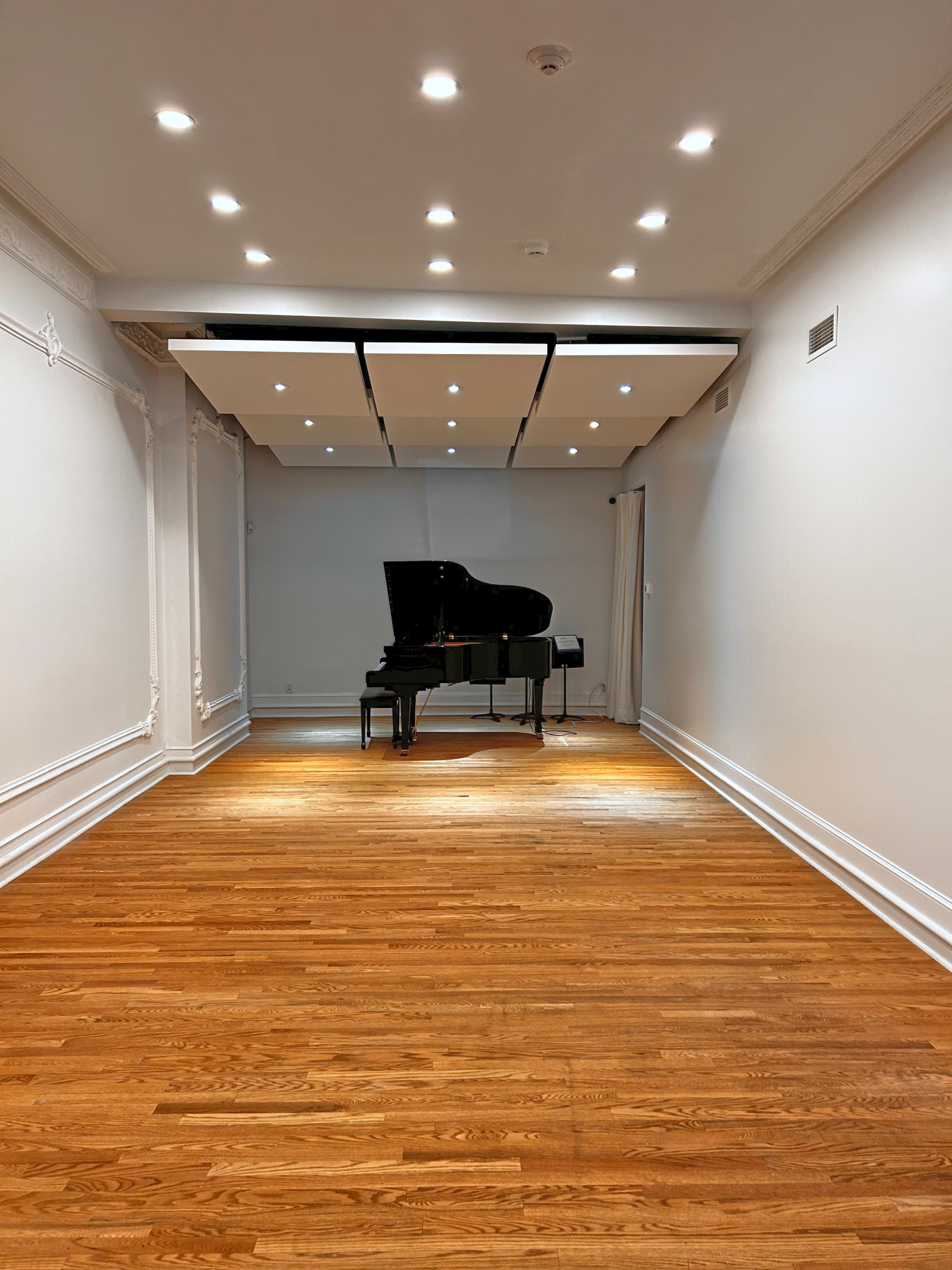
Without much fanfare, a new concert hall was inaugurated in Montreal last night. A concert hall, that’s a quick way of putting it. An intimate space reserved for music, but also for private events, launches or conferences would be a more appropriate description. The Espace Kendergi, a tribute to Maryvonne Kendergi, musicologist, broadcaster and central figure in Quebec musical life for more than half a century, is a rectangular room with a capacity of around 30 people seated (excluding the musicians) or around fifty standing (at a guess, which is in no way scientific, that said).
On arrival on this Tuesday evening, you get the feeling that the place is brand new. The smell of paint wafts through the air, the space in question is immaculately white, the otherwise bare walls are adorned with beautiful mouldings and the piano, a small Fandrich & Sons grand, sits at the far end.
Espace Kendergi, Canadian Music Center in Montreal – Piano : Fandrich & Sons
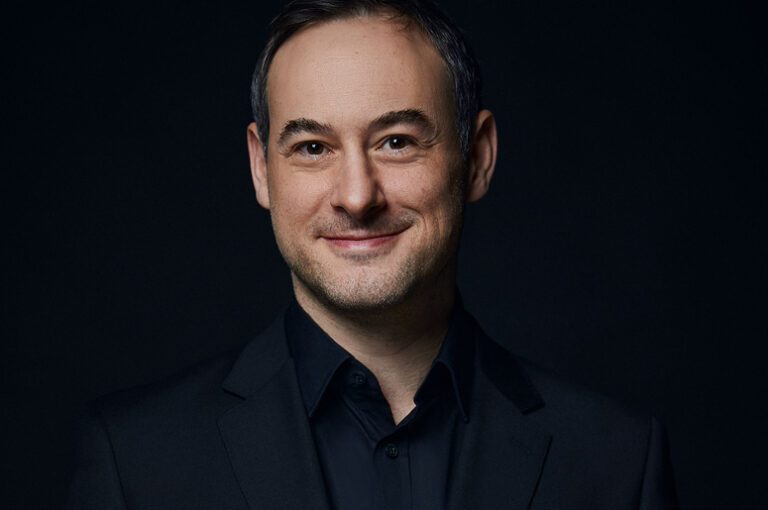
The reason we’re here tonight is to hear, on this very piano, a rarely-played live monument of contemporary music: Morton Feldman’s Triadic Memories, the “largest butterfly in captivity in the world”, according to its creator. The artist, Isak Goldschneider (whom I recently introduced to you in an interview published here), is another important figure in Montreal’s contemporary music scene, as much a musician as a composer and, above all, artistic director of Innovations en concert (whose 2023-2024 season was launched with this concert).
On the musical side, a moment of communion has been achieved thanks to this work, massive in length (around 90 minutes, non-stop!) but as musically delicate as a veil of transparent silk. Feldman’s music is atonal minimalism, simple and complex. The simplicity lies in the rhythmic and melodic formulas and motifs, while the complexity lies in the evolution and transformation of these cells through a slow but irremediable process of repetition and superimposition. With Feldman, you have to take the time to listen. An aural dip of 2-3 minutes is contraindicated. It is only at the end of 90 minutes (in the case of this piece) that the finality of the whole, which easily surpasses the sum of its multiple parts, will become apparent to us, and we will then be able to understand the meaning of the experience. Morton Feldman is like a Rothko painting, but if you can imbibe the spirituality proposed by the American painter in a single holistic glance, it’s impossible to take the full measure of a work by Feldman without, as I’ve just said, taking the time. And even taking the time to take the time.
Feldman is a minimalist, but in a completely different league to Glass or Reich. Unlike his two compatriots, Feldman rejects the marked pulse. It exists, but it is insinuated, suggested. He also rejects the ecstatic, feverish haste of the other two (and their disciples). The musical experience Feldman provides probably has more to do with the ‘mystical’ minimalism of Arvo Pärt or John Tavener. But furtively, because he maintains the link with atonalism, unlike the two Europeans. In the end, Feldman is unique and difficult to imitate. Technically, it would probably be easy, but to get the kind of transcendent immersion that his music provides, I think you’d have to work hard. Where imitators would end up being unbearable and seem endless, the 90 minutes of Triadic Memories seemed much less so. That’s because Feldman manages to turn this long aural march (like the others in his catalogue) into an object that envelops the entire listening experience in an aura of emotional and spiritual embodiment. A sense of totality that encompasses the music itself, the sound, its resonance in physical space and the human presence in relation to that precise ‘moment-space’. Morton Feldman’s music is one of the most humanistic to be heard in the 21st century.
Isak Goldschneider seemed nervous before sitting down at the piano. It’s understandable. If the technical demands are nothing like those of a virtuoso concerto, the emotional, intellectual and spiritual plunge in this kind of music must be total, sincere and deeply felt. He seemed to be exhausted after the last note, and with good reason. He had just delivered a masterly exercise in communication, imbued with infinite subtlety, where the intimacy demanded by the work must be of a rare force of penetration towards the listener. This is music that constantly balances on a tenuous thread, made up of delicate “scratches of silence”, as Renaud Machart put it in Le Monde, but which, once successfully traversed, leaves an indelible mark on the memory.
The audience warmly expressed its approval. It was well deserved.
The hall’s acoustics are very good, but it has to bare with the Montreal street, here Crescent, the new home of the Canadian Music Centre (CMC) in Quebec. We’re used to this urban dynamic, thanks to Bourgie Hall (just a few steps away!), where it’s not impossible to hear the occasional police siren or the din of a dump truck during a Schubert sonata or a recital of French melodies. The difference between this concert hall and the Espace Kendergi is that there are clubs and discotheques nearby the latter. So, for the first thirty minutes or so of the concert, a vague tapestry of “beats pumps”, coming from who knows which neighbour, could be made out in the many musical gaps of silence dear to Feldman. The occasional siren is to be expected, but the continuous hubbub of a dancefloor can become irritating. This was the case for me. Fortunately, it stopped at some point. But it was a Tuesday night! What it will be like on Thursday, Friday or Saturday, we can only guess.
Perhaps we should consider the programming in this light. A recital of Mozart arias can hide the background noise. But as long as the silences, or quasi-silences, of much more delicate pieces are more present, there will be a risk. We’ll have to wait and see what happens, as Claire Marchand, the CMC’s General and Artistic Director, has announced that a full programme will be unveiled at a later date.
That said, let’s not deny ourselves the pleasure of seeing a new player in the network of venues for the dissemination of chamber music, and a contemporary Canadian one at that (Feldman is American, but a few noble exceptions like that are quite tolerable)! For that reason alone, I think we can overlook the few drawbacks caused by the surrounding urban environment.
And above all, we can guess that Maryvonne would have been happy and honoured to be associated with it.
OSM | The Rite of Spring in all its power and magnificence
by Rédaction PAN M 360
photo by Gabriel Fournier
Tuesday evening’s opening of the Orchestre symphonique de Montréal’s 2023-2024 season at the Maison symphonique, perhaps like the season as a whole, held some very interesting surprises in store for us. Of course, the monumental Rite of Spring by Igor Stravinsky was announced with great fanfare, but that didn’t stop the audience from discovering another form of musical ritual during the concert.
Leos Janácek’s Glagolitic Mass was a nice surprise, a surprising choice as the first work to be performed this season, but one that deserves to be congratulated. The blend of liturgical tradition and late Romanticism has shaped a work that can only be appreciated for its power and spirituality. A remarkable performance, though the masterly volume of the OSM Chorus, of incredible quality as always, was a little stifling to the soloists at times.
After a well-deserved intermission for the musicians, it was the turn of the headliner to take the stage, or rather the lecterns. The Rite of Spring is a difficult work, which gave the musicians a hard time for over a month when it was first performed in 1913. Despite this, the OSM shone repeatedly throughout the work.The timbres were perfect, the sonorities clear and sustained, and the bassoons, flutes and brass section are to be commended for their excellent performance throughout.The rhythm section was more than solid. It carried the piece, for which rhythm is so important.
The choice of tempi is particularly noteworthy in the first half of The Rite of Spring. The heaviness of the “Rondes printanières” was a little square, but above all, the ease of the speed of the lively, fast parts. As has been their mantra for the past two years, the OSM and Rafael Payare excel in intensity. In more ways than one, their performance of the second half of Stravinsky’s work demonstrates this to perfection. The mastery of the growing tension leading to sacrifice and the power of the orchestra would warm the composer’s heart. A perfect finale to a superb opening concert and, we feel, a superb season to come!
Kaytraminé at Piknic: vitaminized!
by Jacob Langlois-Pelletier
Last April, Montreal producer & DJ Kaytranada and American rapper Aminé surprised many by announcing the birth of their duo KAYTRAMINÉ. In no time, they unveiled 4EVA, a first dance & hip-hop track in collaboration with Pharrell Williams, and announced the imminent release of an album.
In mid-May, the two men released KAYTRAMINÉ, an eleven-track effort lasting (only!) 34 minutes. Having been touted as THE project of the summer prior to its release, expectations were (very) high, which is one of the reasons why this opus left many wanting more. KAYTRAMINÉ is far from being a bad project, don’t get me wrong. However, the mood of the various tracks is not necessarily what you’d expect after listening to 4EVA. Despite this, the album features good verses from the rapper, interesting guests including Freddie Gibbs and Big Sean, and excellent production that serves the various speakers wonderfully. The two artists’ first collaborative effort will certainly not go down in history, but remains an interesting and different offer from what’s currently being done in hip-hop.
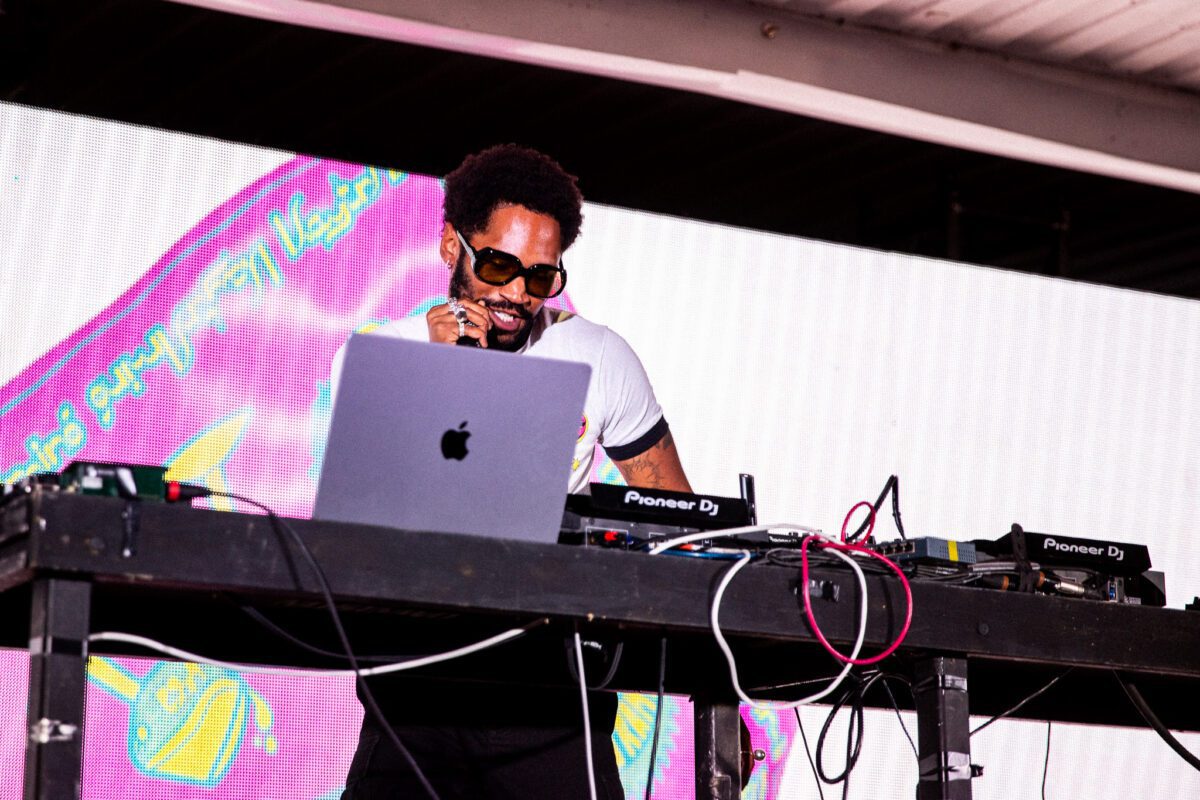
So, here I am at Parc Jean-Drapeau on a Thursday evening to see KAYTRAMINÉ live on stage. Yesterday, the two artists kicked off their short five-concert tour. As a fan of the duo’s solo material, this was a must-see for me, especially as Montreal was their only Canadian date. Kaytranada and Aminé put on an excellent 3-in-1 concert lasting around 75 minutes, and delighted the large crowd gathered near the FIZZ stage.
KAYTRAMINÉ got off to a strong start with a few tracks from their album, beginning with the intro Who He Iz followed by UGH UGH. On stage, Kaytranada took a back seat behind her console, while Aminé took center stage. From the outset, the two artists shine with their charisma and chemistry. It has to be said that they’ve known each other for several years; they actually collaborated on the remix of the song “Not at All” in 2015 (which they actually played during the concert) and the song Egyptian Luvr in 2018. After around twenty minutes, the Montreal DJ left the stage and Aminé strung together several of his most popular tracks, from “REEL IT IN” from “ONEPOINTFIVE” to “Caroline” from his debut album Good For You. We tend to forget it, but the 29-year-old rapper has had several good projects behind the tie since 2017. No doubt, it was during his solo moment that the crowd was most engaged.
You’ve probably already guessed it, but after a fifteen-minute solo performance by Aminé, it was Kaytranada’s turn to shine alone on stage. The Montrealer transformed Parc Jean-Drapeau into a dance floor with an excellent set of his own songs. Behind his table, the thirty-something was all smiles and dancing, and seemed to be having a great time. Afterwards, the two men joined forces on stage to close with “4EVA”, their best duet track (not once, but twice during the encore).
KAYTRAMINÉ put on quite a show on this sold-out evening of Piknic Électronik. The energy of both artists was contagious, and the construction of the concert was downright interesting. On stage, I found KAYTRAMINÉ’s songs more interesting and summery, especially with the crowd singing along. In the end, perhaps the two stars were right: by “summer album”, they meant that this project was designed for summer festivals.
Photos by Alexanne Brisson
Ron Carter and Université de Montréal Alumni Jazz Orchestra: Academic Success
by Varun Swarup
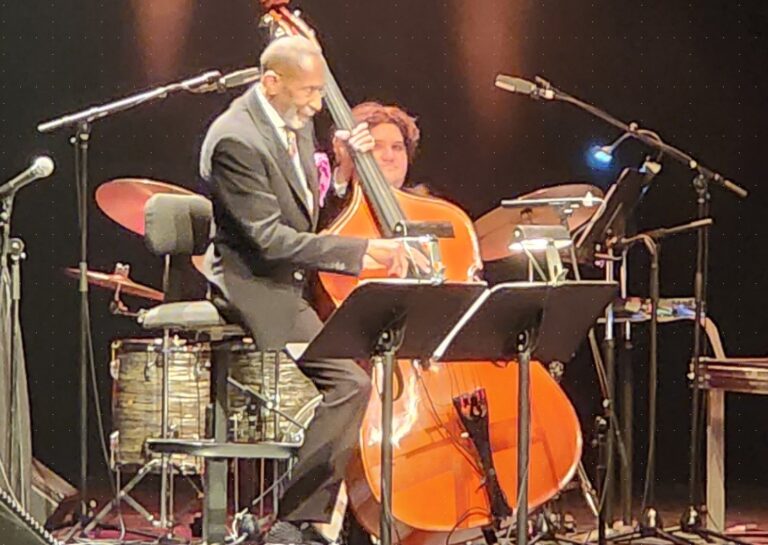
This concert by the Orchestre jazz des diplômés-es de l’Université de Montréal left its academic mark on the local music scene, with eminent double bassist Ron Carter as the first inaugural guest. The atmosphere at Théâtre Maisonneuve was warm and inviting, with the audience mainly made up of friends, big band family members and music enthusiasts attracted by the concept: the best graduates would perform with the great Ron Carter.
However… Although the set list consisted mainly of Mr. Carter’s original works, arranged by Rich de Rosa and very well played by the orchestra, it was a rather conservative affair, at the very least academic. Very little out of step, in fact, with what one might have heard from a very good modern jazz big band in the ’50s and early ’60s.
Highlights included the lyrical “Little Waltz” and “Ah, Rio”, a bossa nova-inspired composition that was a bit of a game-changer. Although the performance was technically impressive, it felt a little dated, especially considering Ron Carter’s influential role in jazz history – mostly as a performer, very little as a composer. Carter was a leading sideman and player in many movements that pushed the boundaries of jazz and even hip-hop, so it would have been interesting to see a selection of more contemporary and innovative compositions.
Another drawback of the evening was the sound balance. The bass seemed to dominate the mix, sometimes overshadowing the other instruments. While it was undeniably pleasing to hear Mr. Carter’s masterful bass playing, the instrument’s unnaturally high position in the mix prevented full appreciation of the ensemble’s nuances.
Nevertheless, it is essential to recognize the exceptional talent on display last night. Whatever one thinks of it, this concert was an excellent showcase for our own musical masters here in Montreal, highlighting their undeniable skills and dedication to their art.
In fact, it would be pointless and unfair to single out one musician in particular, since all had the opportunity to shine throughout the evening, including Mr. Ron Di Lauro, illustrious U de M professor recently retired after 25 years of loyal service at the helm of this university big band and more.
Before bowing out, he brought out his trumpet for a happy “Little Waltz”.
FME DAY 4: SAMWOY, Knitting, Comment Debord, LUMIÈRE, Karma Glider, Hippie Hourrah, Saint Martyrs, TUKAN
by Rédaction PAN M 360
Two PAN M 360 writers are back from the 21st edition of Rouyn-Noranda’s Festival Musique Emergente (FME), a musical takeover of the city to see some of the best and brightest emerging bands from Quebec, Ontario and the international scene indulge in alternative rock, shoegaze, new wave, dream pop, synthpop, art rock, psychedelia and more. Without further ado, here are some of the bands we wanted to highlight on the last day of the FME.
A Swing Night with Saints-Martyrs
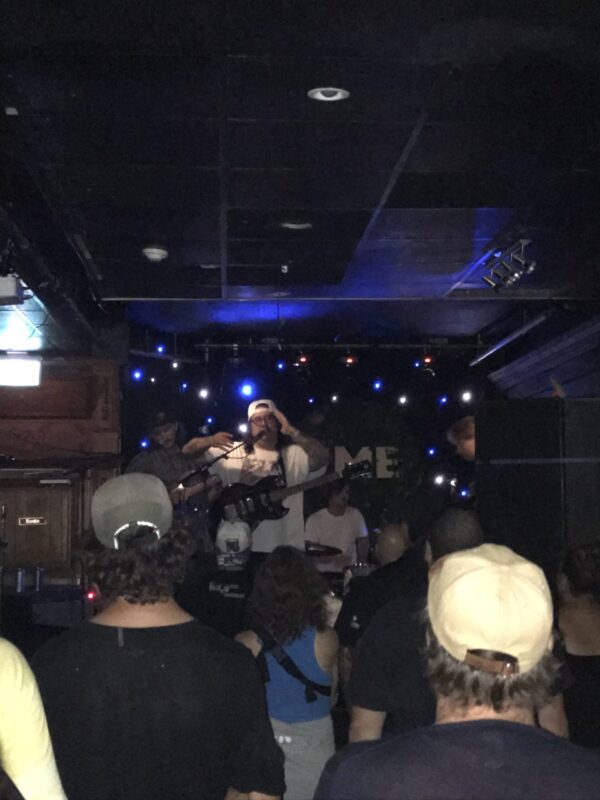
I learned a lot at my first EMF. And one of the most important lessons (which I learned early on) is that you never know what to expect from the next artist. This was the case when we packed into the Petit Théâtre one last time for the last concert of the festival: Saints Martyrs, a noisy art-rock band from Quebec.
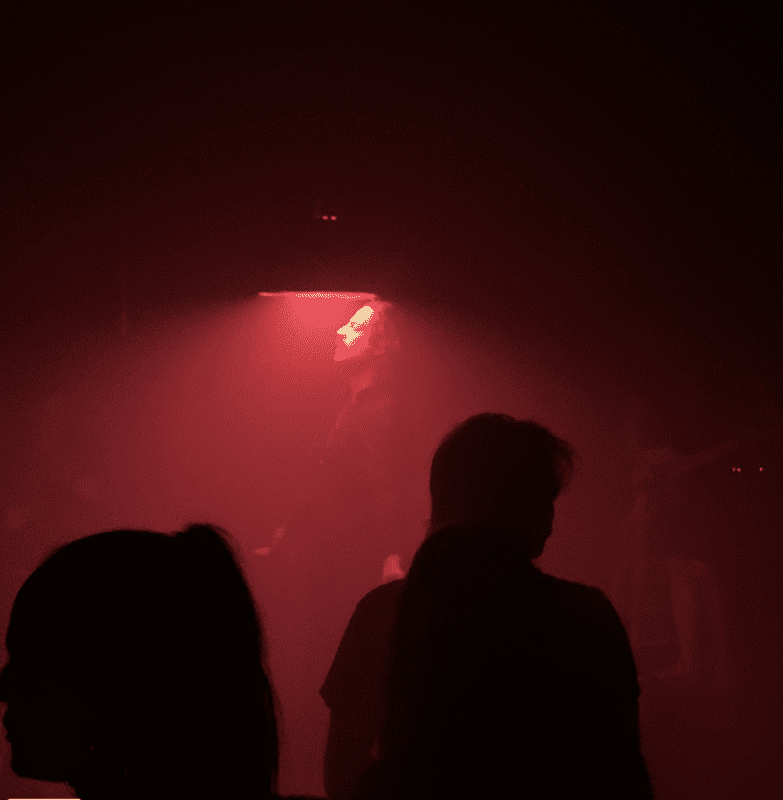
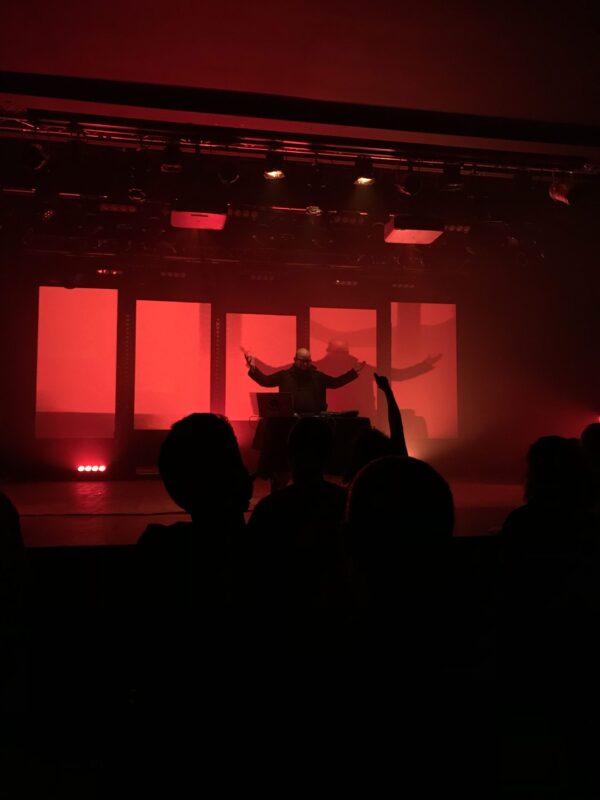
The set began with what was shaping up to be ten minutes of gritty preamble, with tufted, rhythm-less drums, gritty, meandering guitar, and a few hoarse, atmospheric cries from the singer, Frère Foutre – who was dressed like a Rasputin-vampire, with a long black coat and excessively high platform boots. Suddenly, a cheap ceiling lamp lit up above Foutre, the red light bathing his smoky face as he uttered his lyrics with all his might. Guitarist Souffrance (wearing a gas mask) jumped off the stage more than once to try to stir up the shit on the floor, at one point almost tackling a woman standing near us.
While I enjoyed Saints Martyrs overall, I have to admit to scratching my head at the end, when Foutre picked up half the drum kit, dramatically collapsed on the floor below, then began laboriously sliding on his belly for some twenty meters to the edge of the room. I had to step over him to make my way to the exit – I’m still not sure if that was rude or really what he was hoping for. – Lyle Hendriks
Knitting and existential vibration
Born from the ashes of Montreal’s pandemic, Knitting is a bedroom pop meets indie rock band that played a relaxed concert to relieve our daily hangovers on a Sunday afternoon. With energetic, plucked guitars, poppy-emo vocals, and a rhythm section in perfect sync, Knitting exudes the chemistry of a band that’s ten years old, yet not that old – for a band. A bit like Blur and The Postal Service, Knitting’s rock was existential with a dose of the melancholic, a state felt (and hard to avoid) as we left the room. – Stephan Boissonneault
SAMWOY, post-punk ramble
I only attended the end of SAMWOY’s concert at Cabaret de la Dernière Chance, but I vividly remember witnessing a punk rock rendition of the track “Sbwriel”, as SAMWOY wielded a feedback mic and cranked guitar. With music as theatrical as SAMWOY’s Awkward Party album, I was expecting a little more pomp in the set, but was satisfied by more straightforward, but somewhat experimental, punk. SAMWOY’s little stories about the context of the songs were also a nice touch, sometimes drifting into what sounded like post-punk ramblings, but always entertaining.
– Stephan Boissonneault
Comment Debord – The Funk Shall Be Within You
Funky, fresh and enjoying every moment on stage, Montreal rock band Comment Debord were the perfect start to our last day at the FME in Rouyn-Noranda. The band’s relaxed, laid-back approach makes their groovy rock, so carefully honed, seem almost effortless. This is particularly evident when you observe the masterful synergy between bassist Étienne Dextraze-Monast and drummer Olivier Cousineau, the two forming an electric duo that propelled the entire set without a single misstep being apparent.
We were also treated to some excellent vocal performances from the band, with beautifully constructed harmonies from each member. They hit the nail on the head at just the right moment, building up to an essential crescendo before melting back into a smooth, meaty groove. All the while, the five members present were beaming, totally absorbed in every little move on the program. There’s a sense of playfulness and joy in Comment Debord’s work, and these guys made sure we had a great time throughout the concert. – Lyle Hendriks
LUMIÈRE brings Glam at FME
Combining the hair rock of the ’80s, the classic rock of the ’70s and the sexy, androgynous aesthetic that will undoubtedly dominate the tastes of our near future, LUMIÈRE put on a weird and wonderful show on the picturesque shores of Rouyn Noranda’s Lac Osisko on Sunday evening. Led by singer Étienne Côté (Canailles and Bon Enfant), the band passionately drew us into a tight, explosive setlist of glittering glam rock that was hard to resist. Côté, in particular, brings an irresistible charm to the show, making the stage her own, screaming and bawling to her heart’s content.
At one point, Côté ran across the stage and left, while his phenomenal backup singers took over, singing, banging their heads and whipping the crowd into a frenzy. Meanwhile, Côté slipped into a more comfortable outfit, a tight leotard with panties and an open chest. With so much theatricality and confidence, it was difficult if not impossible to look away from LUMIÈRE. – Lyle Hendriks
Karma Glider soaks up the sun in the park
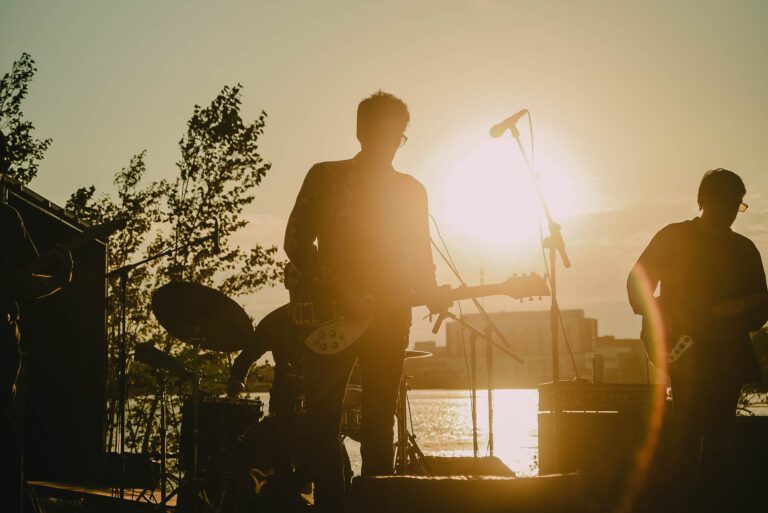
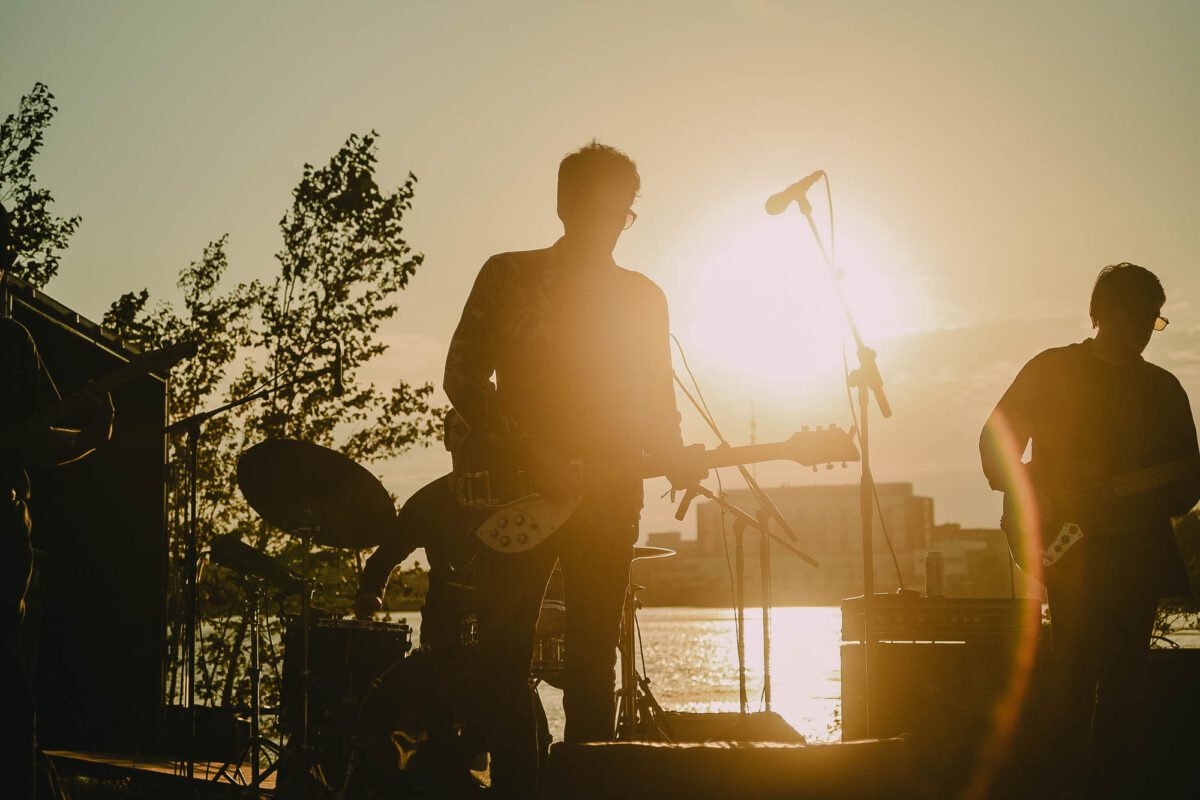
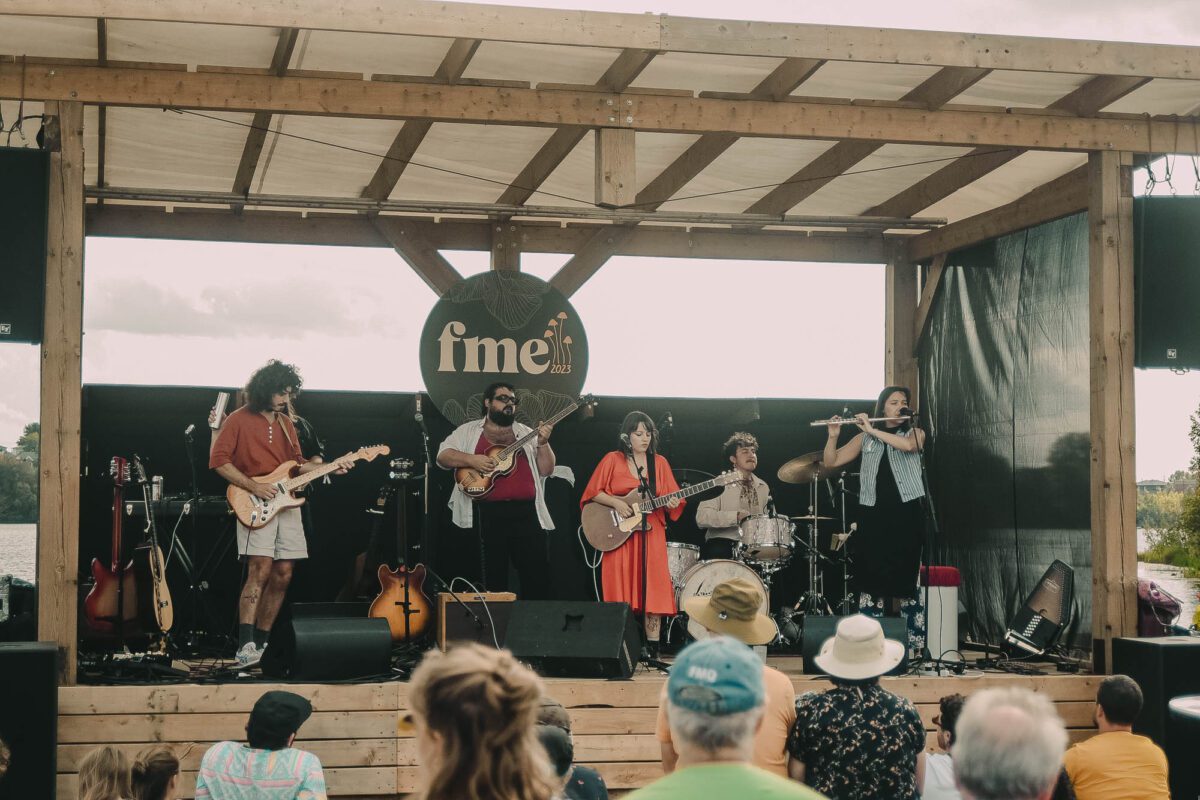
After seeing Mothland’s JP shine as stand-in bassist for La Sécurité, I suspected we’d be seeing another of his projects at the EMF. That’s what happened with Karma Glider, the shoegaze pop rock quartet led by Susil Sharma (Heat), on a beautiful Sunday evening. The backdrop was a sunset over Lake Osisko, as we all sat in an overgrown amphitheatre listening to this deep, personal, alternative rock.
It really was the perfect place to listen in real time to tracks like” In Deep Ocean” , “Burning Up” and the Lou Reed-esque “Cherry” , from Karma Glider’s debut album, Future Fiction. The EMF should make more use of this amphitheatre, as we were all expecting another band to emerge after Karma Glider to take more advantage of nature. – Stephan Boissonneault
Hippie Hourrah Paints an Individual Expo at FME
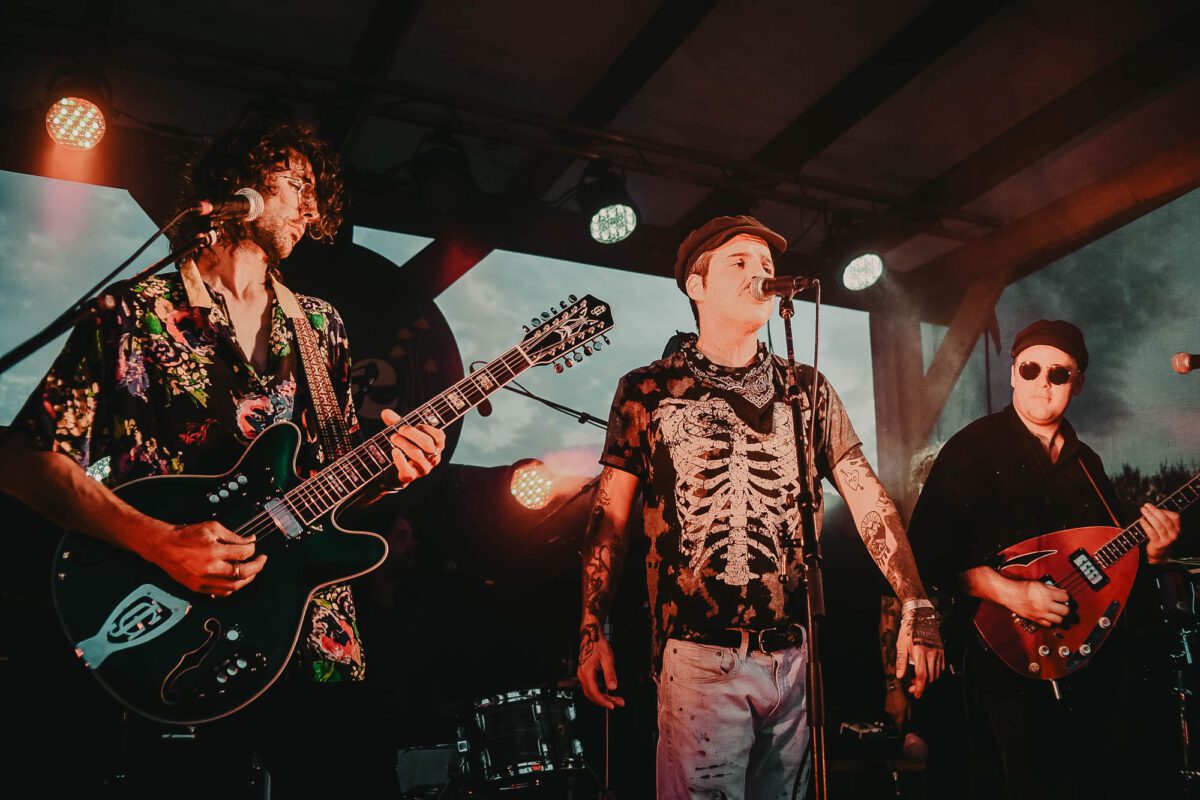
These guys know how to make groovy psychedelic rock that—while it does drone on—bounces between genre, never overstaying its welcome. The fantastic musicianship from Hippie Hourrah at the La Guinguette chez Edmund venue on the water was a welcomed addition right after Karma Glider. The crowd was loving it, especially the woman who crowd-surfed three times.
I only learned later on that she had a circus troupe following her and had rehearsed the crowd surfing a few times, which kind of took away the novelty of it all. Still, Hippie Hourrah is clearly inspiring, especially for the youth of Rouyn-Noranda who were playing air guitar by the flowers. Who knows, perhaps they will one day play FME and be able to thank Hippie Hourrah. – Stephan Boissonneault
Tukan Goes 3 for 3
Brussels-based analog techno/jazz/post-rock band Tukan was THE show to see at FME—and that’s good news, because you had three chances to do it. First performing on Friday in front of the hideously industrial (but undeniably cool-looking) Fonderie Horne, then on Saturday in the sweaty basement of Petit Theatre, and once more on Sunday at the outdoor L’Espace Lounge, Tukan was a force of nature at FME 2023, and it was all by popular demand.
Having seen all three shows in three days, I’ve quickly transformed from totally Tukan-uninitiated to devout follower—favourite songs and all. And what struck me the most about watching these four young artists perform night after night was the sheer excitement they have for their music and the way it compelled us to move. This is especially clear when watching synth player, Samuel Marie, who was constantly teetering on the brink of total euphoria, beaming at the crowd and his bandmates as he drove each song through their ebbing, flowing stages. There’s a passion, a love, a downright need to create this exact type of art between the four members of Tukan, and it comes with an electric urgency that fires through the air like lightning as we look on in awe. – Lyle Hendriks
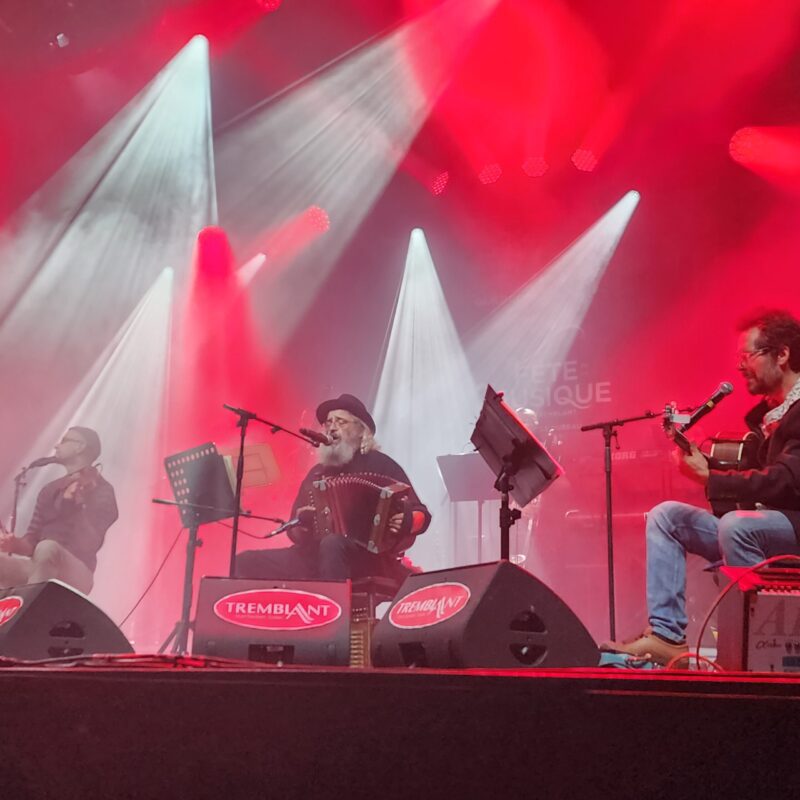
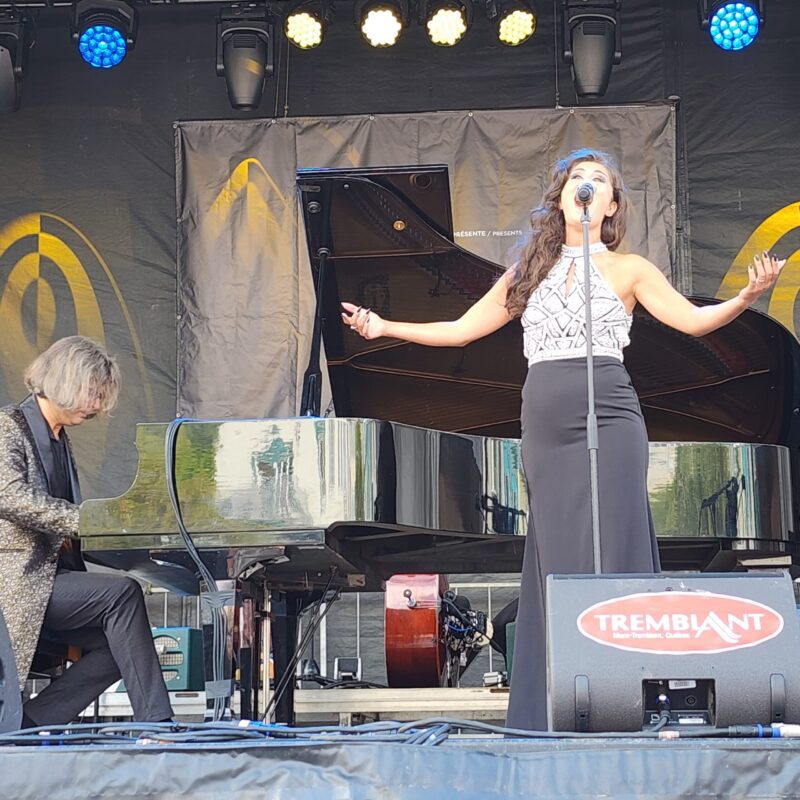
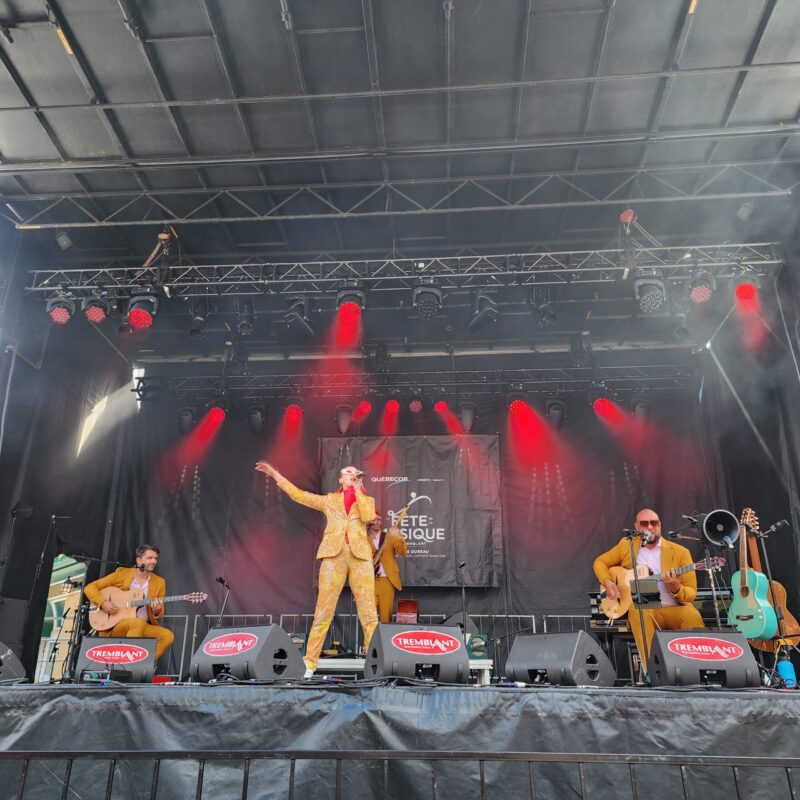
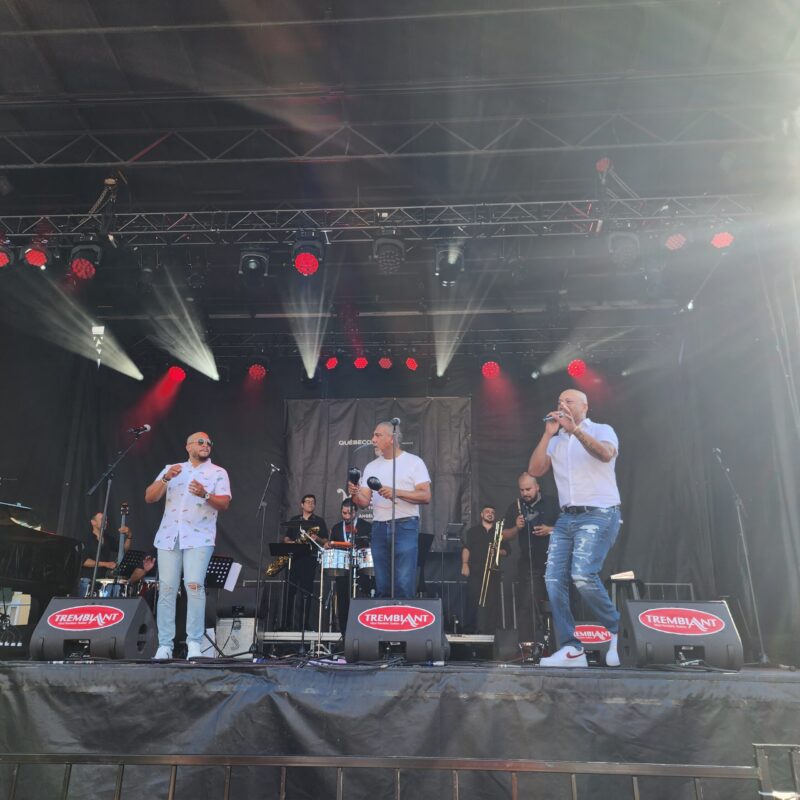
Fête de la Musique de Tremblant | All our reviews
by Alain Brunet
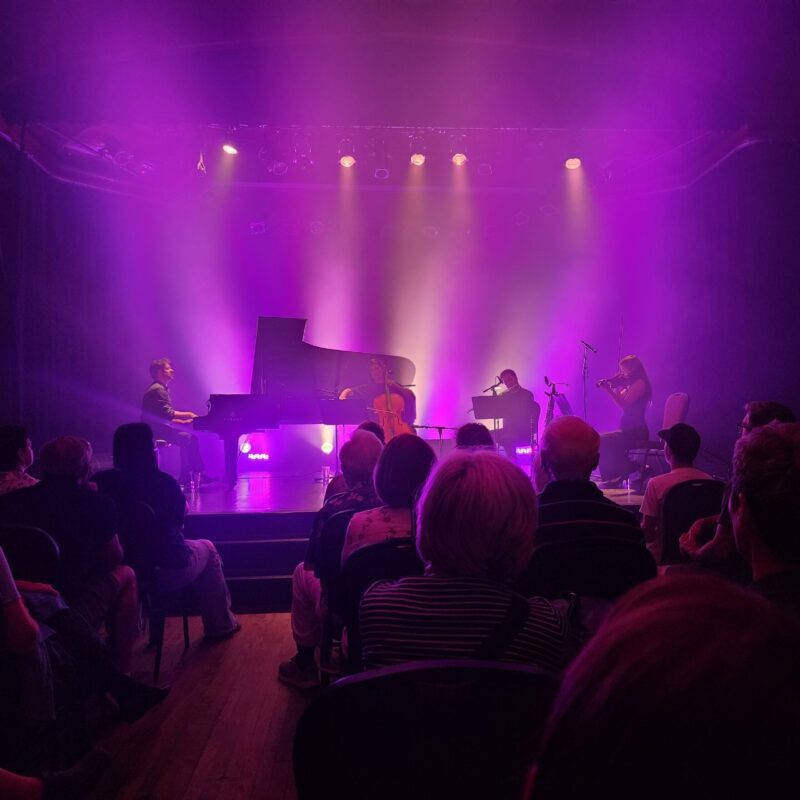
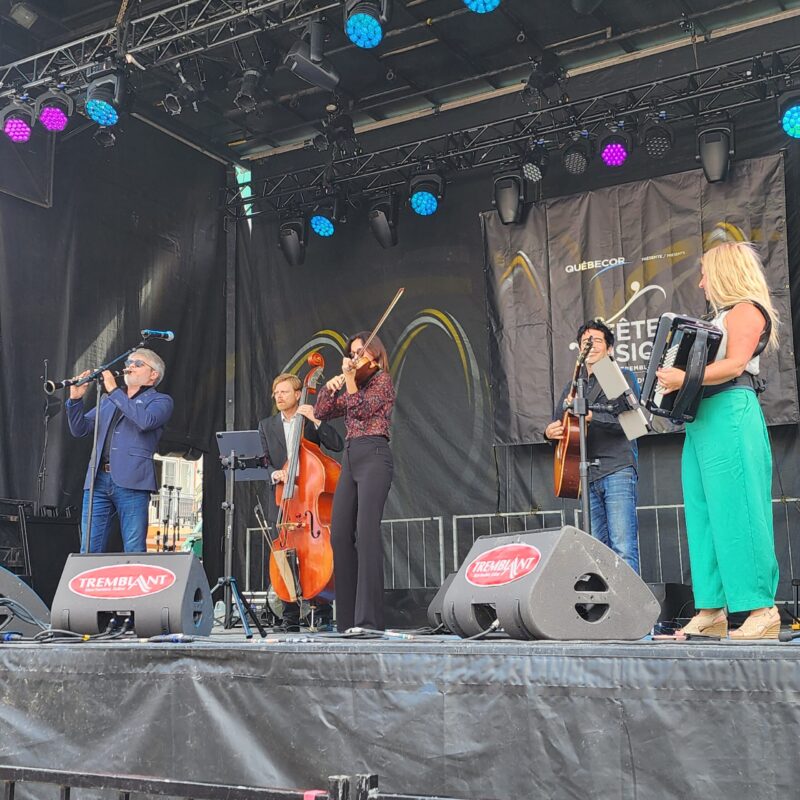
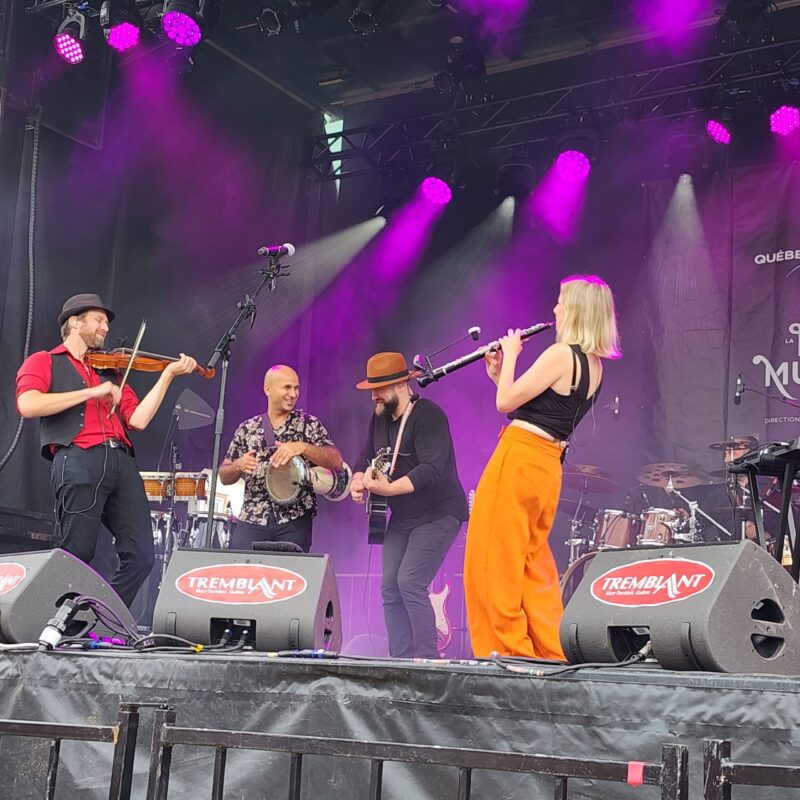
Throughout the Labor Day weekend, Mont-Tremblant’s pedestrian village was filled to capacity, and the near-perfect weather certainly contributed to the winning conditions for its main event, the Fête de la Musique, presented for the 23rd time since the first, 28 years earlier. Angèle Dubeau’s artistic direction stayed the course: consensus-based choices of quality classical and pop music, and a unifying eclecticism, from Western pop to Balkan or Afro-Latin accents. Here are some of the highlights, compiled by PAN M 360.
Jean-Michel Blais, neoclassicism and deep humanity
In this charming little church in Mont-Tremblant, a once sacred place transformed into a concert hall without losing its original aroma, Jean-Michel Blais presented a reduced version of his music for chamber orchestra on Friday. Aubades is certainly appreciated by neoclassical audiences.
Seduced by strictly acoustic composition for an ensemble requiring polyphonic rigor and thus an acceptable mastery of classical language, the musician puts aside his production skills and concentrates on his piano playing, instrumental composition and his more recently acquired skills as an arranger. We won’t repeat here the debate on neoclassicism’s triumph among twentysomethings, thirtysomethings and beyond… This approach has obvious limits but, whatever one thinks of it, remains a zone of elevation for music-lovers fed up with pop and its Indian variations.
Super-friendly, intelligent and unpretentious despite his remarkable success, Jean-Michel Blais doesn’t reinvent the wheel, but nevertheless puts his melodic skills to the service of chamber music. Melodies and tonal harmonies, tight counterpoint, four-part instrumentation: piano, cello, violin, woodwinds. The scores are not overly complex, and the music may seem predictable to anyone familiar with Romantic and modern music (late 19th/early 20th century), or with a number of French film scores, but it nevertheless demands rigorous execution from the performers involved. All in all, a very pleasant moment with a human being who fully deserves the success he is currently enjoying.
Kleztory… anything but kleztheoretical
The group is made up of Elvira Misbakhova (violin), Airat Ichmouratov (clarinet, bass clarinet, duclar), Mark Peetsma (double bass), Raphaël D’Amours (guitar), Mélanie Bergeron (accordion). Elvira, also a violinist with I Musici de Montréal and violist with the Orchestre Métropolitain, and Airat, a post-romantic composer increasingly played by our orchestras, founded the group shortly after arriving in Quebec in the 90s. Kleztory remains an important project for these classical musicians, as they seek out specialized performers, particularly in Balkan music, more specifically that which dominated before the forced migrations and exactions caused by Nazism in the ’30s. Over the years, Kleztory has managed to get closer to the spirit of klezmer and other compatible music such as jazz. Elvira, the virtuoso of this group, is more supple and sensual than ever, with a host of excellent musicians. In addition to klezmer, the Jewish music of Kleztory and its modal explorations with quarter tones, you’ll be able to experience it once again, on September 21 at Salle Bourgie, with a bonus pianist, David Ryshpan. Anything but… kleztheoretical!
Charles Richard-Hamelin, cultural mediation at Tremblant
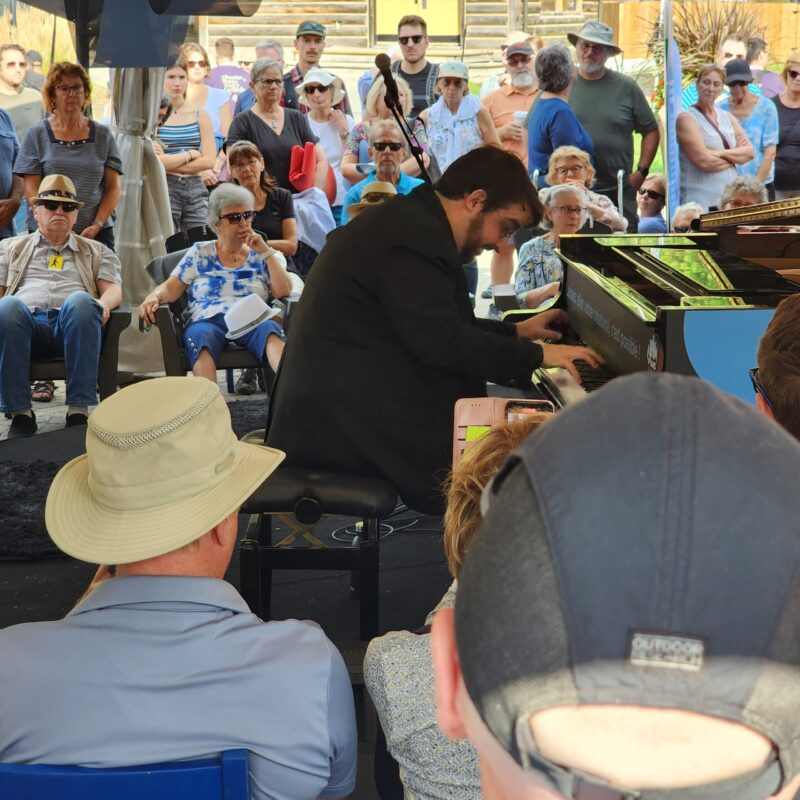
Given his already immense stature and stature, pianist Charles Richard-Hamelin might well not lend himself to this type of cultural mediation, refusing to take part in the crowds at a small festival. But no! The virtuoso, certainly one of our country’s most accomplished pianists, at least in the Canadian top 5, remains humble and accessible. Set up in a small tent, surrounded by curious music lovers who had come to meet him, the pianist lent himself to the game four times, no less. One of these hour-long performances consisted of providing details of his famous second-place finish at the Chopin Competition, arguably the most prestigious piano competition on Earth, 2nd place won in 2016 among 450 excellent performers, “a bit like the piano Olympics”. He played a little-played piece by Chopin, the Allegro de concert, Op. 46, during which you could hear the murmurs of the crowd, dogs barking and babies whimpering in strollers. We were also treated to 6 waltzes by Chopin, most of them very well known. Between pieces, Richard-Hamelin gave us many details of his preparation for the competition he won in 2015.At the end of the program, his fans will ask him to give details of his preparation, parental authority and the need for daily rehearsals throughout his childhood and beyond. All in all, these generous encounters help to cement the relationship between great performers and their audiences.
Ayrad, Maghreb music with rock attitude
A multicultural, multi-genre group with a predominantly North African flavour, Ayrad is led by Moroccan-born guitarist and composer Hamza Abouabdelmajid, assisted by Annick Beauvais (amplified oboe, bass, vocals), Anit Ghosh (violin, backing vocals), Kattam Laraki-Côté (percussion, backing vocals), Sylvain Plante (drums, percussion) and Gabriel Brochu-Lajoie (bass, keyboard). For a decade now, we’ve been familiar with this North African approach with a rock attitude, incorporating raï, chaâbi, gnawa, Tuareg desert blues, but also funk, Afro-Latin and even Indian bhangra. The Ayrad machine is honed to perfection, and we’re dealing here with serious professionals who’ve been at it for years.
Yves Lambert, new creative cycle at 67
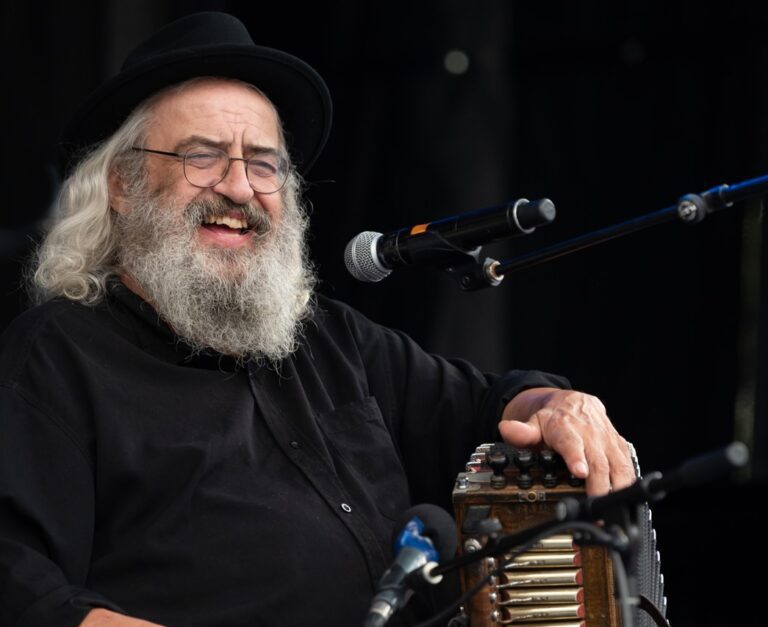
It was written in the sky, our national Yves Lambert would cap the triumphant 90 minutes of his show with a sequence of “La cuisinière” and “Dans nos vieilles maisons”, hits from La Bottine souriante which he left two decades earlier but of which he was the emblematic figure. This audacious and diverse program included a heartfelt tribute to Philippe Bruneau, covers of traditional songs including one by Jean-Paul Guimond and a pair of classics by Oscar Thiffault, as well as original songs and two Bottine Souriante medleys. Since breaking away from la Bottine, Lambert has gone through a number of creative cycles, the most recent of which is now a quartet (vocals, diatonic accordion, violin, guitar, podorythmy), and the forthcoming album relaunches his orchestral ambitions. In this context, Gabriel Schwartz’s arrangements complete the ensemble with four additional instrumentalists (flutes, sopranino sax, bassoon, clarinets, keyboards) and require a delicate sound system to ensure that these beautiful arrangements are perceptible, especially in the most rhythmic sequences of the program’s repertoire. And since this new cycle has only just begun, adjustments are necessary, and we can already foresee that Yves Lambert will soon be fine-tuning all this. Whatever happens, the absolute majority of his fans will be delighted by the proposal, and will see nothing but joy in it.
Serhiy Salov, un hommage à l’Ukraine
Dimanche midi, le premier concert au programme était donné par le pianiste ukrainien Serhiy Salov, établi à Montréal depuis exactement 10 ans. S’étant produit à maintes reprises sur les scènes montréalaises, le Québécois d’adoption avait reçu la commande d’un hommage à son pays natal dont on sait la souffrance quotidienne. Ainsi, il a joué des compositeurs ukrainiens, romantiques ou modernes, dont Mykola Lysenko, un contemporain de Liszt, ou encore Igor Naoumovitch Chamo et Miroslav Skoryk, ayant tous deux vécu au 20e siècle. Le pianiste jouera également la 12e étude de Chopin op 10, dont le pays d’origine jouxte l’Ukraine. Le compositeur avait écrit cette étude tempétueuse après avoir appris la reconquête de Varsovie ar les troupes russes pendant l’insurrection polonaise de novembre 1830 contre les abus de la tutelle russe. Parallèle évident avec l’actuelle tentative russe de dominer l’Ukraine, il va sans dire, et tout à fait compatible au style intense de Salov, pour employer un euphémisme. « Dessert ou digestif », au programme, une chanteuse azérie (qui fut réfugiée vu la guerre) s’est jointe au pianiste. Accompagnée de son hôte, la soprano Irane Ibragimli chantera ce requiem de guerre de Miroslav Skoryk, une pièce de circonstance dans le contexte de la guerre qui fait rage en Ukraine… et dont Serhiy Salov est un fier partisan.
The Lost Fingers
We’ve known The Lost Fingers since the decade of 2000, the latest incarnation dating back to 2014: Valérie Amyot, vocals, François “La Mitraille” Rioux, lead guitar, Byron Mikaloff guitar, Alex Morissette, bass. Originally inspired by gypsy jazz, The Lost Fingers have built a repertoire based on both guitar virtuosity and a hybrid repertoire between gypsy jazz and pop culture, including lively rereadings of hits such as Pump It Up. Clearly, the concept is still finding takers, as the crowd responded very well..
Lengaïa Salsa Brava, que calor!
Lengaïa Salsa Brava is a Latin combo founded in Montreal in 2012 by Guyanese trombonist Giany-Frantz Huyghues-Despointes. Like Montreal, Lengaïa is multicultural: its members come from 7 different countries: French Guiana, Cuba, Colombia, Peru, Quebec, Spain and Venezuela. Needless to say, its members communicate in the three languages they use on a daily basis: French, English and Spanish. In keeping with the instrumentation of the best Latin orchestras in the 3 Americas, this ensemble is made up of three trombones and a baritone saxophone, a section of three percussionists, a double bassist, a pianist and three singers. The real deal! In 2023, Lengaïa released a 3rd studio album, Estética de un Rumbero, from which the Tremblant audience was treated to some invigorating excerpts. Salsa, rumba, guaguanco, cha-cha-cha, bachata, Latin jazz and other Afro-Latin rhythms power this well-oiled machine. Make no mistake, Lengaïa is not a token Latin band, the by-product of a nostalgic diaspora. Indeed, there’s every reason to be amazed by the quality of execution of these excellent musicians, perfectly united and inspiring the dancers on Place Saint-Bernard, where the main stage is located in the heart of the pedestrian village.
Diane Juster’s resurrection with Angèle Dubeau & La Pietà
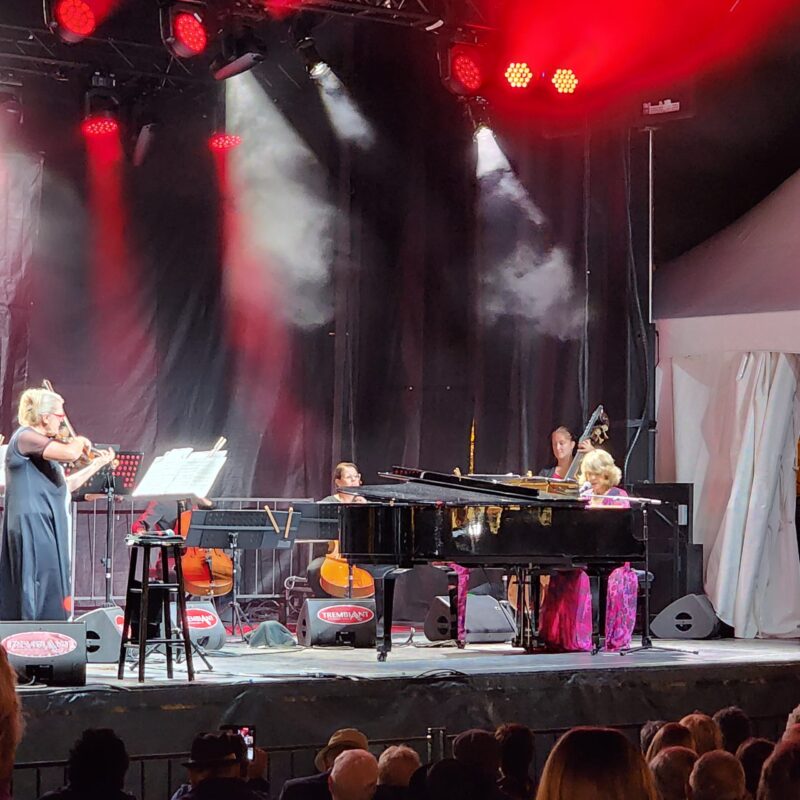
Every Fête de la musique culminates in Angèle Dubeau and La Pietà adding a special guest to their Sunday program. On November 27, she will be at the Maison symphonique with a special program, all Philip Glass and Ludovico Einaudi, from which she played a few excerpts to a packed house: on the Glass side, “Opening” and the first movement of his Symphony No. 3 for strings, on the Einaudi side, “Experience” and “Choros”. This was followed by Saint-Saëns’ “Danse macabre”, performed in spite of a somewhat laborious sound system and the dampness that also affected the instruments – it has to be said that expertise in outdoor sound systems for string ensembles is rare, as these classical ensembles generally play indoors, without contact microphones. Next up was 9-year-old prodigy Iza Kamnitzer, performing the Hommage à l’Ukraine. After performances of Enescu’s “Rhapsodie roumaine” and two Einaudi titles, a “grande dame de la chanson”, to use Angèle Dubeau’s expression, appeared. Diane Juster, whom very few people have seen on stage for many years, agreed to come and perform her classics, all songs of passionate love: “À ma manière”, “J’ai besoin de parler”, “Ce matin” and the essential “Je ne suis qu’une chanson” that became a huge hit by Ginette Reno . At the very least, an instructive dive into the 70s…
FME Day 3: Vanille, Night Lunch, AMMAR 808, Truckviolence, TUKAN, Les Louanges
by Rédaction PAN M 360
Two writers from PAN M 360 are currently in Rouyn-Noranda for the 21st edition of the Festival Musique Emergente (FME) Festival, a musical takeover of the city to witness some of the best and brightest upcoming bands from Quebec, Ontario, and the international scale dabbling in alternative rock, shoegaze, new wave, dream pop synthpop, art rock, psych, and more. So without further ado, here are a few acts we wanted to shed a little spotlight on for Day Three.
Photos: by Stephan Boissonneault
Vanille Brings the Sun and Takes us Where we Need to Go
Vanille’s performance at La Guinguette chez Edmund at FME might have been one of the most beautiful of the festival, with her sunshine ’60s pop bringing in the actual sunrise over Osisko Lake. She played much of her old album Soleil ’96 and a few more rock n’ roll versions of her baroque-medieval songs from the latest album, La clairière. The vibes and atmosphere were fantastic, and everything seemed to be in a sepia-toned haze. Kids were running around, a metalhead was relaxing, looking at the sky with sleepy eyes. There’s really not much else to say other than it was a fantastic sun-soaked start to the mid-day. – Stephan Boissonneault
AMMAR 808 and his Thundering Tunisian Dance
One artist who was only scheduled for killing time before Blesse, with my group, was Sofyann Ben Youssef aka AMMAR 808, a Tunisian DJ making his home in Denmark with a penchant for heavy, heavy bass and European electro that reminds you of dim-lit German clubs. we ended up staying for most of his set as we were pulled from his electronic tractor-beam beats. There was a point when AMMAR’s mic cut out, but he basically said ‘Fuck It’ We’ll do it live and started mixing on the spot, improvising, but still controlling the crowd’s energy. What separates AMMAR 808’s sound has to be his live mixing of aggressive, unrelenting beats and the Pan-Maghreb voices. It’s trippy and heavy, perfect for the dancefloor when you want to dissociate, which, by this point, many of us were well on our way to doing. – Stephan Boissonneault
TUKAN Post-Everything Jazz Electro Bliss
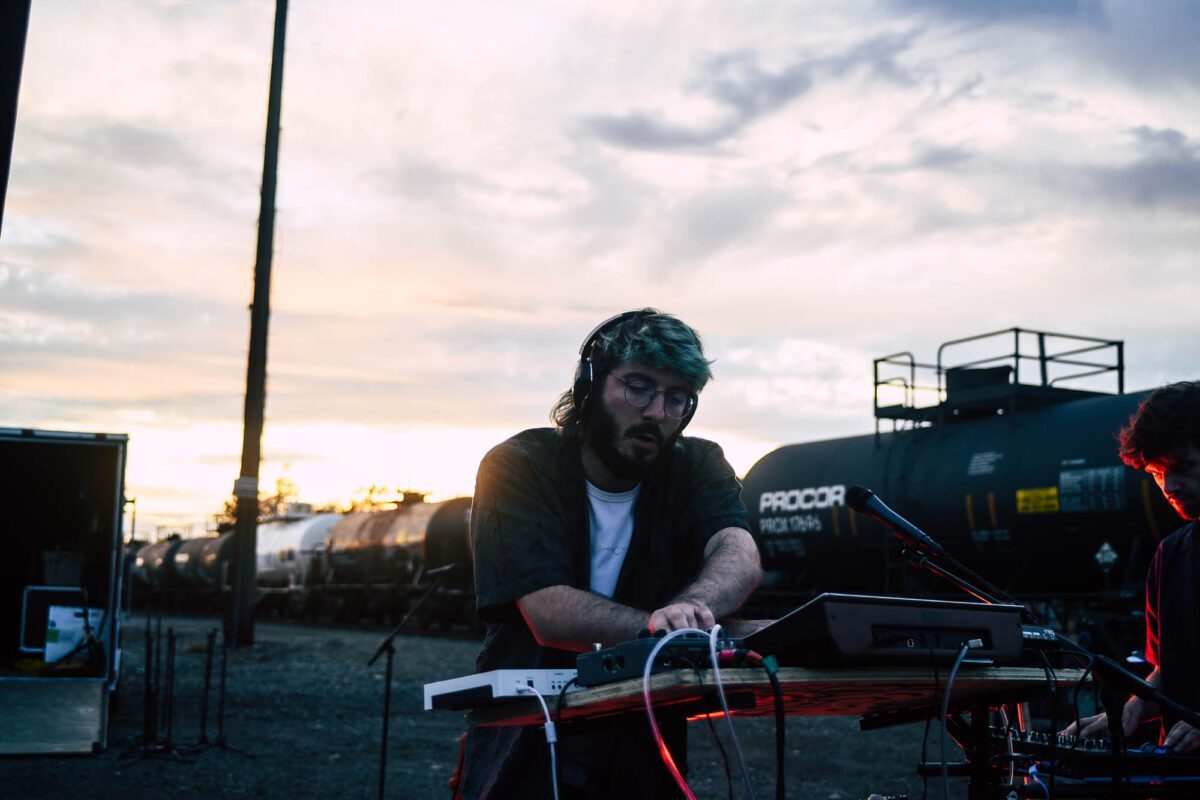
Day 3 of FME was graced by the analog electro-jazz mania of TUKAN in a basement, but their secret show set on the train tracks in front of the Horne Foundry was the true magic hour. TUKAN has the same energy and aptitude as say an electro-trance producer, but uses live instruments to create their dancy soundscapes. Floating Points, BADBADNOTGOOD, Wetpaint, Popul Vuh; these influences and more can be heard in TUKAN’s set. Though the fact they are recreating everything live makes it an exhilarating experience; especially for the two men fronting a catwalk fashion show during the train tracks set. The basement set was definitely more of a club setting, but this scrappy band from Brussels is not one to be missed. – Stephan Boissonneault
Night Lunch (Served at 3PM)
There’s nothing like a generously-cut grey suit, dark shades, and a little analog synth to instantly transport you to an ideal world of yesteryear—one of carphones and glittering city skylines. This specific moment of time was brought to life last night by Montreal art pop outfit Night Lunch. Featuring a cool, calm performance from lead singer and human ice cube Lukie Lovechild, he was backed up in style by rock-solid bass grooves and soft, cushiony chords and melodies coming from synth player Wesley McNeil.
Despite the pop influences that Night Lunch so proudly wear on their sleeves, there’s a darker, sexier side to their sound than you might first expect—just as at home in the dusky, subterranean venue we saw them in as they would be at the front a cigarette haze nightclub. In each track, ’80s-style synths and lead guitar come together to create passage after passage of resonant, endlessly satisfying changes that simply make you want to boogie the whole night away. – Lyle Hendriks
Truckviolence – Violence As Community Service
The boys from Truckviolence aren’t really all that scary or threatening, but you’d be forgiven for thinking otherwise after watching this thrashed-out three-piece take the stage. Thunderous and aggressive, Truckviolence burrows its way into your skull like a 12-gauge slug, with powerful, almost incomprehensibly intricate drum work courtesy of Ryley Klima, throaty, driven guitar, and of course, the absolute sheer fucking willpower and intensity of lead vocalist Karsyn Henderson, who wasted no time in stripping down to his underwear and jumping down into the pit for a little violence of his own.
Despite the violent persona that this act embodies so completely, they’re not without their hidden intricacies, or indeed, their softer moments. At one point, Ryley took a much-needed break from the drums for Henderson and the guitar player, Paul Lecours, to enter a surprisingly sombre, beautiful country jam with nothing but gentle banjo and the soft tones of a tattooed man wearing nothing but his heart on his sleeve. And when that was done, we got right back into it—slamming into one another, headbanging to the point of whiplash, beer spraying this way and that—such is the utterly captivating duality of Truckviolence. – Lyle Hendriks
Les Louanges Tosses Out the Rulebook
Many artists claim to defy convention and genre—few achieve it as truly effectively as Les Louanges did at FME’s mainstage on Saturday night. Armed with flutes, saxophone, synths, and huge emo pants, Les Louange’s show was all over the map in the best way possible. At times, I had to double-check that a new band hadn’t taken over without my realizing it—but in every case, it was simply a new, adventurous tack. Striding with ease over countless genres, from jazz, to funk, to R&B, to a touch of Latin dance, there was a profound sense of confidence and joy emanating from the whole band, but in particular from lead singer Vincent Roberge.
A part of my joy in live music is always watching other people enjoy it, and from my vantage point, I had the pleasure of witnessing countless young people having what might have been the best night of their lives so far, crowd surfing, jumping, throwing glowsticks to the band in appreciation. At one point, Roberge had to take a moment—seemingly overwhelmed by the 1000-odd audience members belting every word of his song as he just smiled on. With so many elements swimming and shapeshifting in the music of Les Louanges, this is one act to pay attention to. – Lyle Hendriks
Subscribe to our newsletter
Gérez votre confidentialité
Nous utilisons des technologies telles que les cookies pour stocker et/ou accéder aux informations des appareils. Nous le faisons pour améliorer l’expérience de navigation et pour afficher des publicités (non-) personnalisées. Consentir à ces technologies nous permettra de traiter des données telles que le comportement de navigation ou les ID uniques sur ce site. Le fait de ne pas consentir ou de retirer son consentement peut avoir un effet négatif sur certaines fonctionnalités et fonctions.
Functional
Always active
The technical storage or access is strictly necessary for the legitimate purpose of enabling the use of a specific service explicitly requested by the subscriber or user, or for the sole purpose of carrying out the transmission of a communication over an electronic communications network.
Preferences
The technical storage or access is necessary for the legitimate purpose of storing preferences that are not requested by the subscriber or user.
Statistics
The technical storage or access that is used exclusively for statistical purposes.The technical storage or access that is used exclusively for anonymous statistical purposes. Without a subpoena, voluntary compliance on the part of your Internet Service Provider, or additional records from a third party, information stored or retrieved for this purpose alone cannot usually be used to identify you.
Marketing
The technical storage or access is required to create user profiles to send advertising, or to track the user on a website or across several websites for similar marketing purposes.