OFF Jazz | Julian Gutierrez Offers a High-Quality Music

by Michel Labrecque

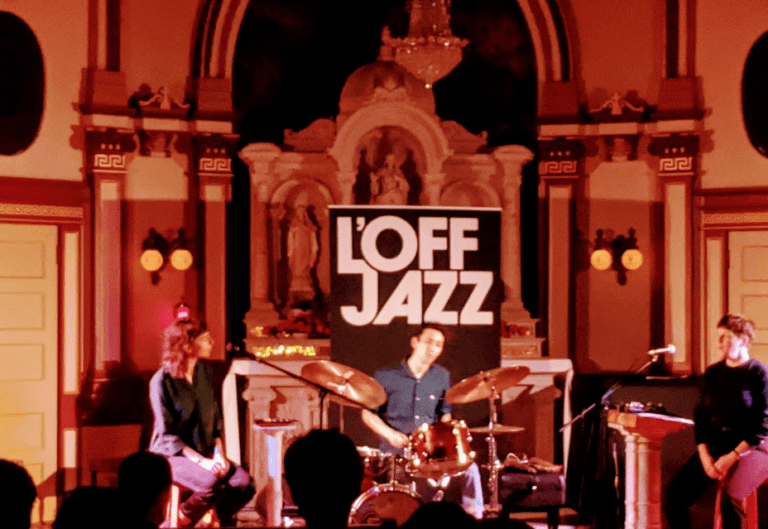
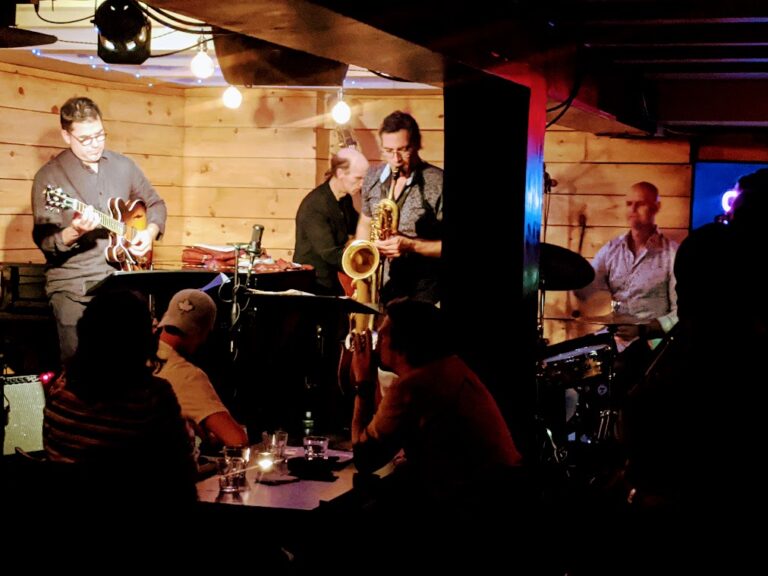
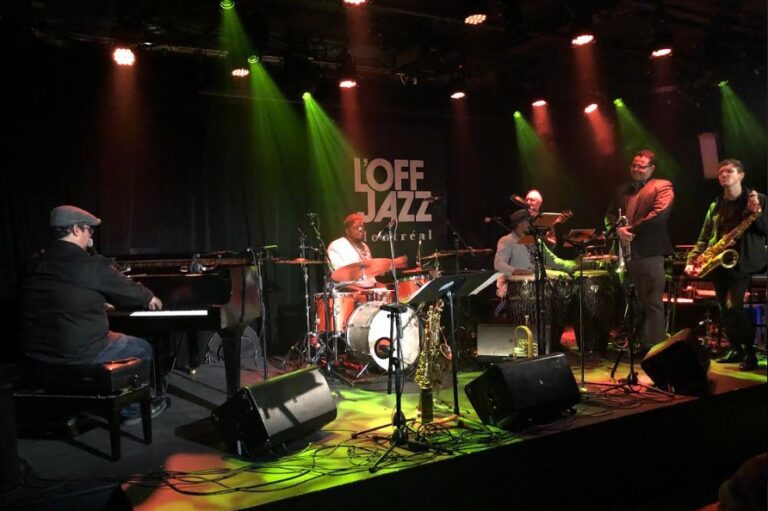
Pianist Julian Gutierrez isn’t reinventing jazz. But his group gave me a very pleasant Caribbean-flavored jazz experience at his concert at the Ministère on Tuesday, part of the OFF Jazz program. The music is richly and finely arranged and grooves intensely at times. A very high standard.

Cuban-born Julian Guttierez, who studied composition at Laval University, has created a very Montreal-style sextet: Guadeloupean Axel Bonnaire on drums, Cuban Eugenio Kiko Osorio on congas and percussion, Brazilian Joao Lenhari on trumpet and flugelhorn, and Quebecers Guillaume Carpentier on tenor saxophone and Jean-François Martel on electric bass. Starting with the third piece on the program, a surprise guest was added: saxophonist Jean-Pierre Zanella, with whom Julian Guttierez has often collaborated.

This sextet (now a septet) mainly performed pieces from the Julian Gutierrez Project’s latest opus, Goldstream, released in 2022.

In terms of improvisation, Joao Lenhari offered us inspired solos, alternating between sweetness and intensity. Guillaume Carpentier brings the depth of the tenor sax. Julian Gutierrez has a rich harmonic palette and weaves inspiring solos of melody and progression. Jean-Pierre Zanella is simply… Jean-Pierre Zanella on alto and soprano sax.

The group’s rhythm section brings a contagious energy and complexity. The unobtrusive but highly effective bassist Jean-Français Martel supports the highly explosive but highly competent Axel Bonnaire, who seems to take great pleasure in playing with his accomplice, percussionist Eugenio Kiko Osorio.

A small downside: I was less convinced when Julian Gutierrez turned singer on two of the eight pieces presented.

That said, this group illustrates the richness of our jazz scene and the contribution of Montrealers from elsewhere. And the power of mixing. After the concert, Brazilian Joao Lenhari told me that he found Montreal more culturally rich than Sao Paolo, the Brazilian megalopolis. This trumpeter will soon be leading the big band at the Université de Montréal. Stay tuned.
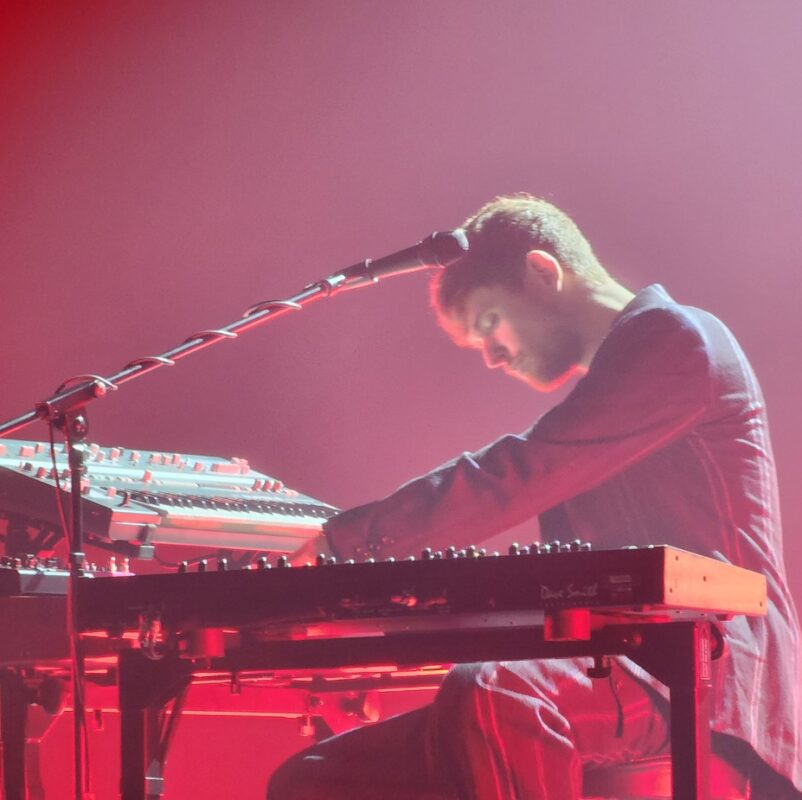
James Blake’s charm in a different guise

by Alain Brunet

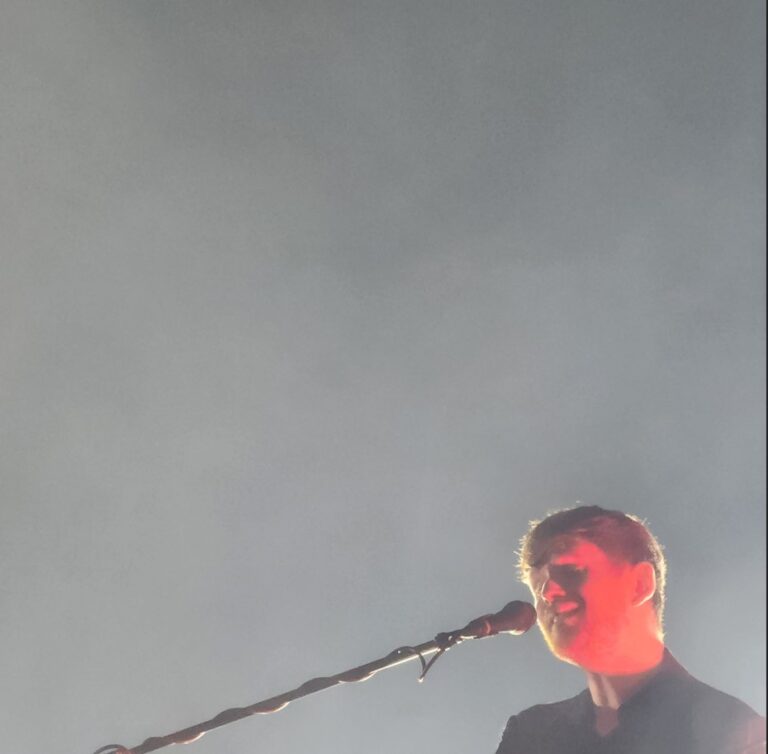
Now in his mid-thirties, James Blake is nurturing his aura by maintaining his focus on creativity and innovation. Playing Robots Into Heaven, his 6th album released last year of which he played 9 tracks on Tuesday evening, features innovative new arrangements and maintains a high level of quality.

On stage at a sold-out Théâtre Olympia, the English singer, songwriter and producer was tempted to take a leap of faith when he claimed to have given his best performance of the current tour.

Assisted by his teenage friends, guitarist, keyboardist and electro producer Rob McAndrews (who opened the concert) and drummer Ben Assiter, James Blake offers real added value to his recordings. This hasn’t always been the case, and we’ve seen lesser performances since his emergence in the late 2000s.

But these self-taught musicians have grown in stature and cohesion as a band. Surrounded by vintage keyboards and modular synthesizers, Blake and McAndrews have the necessary arsenal for a solid execution of the songs on the program built around the most recent opus, assorted with “classics” from previous albums (homonym, Overgrown, Assume Form, The Colour in Anything, Friends That Break Your Heart), not to mention heartfelt covers by Feist (“Limit to Your Love”), Joni Mitchell (“A Case of You”) and Frank Ocean (“Godspeed”).

James Blake has the sensual, cajoling voice of a charming singer, a performer accustomed to the high frequencies of a countertenor when he uses his head voice, or the low frequencies of a baritone when he chooses to express himself with his body voice. But the artist is more a musician than a stage performer. He never gets up to sing, preferring to stand behind his instruments and briefly address his audience.

Her smooth, textured vocals draw on African-American soul and gospel, as do the harmonic choices of her keyboard playing. So far, these references are nothing special, but they become very interesting when they merge into this synth-pop played in real-time. The electronic components of these songs are generally creative, and it’s easy to notice the new sounds concocted by James Blake. What’s more, these songs are interspersed with electronic sequences traversed by dubstep, UK bass music or even techno, leading to a real immersion in our host’s universe. A successful evening!

And so, we can’t say that he’s an authentic crooner because he doesn’t have the attitude and demeanor to perform in front of an audience. James Blake’s charm exerts itself in other ways.

LIST OF SONGS IN THE PROGRAMME, INCLUDING THE ENCORE

Asking to Break  – album Playing Robots Into Heaven


I Want You to KnowPlaying Robots Into Heaven

Limit to Your Love – Reprise of Feist, homonymous album

 
Life Round Here – album Overgrown

Big Hammer Playing Robots Into Heaven

LoadingPlaying Robots Into Heaven

Mile High – album Assume Form

I’ll Come Too Assume Form

Fire the Editor Playing Robots Into Heaven

A Case of You  (reprise of Joni Mitchell)

Love Me in Whatever Way – album The Colour In Anything

Fall BackPlaying Robots Into Heaven

Tell Me –  Playing Robots Into Heaven


Voyeur  Overgrown

Say What You Will  – album Friends That Break Your Heart


Retrograde –  Overgrown

Godspeed  (reprise of Frank Ocean)

If You Can Hear MePlaying Robots Into Heaven

Playing Robots Into Heaven -Playing Robots Into Heaven

Modern SoulThe Colour in Anything

OFF Jazz | Dolma, Rossy, Jobin, An Experience for Voice and Percussion

by Varun Swarup

In the context of Off Jazz, the sacred beauty of the Chapelle Saint-Louis was the ideal setting for this highly convincing and unique project led by drummer Aaron Dolman. Alongside two singers, Sarah Rossy and Eugénie Jobin, this trio navigates instrumentation that reveals a real depth and tenderness in Dolman’s rich chamber compositions.

With the two singers expressing themselves between harmony and counterpoint, and the drums performing between groove and melody, the uniqueness of the experience was soon imprinted on us, and the trio showed great sensitivity to make it all work.

Throughout the evening, the band not only shared their new compositions but also revisited tracks from their debut album, Are You Here to Help?

As the evening drew to a close, the trio left the audience with a particularly sweet memory: a folk rendition of the aptly titled “Can the Circle Be Unbroken.” Aaron joined in this more intimate sequence, furnishing the larger whole with warm drum triads, bringing the evening to a heartfelt conclusion, memorable for those in attendance.

Little Simz At MTELUS: Bring On The Crown!

by Théo Reinhardt

Monday night was a big date for Montreal fans of Little Simz. It was a long-awaited return to Montreal for the London-based rapper and musician, who hadn’t been in our neck of the woods since her debut. She went on to win the prestigious Mercury Prize and explode into critical and popular success with three recent albums.

So, what’s a Little Simz show like when she’s at the top of her game?

The MTELUS hall fills up fast. And, to everyone’s surprise, the show starts early! At 7:57 pm, then, it’s the slow, measured flow of rapper OTG who opens the show. A charming performance! A perfect appetizer for what’s to come.

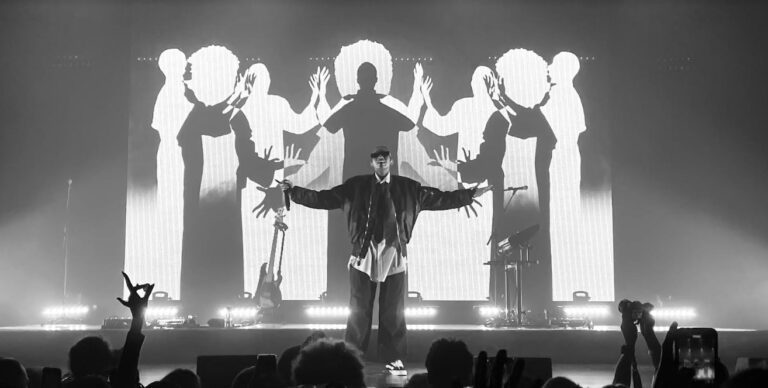
After a few anxious moments, Little Simz finally takes the stage with “Silhouette”, from her latest album NO THANK YOU. Dressed in her usual concert uniform of an extra-long white shirt and black tie, because, understandably, she has no need for flashiness. Alone on stage, she receives the full force of the ecstatic Montreal audience. You can see on her face that she’s delighted.

The rapper performed half the concert on her own. With little downtime between songs, there’s no time to get bored. For her song “Heart on Fire”, the lighting changes from white to bright red, the screen at the back projects flames, and the temperature in the room rises. The same thing happens shortly afterwards for her hit “Venom”, with green. In the middle of the concert, a guitarist and a bassist come in to assist with the remaining songs.

Honestly, Little Simz’s live art loses none of its precision in front of an audience. The lyrics are clear, the syllables cut, the consonants incisive. You can understand it all, you can follow it all. It’s impressive. Not once does she stumble in her lyrics or rhythms. And she does it like it’s easy!

At one point, Simz leaves the stage while the other two jam for a few moments. She returns to the triumphant sound of “Gorilla”, a song that truly deserves to be in the hip-hop pantheon. At this point, the crowd can no longer contain itself. And so goes the rest of the concert, hit after hit, interspersed with softer, more heartfelt moments.

Sii Simz has something special, and that’s sincerity. She doesn’t overplay her presence, and that’s what I appreciate most about her. She’s modest, but aware of her extraordinary talent and the time it took her to get where she is. She shares her pride, which is promptly reciprocated. When she smiles when people sing her lyrics, you can tell it’s true.

One word comes to mind: radiant.

So it was an important show for both sides. For Little Simz, a warm return to Montreal as part of a tour that was drawing to a close. For us, the return of one of today’s finest hip-hop artists. If you were looking for an induction on Monday night, it was at MTELUS.

OFF Jazz | Blanche Baillargeon Welcomes You to Her Nest

by Alain Brunet

In the 2000s, Blanche Baillargeon made a name for herself with DJ Champion’s G Strings. Since then, she has also distinguished herself with Christine Tassan’s gypsy jazz and Misses Satchmo jazz, but few music lovers are aware of her personal work.

Well… she wasn’t well known until last spring, when her new project Le Nid sparked things off with unsuspecting music lovers, including our dear colleague Sylvain Cormier, who was full of praise for her. In fact, Blanche Baillargeon has been making her compositional language public since 2015, and her recent opus Le Nid was the main material for this concert presented at Le Ministère.

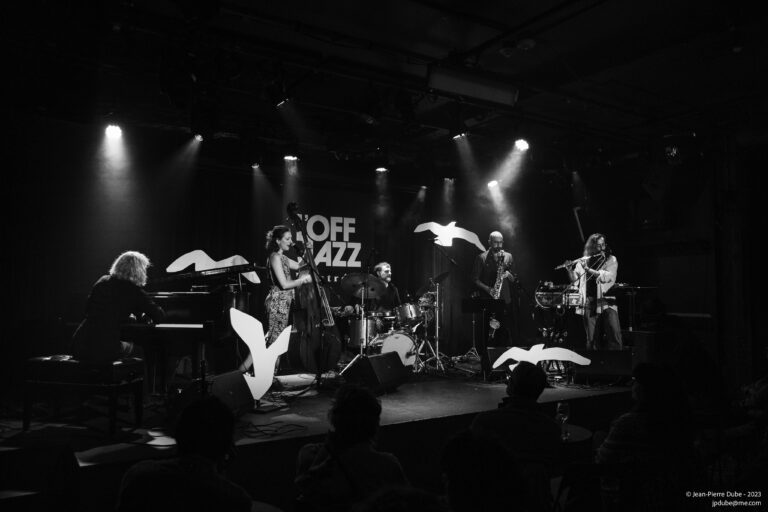
The rustle of the forest, the flight of birds, the light in the landscape, freedom, happiness, malaise, hope and empathy are all sources of inspiration for these mostly ethereal and gentle jazz songs. Pianist Chantale Morin, drummer Sacha Daoud, bass clarinettist Guillaume Bourque and flautist Alex Dodier (who can play sax in other contexts), all excellent musicians with extensive jazz experience, accompany the double bassist in this Off Jazz context.

The music here is a composite of songs expressed in French (lyrics by master poet Patrice Desbiens) and Brazilian Portuguese, including the cover of Chico Buarque’s “Samba e Amor,” and other original jazz-samba/bossa nova-inspired proposals. Blanche Baillargeon’s musical references are clearly jazz, but they are also tinged with Brazilian and Cape Verdean music that is part of the global collective imagination, and with French chanson that also draws on the romantic and modern music of the Western classical tradition.

The result is voluptuous, enveloping chamber jazz, harmonically and melodically rich, and a pleasure to listen to. No peak performance is required of each performer or improviser, rather the composer seeks to create a coherent, cohesive whole around her works. Personally, I preferred the non-Brazilian moments of this repertoire on the Sunday evening program, as I sometimes had the impression of a certain disparity between these noble tropical inspirations of the 60s-70s-80s and the rest of her original compositions, which are fresher and… more original.

Photo credit: Jean-Pierre Dubé

Off Jazz | The Other Life of Erika Angell

by Alain Brunet

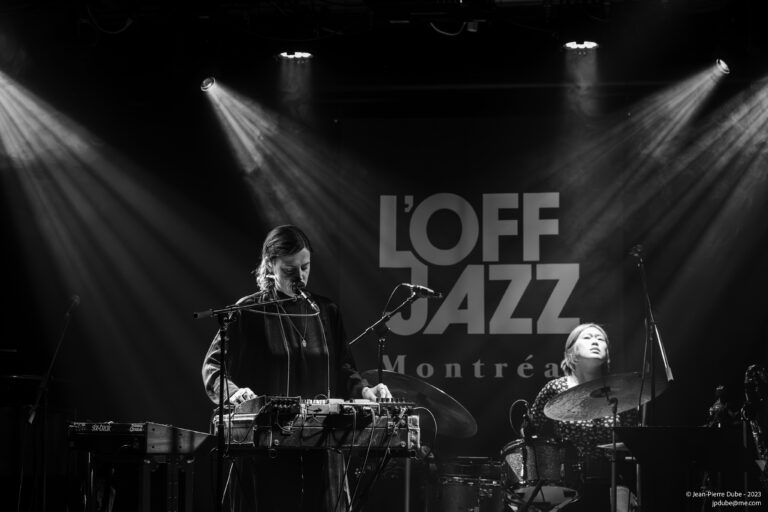
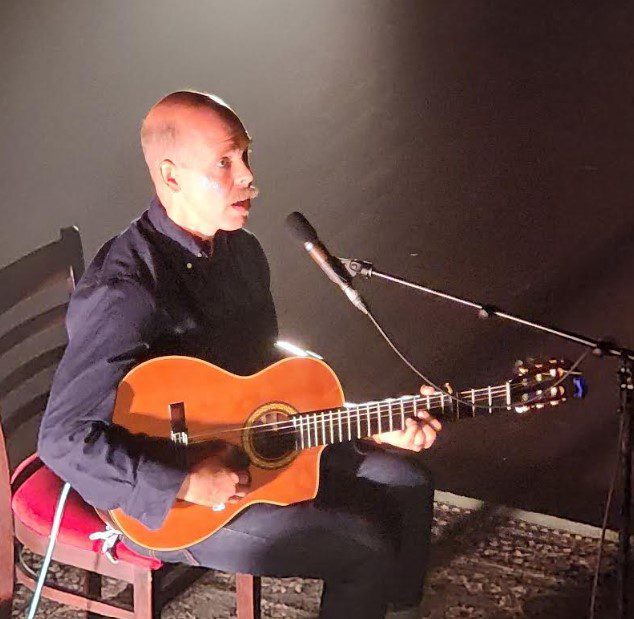
Erika Angell’s artistic life is distinct from that of her excellent band Thus Owls, whose creative core she forms with her guitarist husband, Simon Angell. She is becoming increasingly regular, notably as part of the trio Beatings Are in The Body, which we heard last June at Suoni Per Il Popolo, and more recently Sunday evening in solo and duo at Le Ministère, as part of the Off Festival de jazz de Montréal.

Poetry, song and sound are at the heart of this subtle, unique approach. The magnificent voice of this gifted Montreal artist is the absolute lever of her expression; the choice of words (English and Swedish, her mother tongue), sometimes declaimed without melody, is also brilliant but does not serve songs built on frameworks that have been standardized for ages. Musically, Erika Angell uses continuous synthetic sounds, a kind of drone around which she makes brilliant superimpositions. The musician is equipped with a small keyboard, light percussion and other electronic tools, which she uses in real-time. The compositional structures are not complex in themselves, but a melodic-harmonic continuum on which various ornaments of varying degrees of intensity are placed. And it does!

A kind of exploratory ambient music with sung or spoken texts, Erika Angell’s art can also involve the intervention of drummer Mili Hong, a Canadian resident originally from South Korea. This gifted percussionist can intervene randomly with the updated vocabulary of free jazz, but can also express her skill on sustained rhythms. She listens carefully to Erika Angell’s ideas and adds to those of her employee, who, at the risk of rambling, deserves to be known and recognized for her true worth.

Photo credit: Jean-Pierre Dubé

Basilique Notre-Dame : Celebrating 50 Years of Pierre Grandmaison’s Career

by Rédaction PAN M 360

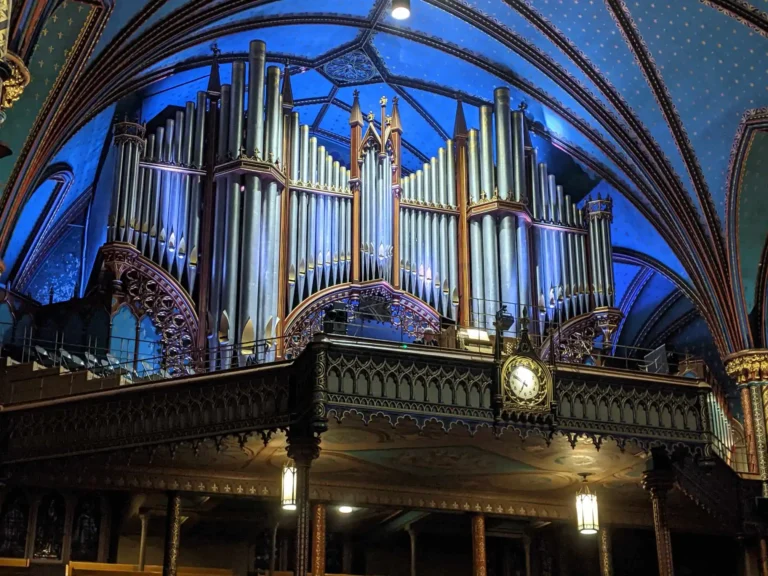
The organ is undoubtedly in the spotlight during the 2023-2024 Montreal music season. Through all the fantastic concerts featuring the imposing instrument at the Maison symphonique, it would be easy to forget that the Pierre-Béique organ has an older brother who also resides in a place of contemplation – in the more common sense of the word, all the same.

On Sunday evening, the Basilique Notre-Dame du Vieux-Port celebrated the 50th anniversary of its organist, Pierre Grandmaison. At the console since 1973, this is an impressive milestone for an organist who has clearly not lost his touch and showmanship after all these years. With virtuosity, clarity and humour, he filled the Basilica with the magical sound of the organ he has come to know so well.

A word about the organ at Montréal’s Basilique Notre-Dame. It is indeed the big brother of the Maison symphonique organ, also produced by Casavant Frères, but that doesn’t tell the whole story. Inaugurated in 1891, it has been resonating for over a hundred years. It also has 7,000 pipes, some 500 more than the Pierre-Béique organ. Admittedly, it has been upgraded fairly recently at Maison Casavant Frères (some of the same technologies found on the Pierre-Béique Organ are also present), but it remains a marvel of organology, especially for its age.

The program appeared to be a best-of of works frequently played at the Basilica. We were treated to the classics, with Bach and César Franck, whose exploration of timbres and stops was fantastic, as well as several works linked to the Virgin Mary, notably Verdi’s Ave Maria (performed with soprano Caroline Bleau), from his last opera Otello (dating, incidentally, fairly close to the Basilica organ’s conception, i.e. 1887). The presence of three pieces by Louis Vierne reinforces the influence of the French tradition on the Montréal organ tradition. We also note the importance of form in the works on the program, with the presence of refrains and encores, but above all of the choral form, which lent itself well to the context.

The atmosphere in the Basilica was quite jovial. The inevitable echo from the Basilica affected the sound somewhat but remained appropriate. Pierre Grandmaison spoke effectively to an audience with a wide range of backgrounds. Warmly applauded after each piece, he rewarded the audience with clear playing that accentuated the themes, making the works accessible to all. He also indulged in a few whimsical touches, notably with the final piece, the Westminster Carillon, which is actually a harmonization of the Big Ben motif we’re all familiar with, and also with an amusing encore, Mozart’s variations on the theme of “Ah, vous dirai-je, maman”.

The audience, seated as in the early church concerts – facing the altar and with their backs to the rear, where the organ was placed – were entertained and mused with Pierre Grandmaison. A fitting tribute to a fine career that continues, after so many years already.

You can hear the Basilica organ and Pierre Grandmaison in the context of the “Take a seat at the organ” activity offered at several times during the Year. For details and tickets, click HERE.

Photo by Alexis Ruel

Off Jazz | Fraser Hollins s’élève et nous élève

by Varun Swarup

In the spring of 2021, as the venues begin to reopen, bassist Fraser Hollins and his band, the aptly named Phoeni are now soaring to ever greater heights.

As one of the first performers at our beloved OFF Jazz Festival, this band featuring Hollins on bass and Phoenix on double bass, Hollins on bass, Samuel Blais on reeds, Carlos Jiménez on guitar, Richardson on guitar, Rich Irwin on drums. What an excellent showcase for the immense local talent we seem to have in abundance!

The audience was treated to a graceful and compelling set of Hollins’ original music in the warmly lit hall of the Diese Onze. Wielding his double bass like a musical oracle, he led the way with a line requiring spidery fingering, drawing us into the heart of the piece and the performance. The premiere was in fact a tribute to Stan Lee!

Clearly, the compositions and arrangements for this dynamic group of friends are a testament to his talent, and that’s what made the evening so special. evening.

Each composition varied in genre, mood and texture, allowing this group of seasoned musicians to express themselves freely, telling us many different stories over the course of the evening.

Arion Orchestre Baroque et Elisabeth Pion : Keyboard In The Style of Montgeroult

by Alexandre Villemaire

This weekend, Arion Orchestre Baroque presents its opening concert with Maskoutain pianist Élisabeth Pion as guest soloist, in a concert whose main attraction is the (re)premiere of works by French composer Hélène de Montgeroult (1764-1836).

A great visionary, the rare aristocrat to have been spared by the French Revolution and the only woman to have passed the competitive examination to teach the first piano classes at the Paris Conservatoire de Musique, Montgeroult’s musical language is imbued with the palette of Mozart’s classicism, but with a few experiments that hint at the beginning of Romanticism.

After the orchestra’s introduction of Mozart’s Symphony No. 26, allowing us to appreciate Mathieu Lussier’s energetic conducting, the soloist presented Montgeroult’s Piano Concerto No. 1 in E-flat major, which the composer constructed as an adaptation of Viotti’s violin concertos.

The instrument here is worthy of mention, as it lends full relief to the “historically informed” spirit of the concert. Played on a Broadwood 1826 forte-piano, on loan from patron Jacques Marchand, the instrument offers a woodier, less resonant sound than modern pianos, but allows greater agility than a harpsichord.

The airy agility of Élisabeth Pion’s fingering is illustrated in the energetic first movement, while the second features a melodic line of great lyricism reminiscent of Chopin, but without the great melancholy flights of the Preludes or Nocturnes, for example. The third movement, Rondo: Allegretto, is resolutely Beethovenian in character, with its bouncy strings and the piano’s place in it, as in L’Empereur.

In the second half of the concert, Mathieu Lussier presents a reconstruction of Montgeroult’s works. Having composed very little for orchestra, Lussier decided to arrange several Montgeroult pieces in the form of an overture, L’impératrice.

The typical lively-slow-fast scheme and choice of orchestration allow us to appreciate Montgeroult’s language in Mozartian and Beethovenian territory.

Mozart’s Piano Concerto No. 24 in C minor was the scene of a complicit dialogue between soloist and conductor, but the winds seemed a little too generous in their amplitude of sound, making it difficult for Élisabeth Pion’s playing to stand out at certain moments.

The Mozart and Montgeroult concert is presented today, Saturday and Sunday at Salle Bourgie. A concert well worth braving the rain for, if only to discover the luminous music of Hélène de Montgeroult.

Photo credit : Frederik Robitaille

Off Jazz | François Bourassa in Quartet and Duo, Exemplary!

by Alain Brunet

On Thursday at the Ministère, pianist and composer François Bourassa kicked off the 24th Off Festival de jazz de Montréal, originally set up to showcase the local community of jazz artists then neglected by the Festival international de jazz de Montréal – unlike in the 80s and 90s. Since then, local jazz at the FIJM has been reduced to a local series and a few outdoor stages, while the OFF presents some thirty concerts each autumn. And here we are!

A double program on the François Bourassa side.

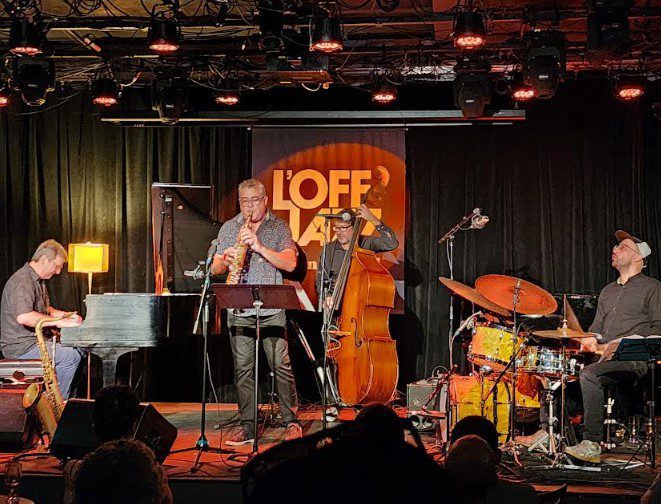
Put forward by composer, arranger, improviser and saxophonist Philippe Côté, the Confluence project consists of a composite work involving contemporary music inspired by classical and jazz. Recorded in New York last year and soon to be released on the Odd Sound label, the duo’s repertoire brings together their interest in exploration, particularly that of the prepared piano, a practice made famous by the American John Cage. The technique involves inserting objects into the piano strings that the soundboard controls. This produces unusual sounds, sometimes akin to the marimba. The compositions on the program are generally simple, with plenty of room for improvisation. Sometimes two pianos are prepared, sometimes just one; exchanges may involve two pianos, or saxophones (soprano or tenor) and piano. This music leaves plenty of room for free improvisation, but harmony (tonal or modal) remains present throughout the experience.

In the second half of the program, François Bourassa’s excellent quartet returned to the Off Festival de Jazz. A quarter-century of practice has brought this ensemble to an exceptional maturity, making it a unique voice for Quebec jazz on the entire jazz planet. The supravirtuosity of saxophonist André Leroux and the compositional excellence of François Bourassa are the keys to this expression, which nonetheless rests on impeccable rhythmic support, courtesy of Guillaume Pilote and Guy Boisvert. Thursday evening was (once again) a testament to this cohesion and inspiration. François Bourassa’s profound knowledge of contemporary music in the classical and jazz traditions has led him to build a virtuoso language free of academic constraints. This vehicle has led him to accomplish small miracles, and the album Swirl, recently released on the Effendi label, demonstrates the formal advances he has made, as they clearly go beyond the usual framework of jazz in a small formation.

Since the beginnings of modern jazz, musicians have generally played a melodic theme (head for those in the know) with the accompaniment of the rhythm section, followed by a section in which all the performers improvise solos, then return to the intro melody at the end of the performance. François Bourassa no longer exploits this form (or exploits it very little), preferring to inscribe his colleagues’ impros in different and varied structures. Once again, we see the march towards the union of the jazz and classical worlds, a process that is now inevitable. One thing’s for sure, François Bourassa is a key figure in this process, much to the delight of music lovers.

POP Montréal Day 5 | Bonnie “Prince” Billy, Alone and Imperial on Stage

by Varun Swarup

As the final act of the Pop Montreal 2023 festival, Bonnie “Prince” Billy delivered a performance that left the Rialto audience with a strong sense of bittersweetness.

From the moment he strummed the first chords of New Partner, his presence drew the crowd like moths to an incandescent light. With no backing band behind him, nothing but his endearing, unpretentious demeanour, coupled with that inimitable Kentucky drawl, Bonnie “Prince” Billy charmed every heart in attendance.

As he sang, every word and syllable carried weight, leaving the audience hanging on his every word, trying to decipher the depths of his poetic mind. He unpacked a sprawling set, spanning two decades of his musical creation. But of course, we were treated to songs from his latest album, Keeping Secrets Will Destroy You.

The evening’s magic wasn’t limited to Bonnie “Prince” Billy’s performance, however. Beginning with the opening set by singer Beyries, the whole evening felt like a journey back to a simpler time, reminiscent nonetheless of the rich traditions of North American folk music. With its intimate, emotional narration, Bonnie “Prince” Billy’s performance was a nod to the folk troubadours of yesteryear, passing on their heritage to the modern age.

Pop Montreal Day 5 | Tangerine Dream’s humdrum, old-school synth

by Stephan Boissonneault

POP Montréal is undoubtedly one of the major events of the fall for true music fans. From Wednesday, September 27 to Sunday, October 1, dozens and dozens of discoveries and acclamations of artists nestled in pop are happening in Montreal. Follow the PAN M 360 team until Sunday!

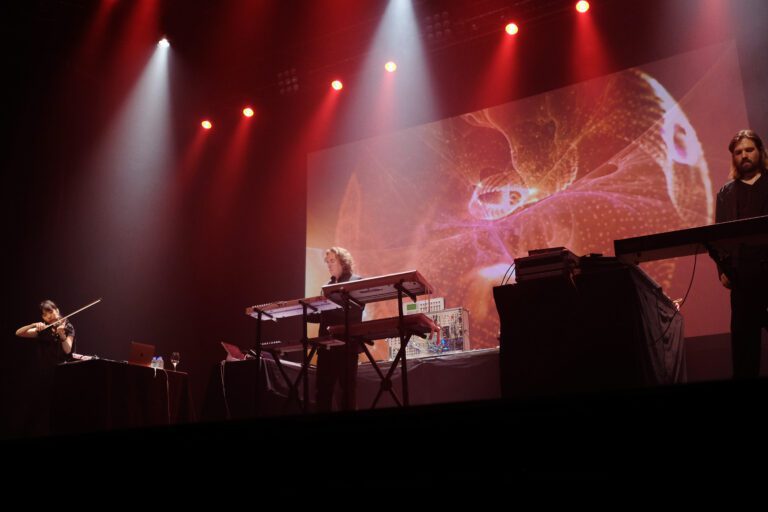
Any musician who has thought about even remotely experimenting with synthesizers to achieve some spacey sounds has to owe a lot of it to Tangerine Dream, a band that is 56 years old and somehow, still kicking. Well, a different iteration of it it is anyway.

Formed in 1967 by Edgar Froese in West Berlin, Tangerine Dream was an important project for the development of Krautrock, Kosmische Musik, and other genres that divulged into synthesizer instrumentals. Along with groups like Kraftwerk and Pink Floyd, Tangerine Dream helped popularize the synthesizer—specifically the Moog series, creating long electronic soundscapes. Movies, books, and TV shows—like the popular Netflix epic, Stranger Things, all cite Tangerine Dream as an influence. Basically, it’s one of the bands that is uber important for musical history in the 20th and 21st centuries.

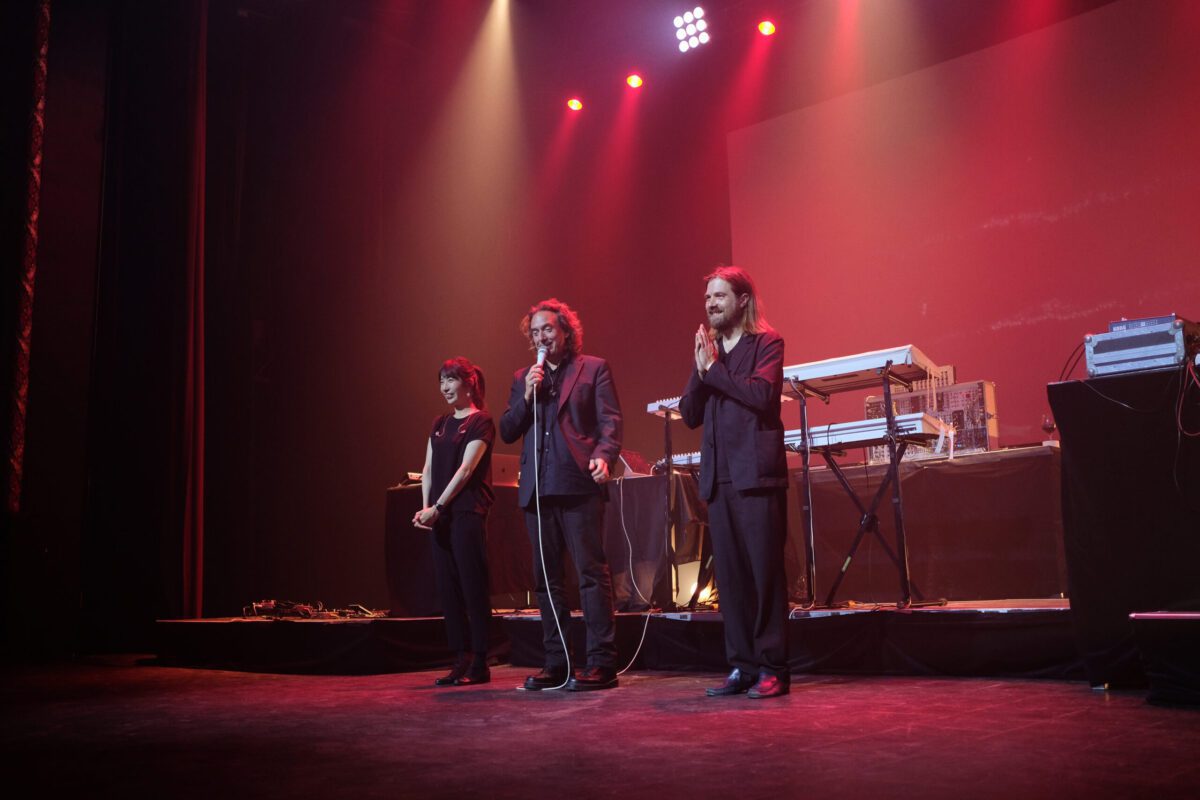
The band has had a rotating cast of nearly 30 members and for the last 20 years, it has been piloted by leader, Thorsten Quaeschning—who was the chosen successor of Froese after his death in 2015. A younger synth player, Paul Frick, joined three years ago, and Hoshiko Yamane also came on violin, 12 years ago. So this is the three-piece that is Tangerine Dream now and this is what we witnessed on the last day of Pop Montreal at L’Olympia, and it was … fine.

I do have to say that some movements in the ever-expanding Tangerine Dream repertoire have legs, like the 2019 “Los Santos City Map,” from the popular video game, Grand Theft Auto V. Yet most of this concert, which almost spanned two hours with no opener, kind of drifted aimlessly. I guess I like way more variation in my synth-wave than eight-minute oscillating arpeggios that are slightly changed with some cool electro violin.


There was also next to no interaction with the crowd by the band, even as some of the crowd stood and danced. They could have been playing in an empty room. The visuals also seemed kind of lacklustre; cityscapes, trains, basically video that looked like it was pulled straight from Creative Commons.

I’m sure if I had witnessed the true Tangerine Dream back in the 1970s or something, my mind would have been blown. But now, in the year 2023, there are thousands of musicians who dabble in synths whose music seems way more out there than these old Tangerine Dream tracks, that only seem to dazzle and exist based on nostalgia. A cool live show, but not one I’ll do my best to remember.

Subscribe to our newsletter