classique

Virée classique de l’OSM | A Requiem of Contrasts

by Alexis Desrosiers-Michaud

The PAN M 360 team is very present at the Virée classique, presented by the OSM. Alain Brunet, Alexis Desrosiers-Michaud and Alexandre Villemaire report on what they saw and heard at the concerts presented in Montreal until August 18.

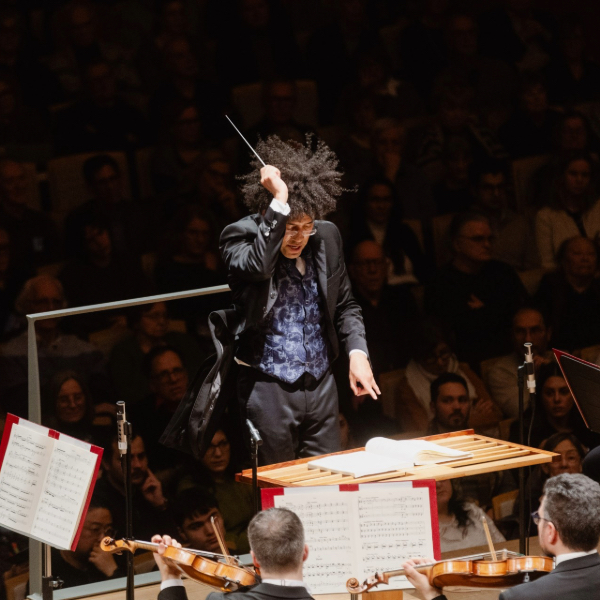
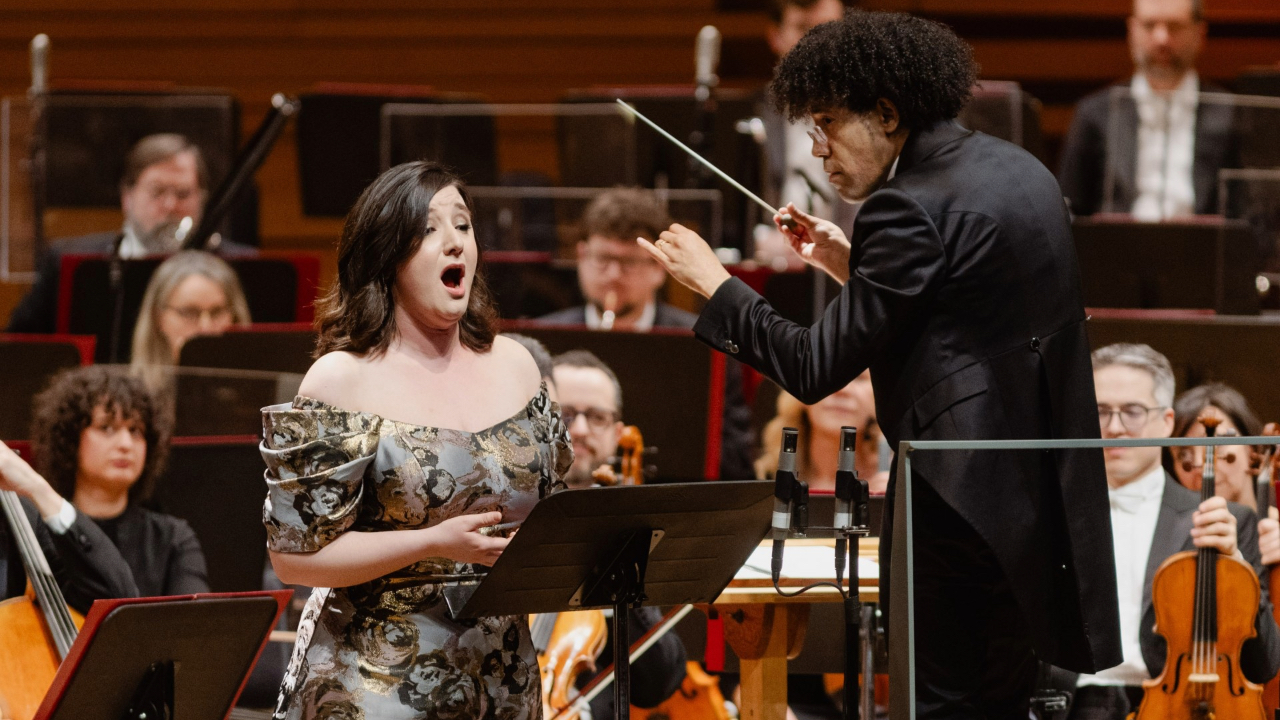
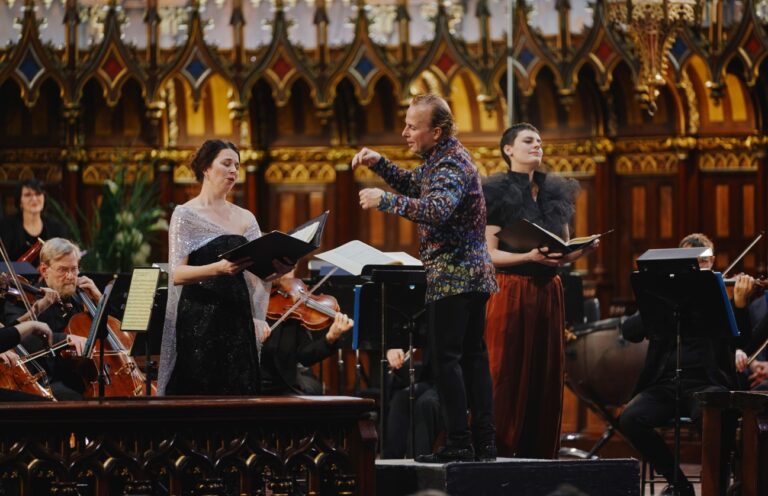
The Orchestre symphonique de Montréal and its choir were in top form for the first concert of the Virée classique weekend, in Guiseppe Verdi’s Requiem.

What’s striking from the outset is the respect and accuracy of the nuances, as indicated in the score; the “very soft” indications are almost imperceptible, and the “very loud” ones shatter the ceiling, to the point of literally vibrating the plexiglass on stage. On the other hand, when singing piano, consonants must be exaggerated, and both soloists and chorus lose the first consonants of words. Conversely, the consonants at the end of words are more sonorous.

The four soloists, including the tenor, Oreste Cosimo (forgotten in the program), sing not with the score in hand, but placed on a lectern. In this way, they can “play” their text. Mezzo-soprano Rihab Chaieb stands out in this respect, detaching herself from the score to interact with her counterparts, or staring at the audience to convey emotion.

The chorus is solid, fair and balanced. It sings loud enough to take its place in the din of the Dies Irae and the Tuba Mirum. In the Sanctus, however, the orchestra and choir are on two different levels. The orchestra is loud and festive, while the choir is restrained and angelic. This part, with 8 voices, should stand out more to perceive the various entries and avoid being swallowed up.

Photo credit: Antoine Saito

Publicité panam
Classical / classique / période romantique

Virée classique de l’OSM | A Successful Trip on Mediterranean Soil for The OSJM

by Alexandre Villemaire

The PAN M 360 team is very present at the Virée classique, presented by the OSM. On the ground, in the free activities and the indoor concerts, Alain Brunet, Alexis Desrosiers-Michaud and Alexandre Villemaire report on what they saw and heard at the events presented in Montreal until August 18.

The Complexe Desjardins vibrated to the sounds of the Mediterranean with a solid and lively Montreal Youth Symphony Orchestra in a sunny program that hit the mark. The orchestra founded in 1976 and conducted by Louis Lavigueur was participating in its fourth time at the OSM Classical Spree, a beautiful symbolism and a participation that we hope to see continue between the Montreal ensemble and the young members of the orchestra, young people who, as Maestro Lavigueur rightly pointed out, will surely be among the new members of the OSM or the OM in the near future.

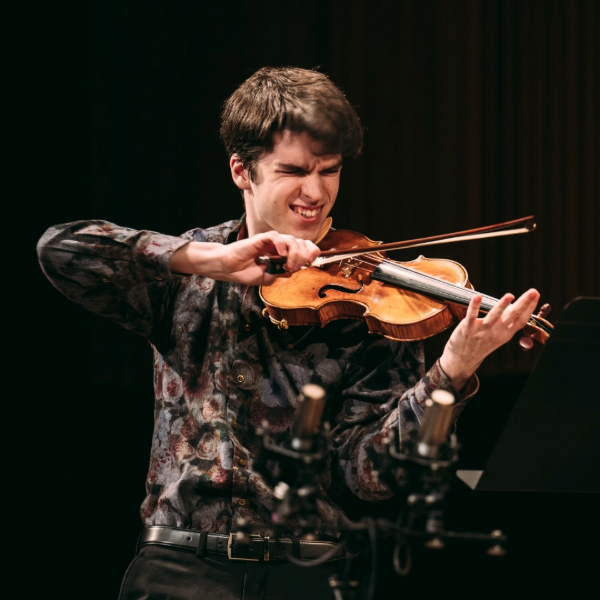
The program he had concocted allowed us to witness the quality of the musicians’ playing. Beginning the concert with the sparkling “Overture” from Rossini’s opera L’Italienne à Alger, the orchestra then welcomed violinist Justin Saulnier, winner of the 2nd prize at the OSM Competition in 2023, to perform the fifth movement of Édouard Lalo’s Symphonie espagnole. Saulnier demonstrated great technical agility with a clear and biting sound, despite a few minor communication challenges with the conductor, particularly for a few slowdowns. However, nothing major to spoil the performance. Certainly the most complex piece on the program, Darius Milhaud’s Suite Provençale offered a most exciting play of texture and color. The orchestra concluded its one-hour performance with a most invigorating interpretation of Rimsky-Korsakov’s Capriccio espagnol, in which several instrumental sections of the orchestra were able to shine with their mastery of their instrument.

Photo credit: Gabriel Fournier

Publicité panam
classique

Virée classique de l’OSM | Telling the Story of Madame de Staël in Music

by Alexandre Villemaire

The PAN M 360 team is very present at the Virée classique, presented by the OSM. On the ground, in the free activities and the indoor concerts, Alain Brunet, Alexis Desrosiers-Michaud and Alexandre Villemaire report on what they saw and heard at the events presented in Montreal until August 18.

Entitled Sur les traces de Madame de Staël, Esther Laforce, a librarian at the BAnQ, offered a musical journey through part of the work of the French and Genevan woman of letters accompanied by the harpist Antoine Malette-Chénier. The novel Corinne ou l’Italie served as the backdrop to the story. The audience was led to discover the eponymous character of the author, an Italian poet, and her love story with Lord Oswald Nelvil, an English nobleman. The sustained research and the story painted once again very aptly constructed by Esther Laforce are presented as a form of ambulatory where we follow the evolution of the relationship between the two protagonists, in particular through their state of mind and through different mythical places in Italy, from Rome to the Kingdom of Naples. Commenting musically on the action with pieces taken mainly from the 18th century harp repertoire (Krumpholtz, Petrini, Naderman), Antoine Malette-Chénier played his role to perfection, embodying in his own way the character of Corinne whose lyre was the instrument of choice. His interventions were in turn marked by lightness, melancholy and torment.

Despite a good musical performance, we found it more difficult to connect with the story and its characters, compared to last year when the epistolary relationship between George Sand and Frédéric Chopin offered lighter and even humorous moments. Here, the style of the language and the content of the subject require a little more sustained and internal concentration, which the open and semi-crowded location of the Espace GEL makes more difficult to fully appreciate.

Publicité panam
classique

Virée classique de l’OSM | Kick-off to a Mediterranean weekend

by Alain Brunet

Soberly and aptly hosted by André Robitaille on the Esplanade du Parc Olympique in front of a mass audience, the kick-off to the OSM’s 11th Virée classique was another opportunity to open up to a planetary conception of classical music, at the very least a Mediterranean one. Bringing together in the same program Pyotr Ilyich Tchaikovsky, Hector Berlioz, Ottorini Respighi and Joseph Tawadros, the great oud soloist and contemporary composer of Arab classical music, was another sign of the times and a further illustration of the inclusive globalization of classical music according to the OSM and Rafael Payare.

First, the tragic loves of Francesca da Rimini, a 13th-century Italian woman immortalized in Dante’s The Divine Comedy, and who inspired the Russian composer in a work written in 1876. Does this symphonic fantasy include elements of Mediterranean culture? In the novelistic inspiration, certainly, but it’s not really out of keeping with the Tchaikovskian style, whose genius we appreciate once again. This vigorous work, with its rockets of strings and woodwinds, its fireworks of brass and virtuoso circonvolutions of strings, was served up with brilliance, passion and high virtuosity.

At the center of the program was the Ouverture du Carnaval romain (1844), a vigorous work based on themes from his opera Benvenuto Cellini. The impression of compositional genius is less strong here, but the execution is more than adequate.

Second and fourth on the program, oud player Joseph Tawadros, born in Cairo but raised in Australia, gave us a few hints of his hybridization of Arab classical music in a Western symphonic version. Originally dressed in a pink shirt, oriental bonnet and stylized moustache and beard, the virtuoso instrumentalist took to the stage in two compositions for oud and orchestra. The oud is a string instrument very similar to the lute, and a forerunner of plucked string instruments such as the guitar, and has become increasingly popular in recent decades. Tawadros’ symphonic works on this program are not of profound harmonic singularity and complexity, but rather an extrapolation of their melodies and specific oud parts. Permission to Evapore evokes the death of the composer’s parents.

As its title suggests, Constantinople takes us to the frontiers of East and West, where orchestral constructions are relatively limited harmonically, as they are primarily at the service of melody and rhythm, as is the case with classical Arabic music, which until recently has eschewed polyphony. For these reasons, one may have the impression of instrumental pop rather than great music, but this is an illusion, for the qualities of these works lie elsewhere, notably in that virtuoso line exquisitely executed in unison by Tawadros and Andrew Wan, OSM concertmaster.

Last but not least, we were treated to music composed in 1924, the second symphonic poem in a trilogy dedicated to Rome. Exactly a century ago, Ottorino Respighi was expressing the grandeur of Rome in music, and Pini di Roma is a fine example of this. The modernity of some of the orchestral harmonies developed at the turn of the 20th century is evident. A blend of post-romanticism and modernity, this symphonic poem includes various elements of popular music, including a march that we would describe as legionary in the conclusion, preceded by the superimposition of pre-recorded birdsong, as Respighi had intended. A visionary of his time, you say? A fitting conclusion to this Voyage méditerranéen, which precedes several other sound experiments inspired in one way or another by Mediterranean musical culture.

Publicité panam
Opéra-rock

Starmania: The Temptation to Exist

by Claude André

In its latest incarnation, the hybrid postmodern rock opera created by Michel Berger and Luc Plamondon in 1978 is given a new lease of life thanks to a new reading of the libretto and a breathtaking staging.

At a time when bombs are raining down and terrorist attacks are multiplying around the world, when a character shaped by TV could once again become “president of the universe” with the help of a social networking tycoon, Starman’s dystopia is truer than ever.

Add to this a group of idle, violent zealots, a populace enslaved by fake news and nihilistic outsiders asking existential questions about the meaning of life and unconventional love, and you have all the ingredients that crystallize today’s society, represented by the intersecting destinies of eight characters, seven of whom will die in a metropolis of skyscrapers where people are obsessed with celebrity and radicalism.

“To propose a readable narrative, beyond the autonomous life that the songs have acquired in 40 years of success (…). To update this booklet, which is certainly visionary, but still very meaningful today, by working on the order of the songs, the transitions, and by bringing back a character who has disappeared since the first version (the guru)…”.

This was the aim of director Thomas Joly, the man behind the grandiose and provocative opening of the Paris Olympics, using a multimedia approach sometimes inspired by direct cinema.

In order to capture the emotional essence of the work, before the dazzling success of the various versions diluted it, whether by a note here or a tempo there, this new version was inspired by the handwritten score of the late Michel Bernholc, arranger of the original version.

From a visual point of view, thanks to ambitious machinery, flamboyant costumes and sophisticated, captivating light architecture, most of the songs that have accompanied our lives for decades are sublimated.

Most of them? It has to be said, some of the pieces seem duller than others, given the bouquet of immortals in the work, which can slow down the rhythm.

So, if the old-school author of these lines was sometimes looking with a certain nostalgia for Balavoine’s ardor in Quand on arrive en ville, or Dubois’ charismatic, mocking posture in the famous Blues du businessman, or Fabienne Thibault’s infectious despair in Le monde est stone, we have to face facts: today’s performers have more than held their own, and will no doubt leave their mark on younger generations just as their predecessors did, although we might have hoped for a greater tonal variety in the choice of female voices.

Despite this drawback and the acoustics that caused some of the rhymes to shatter in the arena that was originally Place Bell, this generous show, which lasts a good three hours (including a twenty-minute intermission) and features some thirty singers, dancers and musicians, proves in our eyes to be the ultimate version of this now cult rock opera.

Photo Credit: Anthony Dorfmann

Publicité panam
Indigenous peoples

International First People Festival – IA, Maori Soul Pop in The Rain

by Alain Brunet

From New Zealand, traditional Maori instruments are integrated into an embodied soul pop. The band’s leaders have clearly thought through their hybridization, as laymen are likely to feel the pop spirit before they discover the Maori flavors.

Māori music collective IA blends taonga pūoro and electronic pop to generate a singular sound. The singer expresses himself mainly in the indigenous language and also in English, reflecting real life in the homeland.

We’re looking at true pros of soul/R&B-tinged pop, with the warm, righteous voice of the soloist (Reti Hedley), the harmonies of the keyboards and the groove of the bass (Moetu Smith) telling no lies. Traditional instruments, especially flutes and percussion, become the Maori ornaments of a global pop whose basic referents are familiar to anyone even remotely connected on this planet. The key to IA’s success lies in this question: should we really be seeking a balance between local and global culture? At IA, this seems to be a sincere and legitimate preoccupation to achieve that artistic identity called indigenous soul music. Based in Waikato, the group is dedicated to highlighting taonga pūoro and Te Reo Māori in its music.

Once again, it’s a shame that the generous remnants of Storm Debby have begun to fall on Montreal, as IA could have generated a lot more interest among music lovers curious to see where Aboriginal pop is at in Oceania.

Publicité panam
Indigenous peoples

International First People Festival | Manawan Hip-Hop Nation

by Alain Brunet

Yann Ottawa aka The RZMN, from the Atikamekw Nation of Manawan, demands our full attention, as he teaches us about the life of his nation, both private and public. With his brother, he raps and sings in Atikamekw, using dramatic chords to coat his flow and melodic lines, sometimes filtered through autotune, and inclined to melancholy. Music runs in the Ottawa family: his father plays guitar and his brother enjoys percussion.

Obviously, he’s more inclined to hip-hop, reggaeton and rap keb, since he expresses himself a lot in French – and also in his mother tongue. In 2022, Yann Ottawa and his brothers released their first mixtape, Bigman Recordz, Vol. 1.

Unfortunately, it was raining on this Thursday evening, and RZMN and his colleagues performed on the main stage of the Place des Festivals in front of a plantation of umbrellas. Under the umbrellas, however, the humans remained captivated. In front of the umbrellas, certainly, there was mastered rap, there were hooks, there were choruses, there were real stories about real life on Atikamekw land, there was real beatmaking, there was a real good aboriginal rap show that we’ll have to see again and again.

Publicité panam
Avant-Rock / Prog Rock

International First People Festival | Subhira Quinteto, Contemporary Avant-Rock and Mapuche Culture

by Alain Brunet

Subhira Quinteto is said to be one of Chile’s most innovative ensembles. The group has been in existence for over a quarter of a century and enjoys a fine international reputation, touring the world music circuit. Clearly, Montreal was not yet among the cities they had conquered, so it was time to catch up on the Place des Festivals, on Wednesday August 6.

Their compositions integrate indigenous music with a kind of contemporary avant-rock, quite savvy in its rhythmic choices (almost always composed measures) and its prog rock or math rock aesthetic matched with contemporary Western music. Their leader, keyboardist and composer, Subhira (Rodrigo Cepeda), is an award-winning professor of composition at the École de Musique Moderne and runs the Mundovivo label. The line-up is made up of drummer Emai Cepeda, violinist Danka Villanueva and flutist Ema Morales, not to mention cellist Juan Angel Muñoz, who was principal cellist of the Santiago Philharmonic Orchestra, has played as a guest with countless national and international artists and orchestras, and will be joined for much of the concert by Khano Llaitul Fernández, an external member of the Chilean team.

This indigenous Mapuche artist and activist is said to have done remarkable work as an advisor on indigenous themes, education, dramaturgy, Mapuche musicology, and the dissemination of art, culture and indigenous rights. You can hear him declaiming, shaking bells and blowing traditional instruments. This is a fine execution of concepts and cultural updates typical of the most open-minded artists of the 70s, 80s and 90s.

Publicité panam

Osheaga: Chappell Roan Could Literally Kill Us All and Get Away With It

by Lyle Hendriks

I think Chappell Roan is about to become one of the most successful musicians of all time, and this summer will be the point we look back on as the moment she caught fire. I arrived at the mainstage a full 30 minutes before Roan’s scheduled start time, and was surprised to find myself completely and utterly late. Before long, I was lost in the throng, some 30,000 people all pushing towards the front, cheering at nothing as the electric charge of Roan’s imminent appearance climbed and climbed.

When Chappell Roan and the band took the stage, the sound was deafening. Dressed in a stunning, drag-inspired fairy outfit, Roan wears the pop-star persona as if she was made for it. And from the very first song to the last, 30,000 people screamed every single word. Cleverly, most of the straightforward lyrics were displayed behind her, which means that I—as someone who had never listened to an entire Chappell Roan song in my life—can’t stop singing the hooks to “Good Luck, Babe!” and “HOT TO GO!” for the life of me.


We were like lemmings headed for the cliff. Again and again, people collapsed from the heat around me. One person next to me spent more than five minutes on the ground before finally getting medical attention. When she got back to her feet, I assumed she’d be headed to the exit. But no—she got right back to dancing and screaming her heart out. We might expect this lack of self-preservation from someone who’s been wearing a diaper at the front of the crowd for the last four hours, but we were nowhere near the stage. The show was simply that unmissable.

It’s hard to describe what makes Chappell Roan so completely phenomenal. Perhaps it’s her incessant energy as she bounces, crawls, and glides across the stage. Perhaps it’s the mostly unsung but utterly exceptional skills of her band. Maybe it’s Roan’s electrifying singing voice soaring over some of the most irresistible pop songs I’ve ever heard. She’s a sensation, a natural-born icon, and she put on one of the best shows I’ve seen in my entire life. 

By now, I think we’re all ready to say goodbye to the last generation of pop stars. We’ve had more than enough millennial acts cram their boring songs about stupid men down our throats. If the crowd at Chappell Roan’s Osheaga set is anything to go by (and it most definitely is), we’re ready for hot tracks from weird queers. We’re ready for something more real, something in sync with the discordant world we live in, something that reaches out, grabs us by the throats, and makes a mess of us. “Lightning in a bottle” doesn’t even begin to describe Chappell Roan. She’s a nuclear bomb in a Birkin bag, and I can’t wait to see where she touches down next.

Photos By Tim Snow

Osheaga, Day 3 | DIIV, shoegaze and post-punk in the rules of art

by Alain Brunet

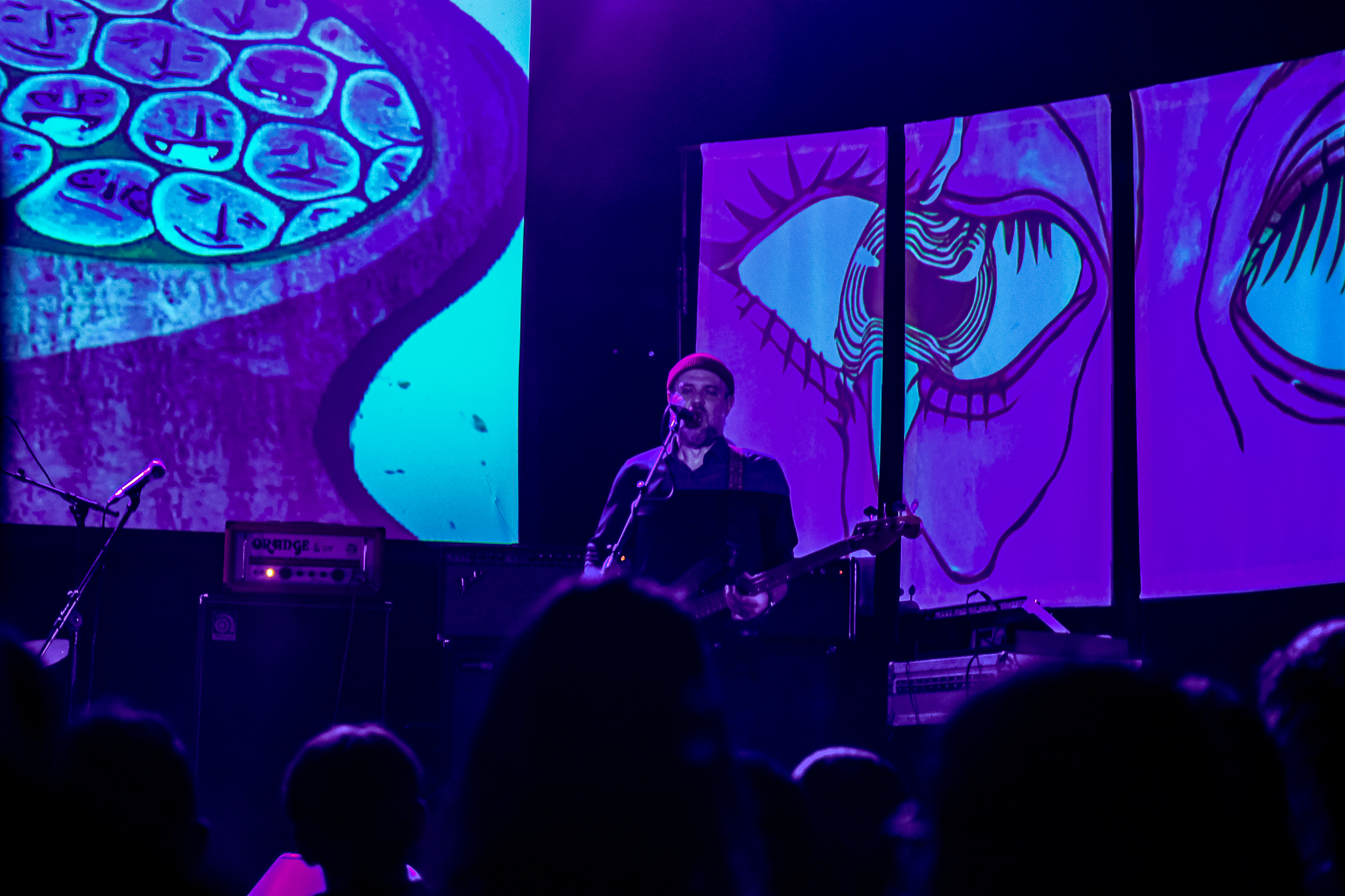
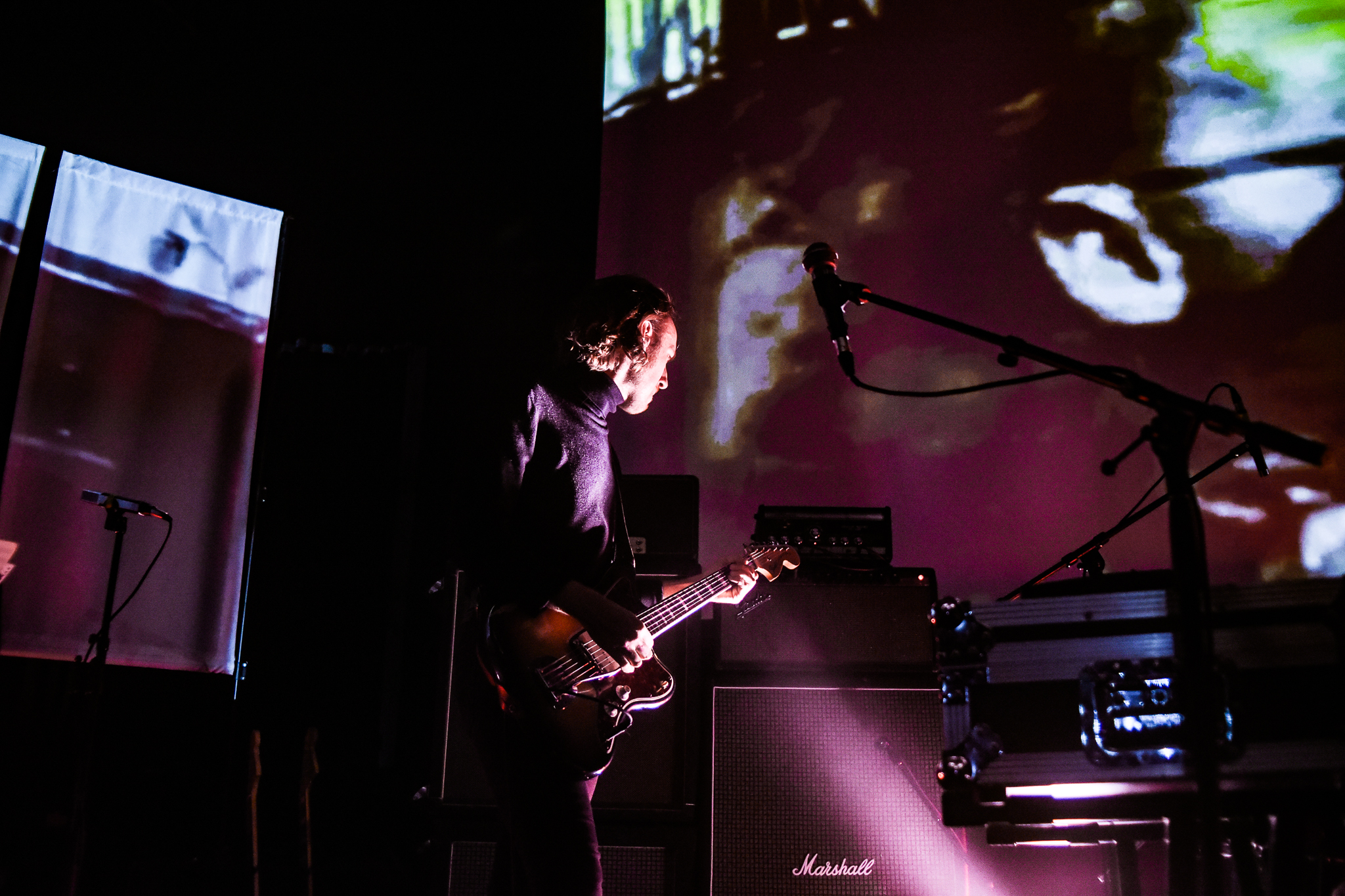
DIIV, a Brooklyn band that has been around since the early 2010s, could be said to be in the second division. Prized by connoisseurs of shoegaze and post-punk, DIIV performed at Osheaga and kept us glued to the Verte stage.

Nothing new under the blazing sun, perhaps, but it is always a pleasure to discover late in the day a group that has fully mastered its references and is capable of telling a 50-minute story without any loss of interest on the part of the audience.

There is no real frontman in this formation, the singer and bassist Caulin Caufield does his job quite adequately but clearly does not have the ascendancy of his colleague Zachary Cole Smith. Obviously, the guitarist is the main designer of the music proposed here, the central musician of this American quartet accompanied by two guitars, a bass, a drum kit and electronic complements that enrich the textures generated by the guitar pedals.

It’s heavy, it’s textured, it’s hypnotic, it’s unkempt like its leader. And it’s really good. We suggest you listen to the recent album released by Fantasy Records, Frog in Boiling Water. Let’s not see any contempt for Quebec’s amphibians here.

Photo by Benoit Rousseau

Publicité panam
Publicité panam

Osheaga Day 2 : Every Dog Has Its (Green) Day

by Lyle Hendriks

First and foremost, let me declare my respect and fealty for Green Day. As one of the all-time greatest bands to walk the Earth, there’s no denying the influence and importance of their early catalogue—a fact that they seem keenly aware of, considering their tour for their new album, Saviors (Reprise Records, 2024) is actually just them playing Dookie (Reprise Records, 1994) and American Idiot (Reprise Records, 2004) in their entirety.

Green Day’s new music is not good. It’s a washed-out imitation, trying to recapture not only the glory days of the band itself, but also anything even remotely popular from the pop-punk and alt-rock world in the last 20 years. And again, it seems that Green Day is completely aware of this fact, playing only a handful of songs off their new release, and then diving into an hour and a half of songs that we’ve all heard a million times.

Is it cool to see “Holiday” and “Basket Case” live? Sure, kind of. They sound exactly like they do on the recordings. Billie Joe Armstrong’s stage banter is well-rehearsed and devoid of surprise (except for when he forgets where he is in the song and asks what verse he’s on). Mike Dirnt keeps it locked down, playing root notes on bass like someone who makes a million dollars per year playing root notes on bass. Drummer Tré Cool, for all of his skill, resembles a Weekend at Bernies-esque meat puppet being controlled by a grip backstage. 

So what’s my problem? Green Day has atrophied around these ancient songs like a brittle old muscle, becoming aging, Botox-bloated men in denial who refuse to let any new life into their performance, only bothering to release a new album in order to have an excuse to play their old ones. For a band who made their mark as rebels, outlaws, and societal outcasts, I can’t pick out a single thing that’s now punk about Green Day. Between songs, I thought Armstrong might finally come out and say something that meant something. Perhaps he’d use his bulletproof status and inconceivably massive platform to speak out on the injustice that they claim to be against. 

But what do we get instead? Lame platitudes about ignoring the “propaganda” and “focusing on the music and being together.” Spineless, empty rhetoric like this is insulting, and he would have been better off telling the truth: “I don’t give a fuck about anything except making money off of you suckers.”

After being treated to the incredible Mannequin Pussy (who spent much of their precious set time ferociously attacking the church, rich white men, and the Palestinian genocide) the day prior, I couldn’t have been less impressed with the substance behind Green Day’s performance. With all due respect to the incredible achievements of Green Day over the past 37 years, it’s time for these old men to step aside.

Photos by Tim Snow

Osheaga Day 2: No Waves Steps Up

by Lyle Hendriks

If you ask me, Osheaga should be packed to the brim with local bands. And while I have my problems with this year’s lineup, there was one act they got right: Montreal-based, surf punk trio No Waves. 

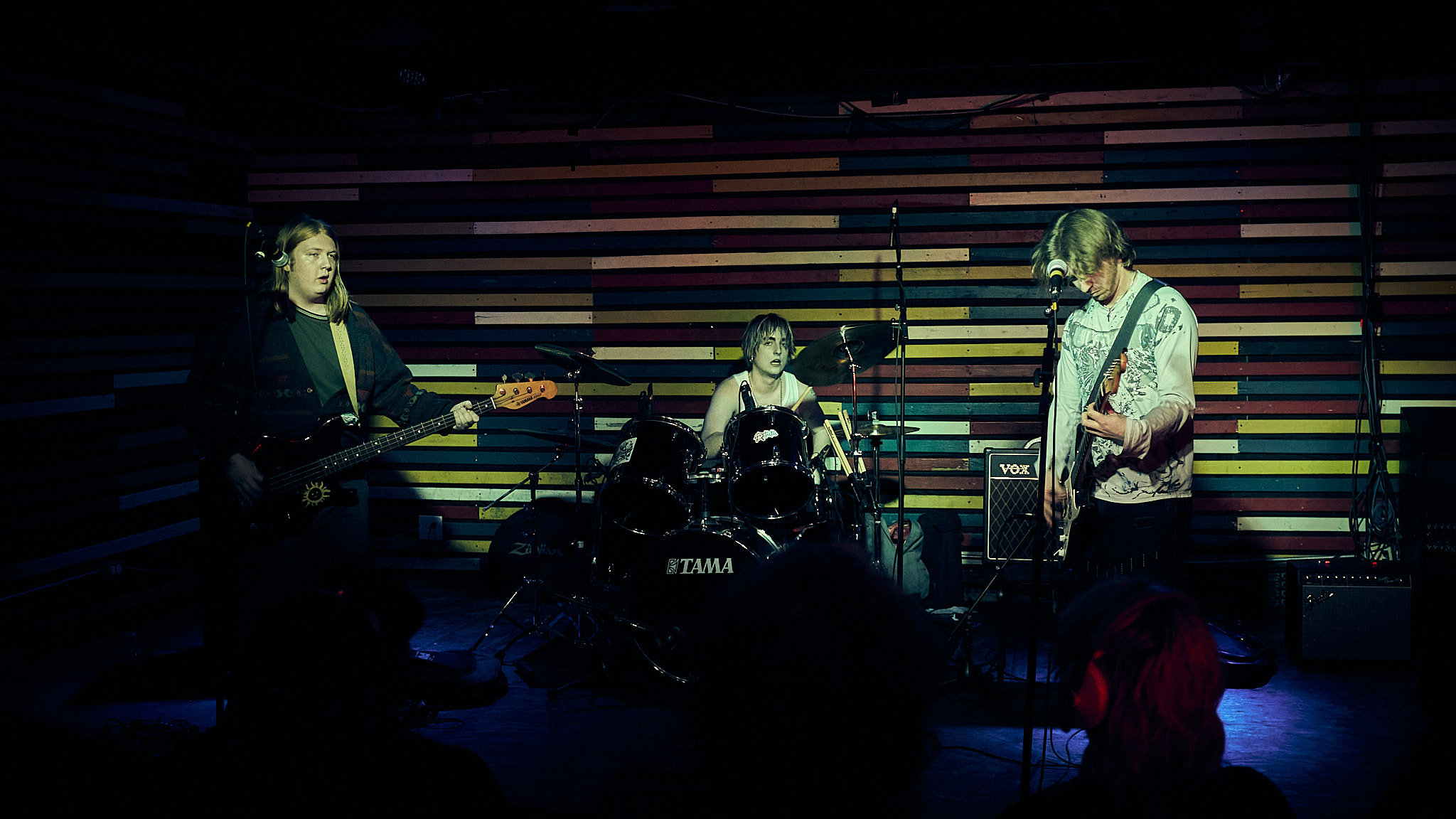
Fast, thrashy, yet fun, No Waves has incredible energy onstage, more than filling the space of the truly cavernous Osheaga stage. I’m not sure if I’ve ever seen a band that was more stoked to be playing, and the energy quickly became infectious as we watched guitarist/vocalist Angel Parra Vela sprint across the stage, climb onto the monitors, and pause to give bassist Cyril Harvin Musgni a kiss on the cheek. All the while, we were kept on track by thunderous yet oddly eloquent percussion from drummer Sam Sussman.


For some seven years, it’s just been these three—a group formed as teenagers and forged over the course of countless basement gigs and illegal DIY shows. It’s this raw exuberance that makes No Waves so captivating to watch. There’s an ease and familiarity to every motion, an undeniable complicité between this tight ensemble that makes it look easy. 


So when Sam is screaming into the mic while playing a whirlwind beat, when Cyril stands and delivers a nasty bassline as if he were hardwired to do it, when Angel leaps across the stage like a bat out of hell—it doesn’t feel like they’re putting on a show, or focusing on hitting the right notes. They’ve mastered their sound to the point that they can deliver, raw, unfiltered expression, using their instruments, voices, and bodies as conduits to deliver a live-fire demonstration that you can’t look away from.

It’s a privilege to watch established, world-famous acts on the Osheaga stage. But to me, it’s even better to watch one of Montreal’s hardest-working bands step up to the plate and absolutely smash it, bringing all the energy of their infamously sweaty, moshy gigs to the institution of the biggest festival in the country. It’s been a long time coming, but this is still just the beginning for No Waves.

Photos By Benoit Rousseau

Subscribe to our newsletter

Inscription
Infolettre

"*" indicates required fields

Type of Suscribers