Africa / Kora

PAN M 360 at Nuits d’Afrique 202 | All United by The Kora

by Michel Labrecque

The kora is one of the most fantastic African inventions. This 21-string harp, made of calabash (a large, very hard squash) and cowhide, invented at the end of the 17th century, allowed West African griots to create complex music with very rich harmonic possibilities.

My first auditory contact with this instrument occurred in the summer of 1979 (that doesn’t make me any younger…) in a post-hippie bar in Olympia, in the United States, during a community radio meeting. The Mandingo Griot Society record was playing and everyone at our table stopped talking; some started dancing. “What is this instrument, it’s so beautiful,” someone cried. We had to do our research later. There was no internet or cell phones. 

From the mid-1980s, the African wave swept across the West, bringing us multiple koras in its wake.  

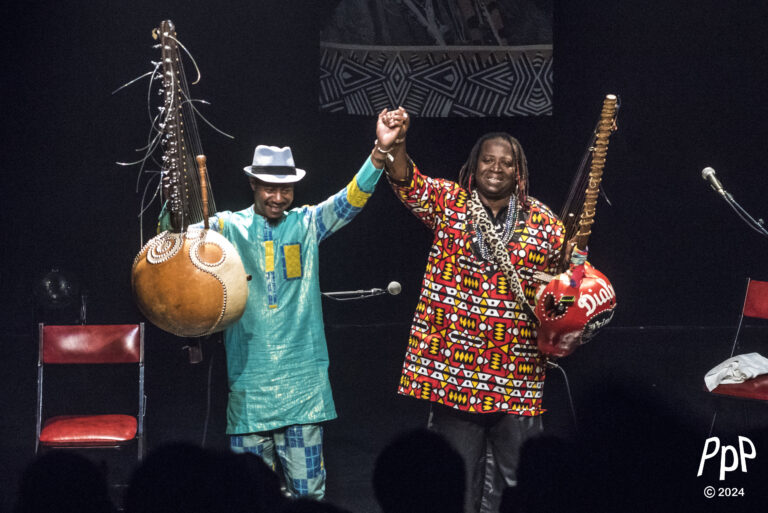
The Night of the Kora has become a staple of the Nuits d’Afrique festival. To embody it in 2024, who better than Prince Diabaté, nicknamed the “Jimi Hendrix of the kora”. Originally from Guinea Conakry, from a lineage of griots, these traditional Mandingo singing journalists, Prince Diabaté is an innovator of the kora, having sometimes merged with modernity, the WahWah pedal, rap and symphonic music. The prince of alternative Kara. 

However, at Gésu, this July 14, Prince Diabaté presented himself in a more intimate format, solo, with his all-red kora, with his name engraved on it. Is it for lack of resources or for concern for authenticity? Regardless, the result delighted the rather large audience.

Prince Diabaté completely merges with his instrument. He manages to extract unknown, unpublished notes, sometimes in cascades, sometimes gently. He also sings in a pleasant voice, or declaims words of traditional songs or compositions. He also sometimes hits the body of his instrument with force, to create rhythmic surprises. 

For me, there is something strangely timeless about this performance. I can not explain it. This sound, based on centuries-old traditions, is surprisingly current. 

Opening act, Malian-turned-Montrealer Diely Mori Tounkara. “We’re going to have fun tonight,” he said from the outset. Diely is less flamboyant than Prince Diabaté, but his more meditative playing, using a lot of reverb, is not without interest, quite the contrary. This distinguished artist of Montreal diversity gave us an excellent time. To cap off the evening, the two musicians played together, alternating improvising one after the other.

The audience, predominantly white but with a significant African component, was won over. There were no more races, languages, differences. Everyone was united by the kora.

Photo Credit: Peter Graham
Publicité panam
Jazz

PAN M 360 AT FIJM 2024 | June 28 at the Jazz Festival with Ambrose Akinmusire

by Michel Labrecque

Friday was my baptism of the 44th Montreal Jazz Festival. Getting back into it is always a blessing, especially when the weather is nice. In a brief moment, I was able to watch excerpts from performances by Sunny War, a young woman who reinvents the blues, outdoors, then by jazz poet Aja Monet, indoors. These two concerts were free, it was more than a treat.

In the meantime, I could see children bathing in the fountains of the Quartier des Spectacles and people of all origins waddling, chatting, smiling. The large outdoor stage was packed to listen to the jazz rock of Cory Wong. Not my cup of tea, but the crowd seemed to enjoy it. The eclecticism of the festival is very unifying. 

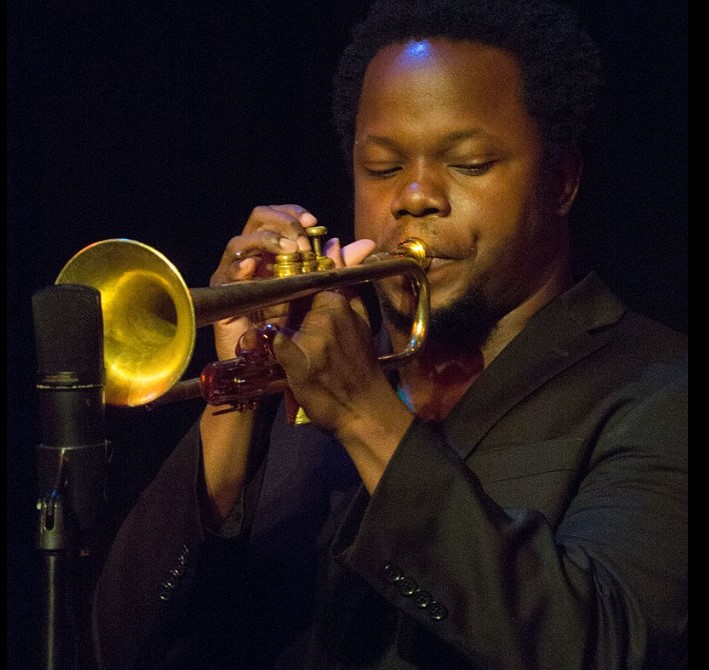
My favorite destination for this evening was Gésu, to hear trumpeter Ambrose Akinmusire perform solo. The 42-year-old prodigy trumpeter is alone on stage, almost completely in the shadows. Only his trumpet speaks, sometimes accompanied by the sound of voices. But what a trumpet my friends! A full sound, which inhabits the entire space. Where virtuosity alternates with long notes… and speaking silences. 

We are in the vein of his album Beauty is enough (2023), also performed solo. Ambrose Akinmusire explores every orifice of his instrument. He manages to make the trumpet sound in a thousand ways: sometimes it is a long blast of wind; sometimes the sound of his voice seems to harmonize with the brass. This trumpet belches, argues, rocks, cries, meows, calms, roars, sings. She explores all possible and impossible half-tones and quarter-tones. All these sliding notes that take us on a journey through our heads. With just a little reverb. I’m not always a big fan of the trumpet. But Ambrose’s is floating, poetic, learned, emotional, naked. The gentleman is also a great composer, as his other group albums have demonstrated. At the end of the concert, he finally spoke to us, explaining that this recital is, in part, an imaginary dialogue with other deceased trumpeters, notably Roy Hargrove and Wallace Rooney. For my part, as I listened, I imagined an infinite meditation, a therapy session, an atrocious war, people ranting in demonstrations and moments of absolute tenderness. My seatmates probably heard something completely different. We sometimes heard strange clicking noises during the performance. Was it a problem with the sound system or the effects the trumpeter wanted? The debate between spectators after the concert remained open. 

Today, Ambrose will perform again at Gésu in the company of veteran British double bassist David Holland. Many of us will be back.

Subscribe to our newsletter

Inscription
Infolettre

"*" indicates required fields

Type of Suscribers