In the context of International Women’s Rights Day, Arion Baroque Orchestra promises as many tears of joy as of sorrow—sometimes both at once—throughout this program built around the name Marie, an unavoidable one if ever there was one.
Marie, as in the mother of Christ at the foot of the cross in the moving cantata Il pianto di Maria by Giuseppe Battista Ferrandini, but also as in the first name of two eighteenth-century composers who left their mark on opera—Grimani and Agnesi.
For this program, Arion welcomes—fittingly—women of great talent: the contralto Anthea Pichanick and conductor and harpsichordist Marie van Rhijn, invited by PAN M 360 to give us a preview of the two performances scheduled for Saturday, March 7 at 7:30 p.m., and Sunday, March 8 at 2:30 p.m.
Alexandre Villemaire spoke with Marie via video call so that she could tell us about… Marie.
Publicité panam
PROGRAM
Antonio Vivaldi (1678–1741) Cantate Cessate, omai cessate, RV 684 Concerto in D minor for strings and basso continuo RV 129, « Madrigalesco » Maria Margherita Grimani (fl. 1713–1715) Cantate Pallade e Marte (extraits)
Intermission
Maria Teresa Agnesi (1720–1795) Serenata Ulisse in Campania (extraits) Giovanni Battista Ferrandini (1709–1791) Cantate Il pianto di Maria
Next Saturday evening, March 7, one of the highlights of the Semaine du Neuf will be presented at the Studio-Théâtre de l’Édifice Wilder: the multidisciplinary performance Hide to Show by the Flemish Belgian ensemble Ensemble Nadar, conceived by German composer Michael Biel.The work explores hyperreality, solitude, visibility, and synchronicity in the digital age.
Hide to Show, literally “to hide in order to reveal,” is an artistic reflection that illustrates how we synchronize with other human beings while simultaneously concealing ourselves. It also evokes our behaviour on social media and our use of avatars to better hide ourselves in order to express ourselves without restraint.
In the performance, eight musicians are filmed in real time—from backstage preparation to the moment they step onto the stage. A subtle interplay gradually takes shape, altering the audience’s perception of what is actually being performed live before them and what is not. A metaphor for our era, Hide to Show is explained here by Pieter Matthynssens, artistic director of Ensemble Nadar.
PAN M 360 : The artistic direction of the Semaine du Neuf presented your program Hide to Show as a major highlight—if not the highlight—of this year’s festival.
Pieter Matthynssens : I didn’t realize he had emphasized our program to that extent, and I’m very happy to hear it! We actually met him about two years ago in Strasbourg, I believe. He told me he had been very impressed by this work, which I would describe as a “stage composition.” We are very excited about the idea of presenting our work in Quebec. We will be performing at least three dates—we wanted to present at least three performances in Quebec (in Saguenay and Gatineau), partly for ecological footprint reasons.
PAN M 360 : This work was created by German composer Michael Beil. Can you remind us of the process behind it?
Pieter Matthynssens : The piece was conceived during the COVID lockdown. We had to postpone its performance, which ultimately turned out to be beneficial because it gave us time to study and refine the work. Its premiere eventually took place in 2021.
PAN M 360 : And Nadar is a Flemish Belgian ensemble?
Pieter Matthynssens : Absolutely. We are all Flemish and funded by the Flemish government. I’m based in Sint-Niklaas, in northern Belgium.
PAN M 360 : Let’s talk about gesture, movement, costumes, and scenography as part of the sonic material. Could you elaborate?
Pieter Matthynssens : Hide to Show is what I like to call a “stage composition” by Michael Beil. Throughout his career, he has worked extensively with live video. For this piece, he considered all aspects of the performance. He composed all the notes and sounds, but he also designed the entire video programming. Cameras are placed on stage to film and record the action in real time.
Additionally, he designed the set and costumes. The stage is divided into six compartments where the musicians perform, isolated from each other. Artists can also be separated from the audience by Venetian blinds, which double as projection screens when closed. Musicians are projected on these screens, making it impossible to tell whether the performance is live or pre-recorded. Michael Beil creates a virtuosic interplay between the performers and the video recordings, so much so that you can no longer distinguish what is really being played in front of you.
PAN M 360 : So it’s a dialogue between scenography, costume, movement, and performance. You are the ensemble’s cellist, but there’s also flute, clarinet, saxophone, percussion, violin, keyboards… and electronics?
Pieter Matthynssens : Yes, most of the time. The electronics come from a pre-produced tape. Michael Beil drew on the sound material of Hatsune Miku, the Japanese virtual singer who became famous performing as a holographic projection. Her “Leek Dance” went viral on YouTube, inspiring countless fan imitations. This dance became a starting point for Beil’s electronic work, which anime fans will recognize in subtle references. The performance also nods to the 1990s, American pop (including the Beach Boys), and the Belgian acid scene. Beil conceived this piece before the ’90s revival trend.
PAN M 360 : Why the isolation compartments on stage?
Pieter Matthynssens : In a way, it’s a very “COVID piece,” because we were all isolated. It reflects the virtual ways of rehearsing during the pandemic, which became a creative method here.
PAN M 360 : How do you see the relationship with the performers as actors? What are the interpretive challenges?
Pieter Matthynssens : We manage because we’ve worked with Michael Beil for a long time, since 2012. He had composed a 10-minute piece and thought, “This is the limit of what I can ask of a musician.” We said, “Really? We can do more!” Then he wrote a 30-minute piece, and we replied, “OK, we can reach the next level.” Finally, he said, “Now I’ll truly compose everything I can imagine with a performer,” and created a 70-minute work.
PAN M 360 : There are limits to human ability, though?
Pieter Matthynssens : The most important thing in Beil’s work is that we remain musicians. Yes, we perform gestures as actors, but these gestures are always connected to the music. We execute them in real time without feeling fake. The gestures become musical and are part of a precise vocabulary, like the musical material itself.
We achieve a very high degree of precision. Every movement is captured by cameras; mistakes appear in the recording, so we must be extremely accurate. The interpretive challenge lies in simultaneously combining musical performance with physical gesture. For example, I may play one measure, then pause, move, dance, and return to my instrument, sometimes singing in unison elsewhere.
PAN M 360 : So it’s difficult to perform all that?
Pieter Matthynssens : Yes, it may seem easy at first, but it’s complex, chromatic music, exploring microtones and shifting keys. For 70 minutes, our brains function like computers processing multiple data streams. We perform entirely from memory, without a score. After many performances, we now play flawlessly; the piece has become part of us, and muscle memory ensures an accurate interpretation.
PAN M 360 : Program notes say the piece explores hyperreality, solitude, and synchronicity with unseen humans who are observed or choose to become invisible.
Pieter Matthynssens : The core idea is exposure versus concealment. Knowing how to behave when the camera is on—or off—even though, in the end, it’s impossible. Michael Beil asks us to act as if we were at home.
PAN M 360 : Why? What is the work’s central meaning? Or is that question irrelevant?
Pieter Matthynssens : You’d have to ask the composer! Personally, I see the tension between live performance and recorded performance. Concert promoters always ask for videos of our shows. But the magic disappears when you watch only a recording. Being there, you realize the cameras have significance. The audience tries to discern the “real” live performance from the recordings. Michael Beil asks the question: to what extent can we manage the fake?
Publicité panam
A completely unhinged corporate retreat where a steroid-fueled host leads the event like a hallucinatory TED Talk cum musical, set to contemporary percussion music that draws as much from abstraction as it does from industrial Muzak or rock spectacle, barely scratches the surface of Architek Ensemble and soprano Sarah Albu’s Quigital: Corporate Retreat. Add to that audience members (you) who will be part of the show as employees of the multinational Quigital, complete with access card, corporate email and all the trappings of a loyal employee trying to become better, unaware that their job is on the line until the end of the show. Ouch, but what bit composer and designer Eliot Britton and made him embark on such an adventure? Critiquing corporate culture, surveillance capitalism, or just having fun? A little bit of all of that, actually. I met with Eliot, Ben Duinker from Architek, and Sarah Albu to talk about this intriguing and potentially fascinating show.
The show was written by Eliot Britton, Patrick Hart, David Arbez, and Kevin McPhillips.
The staging and dramaturgy are by Marie-Josée Chartier.
The interview is bilingual (French and English)
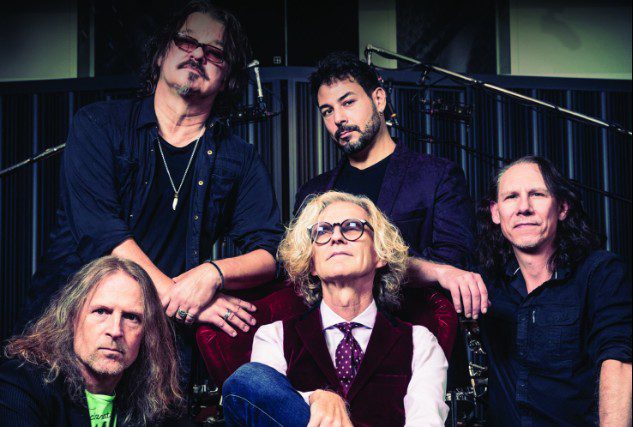
Among Quebec’s favorites in Scandinavian rock, The Flower Kings remain at the forefront. For Friday, March 13—the date of their stop—it’s easy to anticipate a well-filled Palais Montcalm to welcome the Swedish quintet, preceded by California’s multi-instrumentalist and singer Neil Morse, himself part of the prog movement that unites so many Quebec fans. For this occasion, which promises to be very special for fans in Quebec, PAN M 360 connected with the leader, guitarist, and singer of The Flower Kings. Roine Stolt was reached at his home in Uppsala, a town located 60 km from Stockholm, where the 69-year-old musician was born and still lives… and who couldn’t care less about the stylistic labels people try to attach to him. A must-read!
PAN M 360 : We’ve known The Flower Kings for a long time. You have 14 studio albums, 5 live recordings. That’s a huge contribution to the prog—or even jazz-rock—scene.
Roine Stolt : I don’t think “progressive rock” is necessarily the right label for us… It’s rock, but beyond that, I don’t always know how to describe it. In my mind, when people say “progressive rock,” you start thinking of King Crimson, Yes, bands like that—or even Frank Zappa. Anyway, I didn’t get into music to play progressive rock. I got into it to play the music I loved. I like King Crimson, but I also love ABBA, The Beatles, Elton John, pop music in general. Any good music works for me.
PAN M 360 : No worries, we’re not tripping over the flowers on the carpet. Let’s talk about Love, your most recent 12-track album. Is there a connection to the current moment, or does it reflect what’s happening in your life?
Roine Stolt : For many reasons, actually. I’d say it’s not exactly a romantic Love, if you know what I mean. It’s more the love we feel for the planet, for our children, for our pets. That’s the starting point. As Burt Bacharach and Hal David said, What the World Needs Now Is Love… sweet love. I felt it was the right time to name an album Love. And I already have a good idea for the next album—it will probably be the start of a trilogy.
PAN M 360 : Go on…
Roine Stolt : Usually, I’m not really into concept albums, but at my age, you think a lot. You wake up early, your mind starts racing, imagining the day ahead, studio work, family, the news, the state of the world. That’s why lyrics have become more important, much more than when I started this band 35 years ago. Back then, the music was the main focus. It’s a personal development. Of course, the music itself has changed, too.
PAN M 360 : In what way?
Roine Stolt : I think especially about guitar solos, which used to feel very “cool” to me. Now I ask myself whether a new song really needs a guitar solo.
PAN M 360 : You have a sort of space-rock approach with the guitar—your solos are never overstuffed, not overly complex, not extremely fast, no shredding. Musicality comes before technical display.
Roine Stolt : Yes, for me, the starting point was probably the blues. I was very influenced by B.B. King, Duane Allman, and especially Jimi Hendrix. I first saw myself as a blues player, but with orchestral ambitions.
PAN M 360 : Sometimes, the guitar in The Flower Kings approaches David Gilmour’s space-rock style (Pink Floyd).
Roine Stolt : He probably had the same starting point—melody and tone over complexity. That doesn’t mean I like only that style. I also love guitarists like Allan Holdsworth, who was a major influence. But I never tried to play like him; he was unique and beyond my technical capabilities.
PAN M 350 : Understandable—Holdsworth (1946–2017) was one of the greatest of his generation. Your path is different because you are also a composer and orchestral designer.
Roine Stolt : Yes, and I stay open. I still believe my type of guitar can adapt to progressive, space rock, or orchestral rock concepts. There’s always improvisation in the guitars and keyboards in The Flower Kings.
PAN M 360 : How have you managed to keep the core of The Flower Kings together for so long? You must have some kind of magnetic force with your friends to keep the family united, right?
Roine Stolt : Yes, probably. It’s easier to see from the outside, but it’s probably true. We still feel like we’re learning and evolving, even if we’re all old.
PAN M 360 : What have you learned recently? For you, aesthetics still take priority over technique.
Roine Stolt : Yes, indeed. I’ve spent more time thinking about arrangements and production. I approach songs like orchestral works, with strings, woodwinds, brass, percussion. On stage, we have guitar, keyboards, bass, vocals, trumpet. The orchestral arrangements are also in the keyboards. I like to think we are different from other bands in our orchestral approach.
PAN M 360 : You could call it “chamber rock.”
Roine Stolt : Yes, that’s true. It’s a good way to describe what we do.
PAN M 360 : Do you ever invite extra sections, like a string quartet?
Roine Stolt : No. But I can say it’s a dream I had once in my life. I still think it would be really nice to do something like that.
PAN M 360 : You’ve played many times in North America, in Canada, and in Quebec, which is ideal for your kind of music. We’re northerners, like you. One could even argue that prog rock, space rock, and related styles have always resonated well in northern regions, both in Scandinavia and Canada.
Roine Stolt : That’s true. Even bands like Genesis, Gentle Giant, King Crimson, Emerson, Lake & Palmer, or the Canadian band Rush generated a lot of interest there, just like here. The first time we toured North America, we played in Quebec, at a venue called D’Auteuil. I even played in Quebec with Kaipa and Agents of Mercy. As for The Flower Kings, they’ve come to Quebec several times. Not long ago, I also performed there as a bassist in Steve Hackett’s band.
PAN M 360 : Will you play a mix of your past hits in Quebec or focus on songs the audience loves?
Roine Stolt : We’ll play several tracks from Love because we like the songs and enjoy performing them. Learning new songs is always a challenge. Of course, we’ll include a few older songs, maybe going back to Stardust We Are. But we won’t stick strictly to the hits.
PAN M 360 : There’s always a tension between what artists want to express and what the audience expects.
Roine Stolt : Yes. Lately, I’ve been listening a lot to European folk, northern and Mediterranean, music for accordion, violin… For me, evolution continues. I’ve spent a lot of time developing these sounds, and I’m still taking time to express musically what I love today.
Publicité panam
ATMA Classique, the largest independent classical music label in Canada, has just been acquired by the group GFN Productions, led by Nicholas Choinière, Gabriel Felcarek, and conductor Francis Choinière.
Founded in 2018, GFN Productions presents more than 100 symphonic concerts across Canada each year. For its part, ATMA Classique currently holds a catalogue of 780 albums. The label was founded in 1994 by Johanne Goyette and was later sold in 2020 to Guillaume Lombard and Les Éditions Ad Litteram, ATMA’s parent company until this latest acquisition. Needless to say, these young entrepreneurs aim to further expand the reach of ATMA Classique, particularly through their expertise in marketing and audience development. The parent company Les Éditions Ad Litteram, as well as the companies Studio Esplanade and Livetoune, were also acquired by GFN Productions, which intends to keep the current team in place.
The new CEO of ATMA, Nicholas Choinière, answered questions from PAN M 360 on the very day the acquisition was announced. The transaction is expected to have a major impact on the Quebec and Canadian music ecosystem.
What better way to wrap up a weekday afternoon than with early songs performed by two specialists, accompanying themselves on lute and violin?
As part of the concert series presented at Le 9e, ArtChoral welcomes the duo Ménestrel, who will appear on the top floor of the Eaton Centre this Tuesday at 5 p.m., presenting their new self-titled album released on the Leaf Music label.
Ménestrel was co-founded by Janelle Lucyk and Kerry Bursey, who blend early repertoire with Canada’s oral folk traditions. Beyond traditional venues, Ménestrel is committed to bringing the transformative magic of music to unexpected places. An angelic-voiced singer, violinist, and producer, Janelle Lucyk is part of a new generation of artists specializing in this repertoire. She serves as artistic director of Ménestrel, producing music drawn from early sources and orally transmitted folk traditions. She is also Artistic Director of Musique Royale (est. 1985), which presents concerts in historic spaces across Nova Scotia. In this case, Janelle also directs the new ArtChoral series at the Art Deco Le 9e Grande Salle, recently reopened to the great delight of Montreal audiences and beyond.
Kerry Bursey is a tenor and plucked-string instrumentalist whose voice is admired for its “radiant quality.” He is one of the rare tenors of this kind who accompanies himself on the lute.
On the eve of Ménestrel’s concert at Le 9e, Kerry and Janelle answer PAN M 360’s questions. PAN M 360 : Tell us about the foundations of the project—your original motivations.
Kerry Bursey: With Ménestrel, we enjoy bringing all kinds of songs back to life—sometimes works that are already part of the classical canon (John Dowland’s lute songs, monodies by Monteverdi and Frescobaldi, songs by Josquin Desprez), sometimes pieces forgotten after their original publication and later unearthed from dusty collections (songs by Binchois, airs de cour by Guédron and Ballard), and sometimes old folk songs that have become commonplace but that we revisit and recontextualize (À la claire fontaine, En montant la rivière – Ernest Gagnon collection). Others are largely unknown to the general public yet feel, upon first hearing, as though they’ve always been with us (The Outlandish Knight, Fear An Bhata, Robin Hood & the Peddler – Helen Creighton collection).
We make no distinction between learned and popular music. Our goal is to make this repertoire accessible and help our audience forget what era they’re in. By digging into the past, we rediscover an incredible and timeless wisdom. It’s important to us to keep certain songs quite literally alive.
PAN M 360: How did you choose to combine classical early music with traditional Francophone and Anglophone songs?
Kerry Bursey : It came very naturally for us to combine these two worlds, classical and traditional. What we call early music isn’t just written music—it’s also orally transmitted music. Many Canadian traditional melodies actually originate in older European classical repertoire, sometimes directly from Baroque collections of court airs.
It’s fascinating to see how melodies survive and mutate over centuries. When written music becomes oral—like many Quebecois tunes—it transforms, almost like a game of telephone. Sometimes a folk melody is later reworked by a composer into a theme and variations over a repeating bass.
In terms of folklore, we focus mainly on Quebec and Nova Scotia, which naturally leads us to the classical traditions of France and England—places where the lute flourished. The lute even made its way to Canada, though it didn’t survive as long here. Ultimately, we’re interested in these worthy sounds that have been forgotten.
PAN M 360: How was the recording conceived?
Kerry Bursey : The recording took place in Lunenburg, Nova Scotia, a UNESCO World Heritage Site, in the second-oldest Protestant church in Canada (St. John’s Anglican Church). Lunenburg and this church are central to the duo—it’s where Ménestrel gave its very first concert in 2019 and continues to perform several times a year, including an annual reduced-scale Messiah in December (a 12-voice choir, one player per instrumental part).
It’s also the home base of Musique Royale, directed by Janelle. The church is a very special place—a cultural and spiritual pillar for many Nova Scotians.
The album was recorded by Jeremy van Slyke of Leaf Music. There’s an almost “live” quality to the recording that captures Ménestrel’s concert spontaneity. It’s essentially a selection of what we consider the “hits” of our repertoire—a survey of the various styles we’ve explored over the years.
PAN M 360 : How does the stage performance differ from the recording?
Kerry Bursey: Performing live is what Ménestrel does most naturally. Many artists record first and then tour. For us, it’s the opposite. Since 2019, we’ve given numerous concerts, toured across Canada multiple times—in 2024 alone we performed in every province and territory—and also appeared in Europe.
PAN M 360: Tell us about your professional and artistic relationship.
Kerry Bursey: We met in Nova Scotia in 2019 and have been making music together ever since—not only in Ménestrel but also with several major early music ensembles across Canada.
A strong musical cohesion developed quickly between us. At first, our repertoire was primarily learned and written music—Renaissance and Baroque lute songs—but gradually our interest in early music expanded to include oral traditions and historical folk music.
We both began as classical instrumentalists who became deeply involved in vocal music, especially choral and ensemble singing. This helped shape our sound and distinguish us from more operatic vocal projects.
Our singing isn’t rooted solely in operatic bel canto. One unique aspect of the lute—and plucked strings in general—is the ability to accompany oneself while singing. This practice largely disappeared from the classical world but remained alive in traditional music.
Janelle Lucyk : Since meeting in 2019, we’ve collaborated extensively, both within Ménestrel and beyond. We strike a delicate balance between seeking a unified sound while maintaining enough artistic differences to complement each other. Once you’ve heard Kerry Bursey’s beautiful voice, you too will want to collaborate with him!
PAN M 360 : How do you present yourselves on stage?
Kerry Bursey: We are both singers and instrumentalists, so we accompany ourselves. Even when I sing, I play the lute. Janelle often plays violin to harmonize or provide introductions and interludes. The image of the minstrel is not just a singer but also an instrumentalist—often a lutenist—which was the premier accompanying instrument for nearly 400 years.
PAN M 360 : What does the role of the minstrel mean in 2026?
Janelle Lucyk : As the world evolves, we continue to turn to music for entertainment and comfort. The minstrel’s role remains. Music fulfills emotional, social, and spiritual needs in ways no other art form can—but only when the intention is sincere.
These old songs will remain alive only as long as they continue to speak to us. Human emotions haven’t changed much in 400 years, even if language has. If we can bridge the centuries, the emotional power of these songs remains immense. For now, we’re here to play them.
Kerry Bursey: The term “minstrel” suits our approach. We embrace the modern image of a traveling, versatile musician sharing melodies and stories from court to village, regardless of style or instrument.
There’s a freedom in that approach—a duality between learned and entertaining, written and oral. We aim to unite those worlds, blending classical and popular traditions while respecting historical practice. We try to recreate the experience of a song—without being overly rigid about musicology—offering a timeless sound that feels both detached from current trends and fully accessible.
PAN M 360 : What’s next for Ménestrel?
Kerry Bursey: We’ll continue refining our repertoire, sound, and mission. For something different, we’re touring as a trio with Vincent Lauzer through Prairie Debut, traveling to Western Canada with playful early arrangements of modern songs. We also have duo concerts scheduled across Canada in the coming years. Check out our online schedule!
The percussionist Krystina Marcoux has been dreaming of it for about twelve years. The creation she is about to present to the public at the festival La semaine du Neuf (organised by Le Vivier), on Thursday, March 5, 2026, at the Espace orange of the Wilder building in Montreal, will be anything but ordinary. At least, that’s the promise that the show Speak No Words/Le silence des mots offers us. I say show intentionally because it is much more than a concert in the traditional sense. With cutting-edge technology allowing the translation of musicians’ gestures into music and even into light shows, in addition to the interpretation on “normal” acoustic instruments, Speak No Words/The Silence of Words promises us an evening where both sound and gesture improvisation will reign, with added driving grooves and even a bit of deconstructed Bach. Wow. The proposal is extremely intriguing and appealing to any music lover with an auditory curiosity (and more). With Stick&Bow (the duo that Krystina forms with cellist Juan Sebastian Delgado) and the Paramirabo ensemble, it is the music of Philippe Macnab-Séguin and the cutting-edge technology of Christophe Lebreton that will be highlighted. I spoke about this creation with the main person involved and designer, Krystina Marcoux.
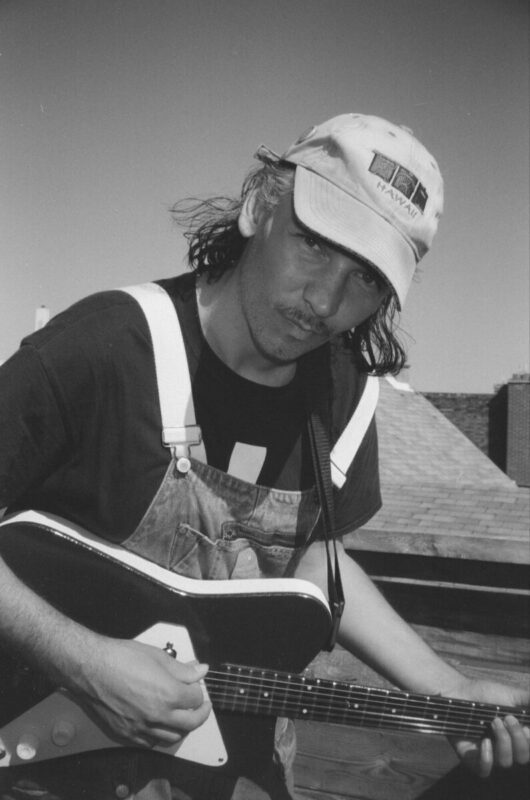
Listen, nobody asked Gus Englehorn to move to Wailuku, Hawaii and start hearing whales inside his guitar, but HERE WE ARE, here we all are, in 2026 or whatever year this diseased calendar has spat us into. But the man has done it, he’s gone and done the thing, he’s made another record, a year after the last one, which means either he’s cracked some cosmic code or the sun out there is doing something genuinely illegal to his brain chemistry. Frankly either explanation is fine, both are fine, we’ll take it, because The Broken Balladeer exists now and it’s got a marxophone (played by his wife Estée who also keeps the beat) on every single song and somewhere in there is a four-minute story about a governor’s son named Edrick who gets raised in a “Horsehair Purse” and ends up on an iron lung and NOBODY, including the man who wrote it, fully understands what happened…
That’s the whole songwriting game, isn’t it? Certainly is for Gus. You open your mouth, and gibberish falls out, and after two hundred hours, the gibberish has a melody and the melody has feeling. Here it is from the man himself, Gus Englehorn, The Broken Balladeer.
PAN M 360: You’re starting your tour in Montreal and then going on this crazy tour with Holy Fuck.
Gus Englehorn: Yeah, and we’re playing 15 shows in a row with Holy Fuck. I’m so scared. I’ve only ever done like five in a row. I don’t know what I’m gonna do
PAN M 360: You’re going to be roadworn for sure!
Gus Englehorn: It’s gonna be brutal, dude. I’m gonna look…, I’m gonna look 10 years older (laughs)
PAN M 360: But what a crazy opportunity to play this new album to a completely new audience.
Gus Englehorn: Yeah, I think their crowd will give me some needed energy.
PAN M 360: I have to admit, I didn’t think we would get a new album from you so soon. The Hornbook came out only a year ago, and now we have this new one The Broken Balladeer.
Gus Englehorn: Yeah! I mean, I’m usually like pretty slow, but in Hawaii, the songs just kind of, they just kind of ooze out of me. I have no friends and no distractions, and I wake up when the sun rises, and by the time noon rolls around, I’ve been playing guitar for like five hours, writing songs. I think the sun gives you energy too, it like changes your whole perspective a little bit. I feel like I’ve been way more productive since moving to Hawaii.
PAN M 360: That makes sense. Do you think Hawaii’s vibe has influeneced what you write about too?
Gus Englehorn: Yeah, for sure. I think you really have no control over it. Like you can choose where to live, but it’s one of those things that you can’t help. The other day I wrote this song about, you know, you stick your head under the water, and in Hawaii you hear the whales. So I play the whale sounds like on the slide guitar. So I wrote this song about the whales singing, and I’m kind of doing this slide thing ( heimitates whale sounds). That’s like the most direct Hawaiian thing, but I haven’t played a lot of slide guitar. I think I have the guitar in my hand so much that my left hand starts turning into a claw after a while, so slide guitar is nice because you don’t have to press it down too hard, you know?
PAN M 360: Yeah, I love slide guitar too. And there are lots of cool and sort of random instrumentation on this new album, too. An omnichord, a marxophone, which is super medieval.
Gus Englehorn: Yeah, dude, and the phone we were playing with was like from the 1800s. Like super old. Estée’s always kind of like bringing to my attention, like, weird, cool instruments. Like they use that instrument on The Smiths’ song “Please, Please, Please.” I was always like, ‘What is that thing?’ But there was one just in the studio, and we’re like, dude! So it’s like, it’s on like, every song.
PAN M 360: So did you record every song in the studio in Austin?
Gus Englehorn: Yeah, I only did one overdub this time, at home. Like one little guitar solo, if you could call it that. But we did the whole thing in like six days in Austin. We played some shows in Montreal and then were just like practicing, and then we imported a truck to the United States and drove it to Texas. Man, I was so tired when we got to Texas. I laid in bed for like three days there, and then we recorded the whole album.
PAN M 360: And you were recording with like legends, too, so you must have been super prepared.
Gus Englehorn: Yeah, it was nuts. Like Paul Leary and Stuart Sullivan, the two dudes who recorded the Sublime album, and then, [Mark] Kramer, who played bass with Ween and like The Butthole Surfers, and he played bass on it, and then frickin’ Howie Weinberg, who, like, mastered Nevermind. He mastered it. And that’s all, Paul. He would like call people up who were in town. We were so not worthy. But the first day, we recorded like 11 songs. Paul was like, ‘I’m astonished, usually, I would record, and there’d be, like, some dude, passed out on the floor.’ So I guess just the fact that we just weren’t completely obliterated the whole time, the bar was already pretty low, as long as you showed up sober and well-practiced.
PAN M 360: Ha, what a different time recording was back then. I also hear way more of Estée‘s voice on this one. Did you write it more with her voice in mind, guiding some of these songs?
Gus Englehorn: I think it’s just from doing all the live shows, and I just kind of started realizing after a while, like, ‘Oh my God, every time Estée sings, it sounds so good, I don’t really even know how to sing, so it’s, like, when Estée sings, adds this Pixies thing. Like I love Frank Black [Pixies guitar/vocalist], but, you know, when Kim sings in the back, it adds this beauty to the whole thing. Which is the same as Estée. I think Paul, too, was, like, ‘Well, we should probably have Estée sing on this one, too. ‘We never regret when Estée sings.
PAN M 360: I want to talk about that one song, “Horse Hair Purse.” It’s so catchy, and like I still don’t know what the hell is going on, but what is the inspiration behind that one?
Gus Englehorn: Dude, that’s one of Estée’s favourites, too. I don’t know what it’s about, really, either. I just started seeing this, like, cartoon in my head… I don’t know quite who the mother of Edrick, the governor’s son, is, but it’s like the governor abandons his son, who’s in the courthouse bathroom in a horsehair purse. And then he becomes kind of, like, a creature. I imagine him, living in a kind of bell tower, and coming out, like, doing crazy stuff. And that’s where they try to hang him at the courthouse, and the governor shows up, shoots the rope, and saves him. But then, like, some sort of, like, supernatural force rings out from the lake and renders Edrick, like, I don’t know, brain dead, or something. That’s why he’s being kept alive by an iron lung (12:09) in the governor’s house.
PAN M 360: You see, you’re explaining the story, but I still have no idea. This is like a book, and it’s a four-minute song. Where do you come up with this stuff?
Gus Englehorn: I mean, lately, last songs, I haven’t written anything down. I’ve just been kind of singing off the top of my head, coming up with stuff. It is definitely a mystery to me. I definitely don’t set out to make, like, even stories or anything, but somehow, it just starts kind of taking shape. I remember David Byrne, I was reading a thing with him, and he said he just started, like, shouting out a bunch of gibberish until the sounds kind of started sounding good and then that turned into words. I feel like that’s kind of what I do all day. Poor Estée has to put up with me just shouting gibberish and stuff all day. And then, you know, after, like, 200 hours, it’s like ‘All right, ‘”‘Horsehair Purse” has birthed.
PAN M 360: The Broken Balladeer. I know it’s a song, but why did that title kind of piece everything together for you?
Gus Englehorn: I’ve always been kind of fascinated by those, like, down on their luck, like, aging stars. Not that I’m … I’m aging, but I’m not a star. I’ve definitely got the aging part now. But I watched that movie by Ken Russell, The Boy Friend. It’s just this big theatrical kind of, you know, thing with Twiggy in it and stuff. And it’s just an awesome movie. And I just kind of, like, I started writing that song, the first song of the record, “Hounds Are Out,” and it starts with me saying ‘My hair is turning gray, as I stare into the mirror backstage and say, good evening, ladies and gentlemen, it’s showtime.’
And I just kind of was imagining my not-so-distant future, where you’re like, you’re super dishevelled, and all haggard from the road, and you’re like, you know, you’re The Broken Balladeer.
PAN M 360: That’s going to be you after the Holy Fuck tour.
Gus Englehorn: Yes (laughs). This is what I will become. It’s like a prophecy.
Photos by Estée Preda
Ta da da daaaam! The most famous riff by Beethoven will resound once again at the Maison symphonique: this coming Friday, March 6, the ensemble Caprice will perform the composer’s celebrated Symphony No. 5, and will join forces with ArtChoral for a performance of the Great Mass in C, Op. 86, as well as Mozart’s Ave verum corpus, K. 618. This repertoire is not Baroque in the least, yet these “adventurers” of Baroque and early music will offer interpretations that differ greatly from those of traditional symphony orchestras. Conductor of both ensembles, Matthias Maute explains the program to PAN M 360.
Wolfgang Amadeus Mozart, Grande messe en do mineur, K. 427
Ludwig van Beethoven, La Symphonie no 5 en do mineur, op. 67
Wolfgang Amadeus Mozart,Ave verum corpus, K. 618
Artistes
Chef d’orchestre
Matthias Maute
Sopranos
Janelle Lucyk
Myriam Leblanc
Ténor
Philippe Gagné
Basse
William Kraushaar
Chœur
Ensemble ArtChoral
Production
Production / DiffusionEnsemble Caprice
The Classica Festival will present its 16th program from May 22 to June 14, 2026. From Beethoven’s Symphonic Heptade to his Piano Concertos, Classica offers more than twenty programs performed mostly by Quebec artists. Reflecting a fully committed artistic vision, Classica 2026 features a hybrid program that blends instrumental and vocal music from the classical repertoire with new explorations in symphonic pop-rock, world music, and youth concerts.
“From its inception, the Classica Festival has defined itself as a space for sharing dedicated to all so-called classical music in multiple configurations, from various eras, origins and movements. With this 16th edition, the Festival embodies its mission more than ever: to offer a unifying program guided by a constant concern for quality,” emphasizes Marc Boucher in a press release.
But what else?
The general manager and founder of the Classica Festival gives a preview of its program, launched this week, under the theme “Concerts within your reach.” Concerts that embrace their potential!
Le Vivier is launching its Semaine du Neuf 2026, which will take place from February 27 to March 15, in various venues in Montreal. PanM360 will extensively cover the event featuring contemporary interdisciplinary music and concerts. Here, let us tell you about the concert that will be held on March 1st at the Studio-Théâtre of the Wilder Building in the Quartier des Spectacles. A multimedia concert in which the excellent Montreal instrumentalists of Architek Percussions and the Swiss ensemble Contrechamps will join forces, in addition to featuring video projections and electronic tracks. On the program, three Canadian creations: The Brown Gardener (Co-commissioned by Contrechamps / Le Vivier for Architek Percussion) for percussion quartet, by Alexandre Babel; AUTORRETRATO EXTENDIDO (Commissioned by the Contrechamps Ensemble, in partnership with Art Zoyd Studios) for instrumental ensemble and video, by Daniel Zea; and Crxssfaaz (pronounced something like “crossphase”) for instrumental ensemble, video, and electronics, by our beloved Nicole Lizée. I talked about all this with Serge Vuille, the Artistic Director of Contrechamps, an ensemble that will be on stage in Canada for the first time.
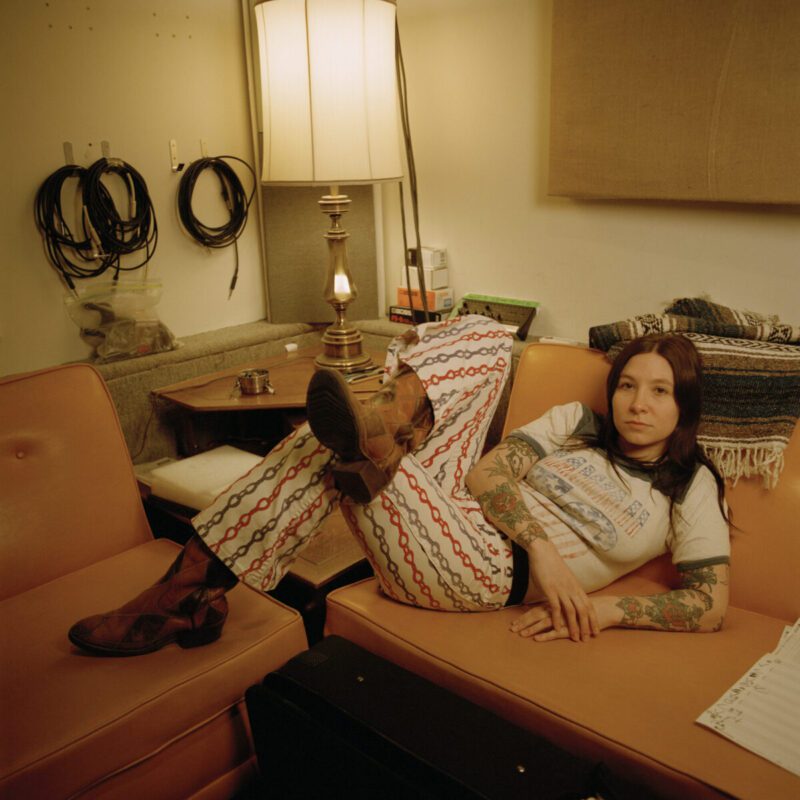
For those unaware of the country rock singer songwriter, Julianna Riloino, you may have heard her voice as part of Daniel Romano’s The Outfit. But since 2022, she has been releasing fantastic solo music. She just released a deluxe version of her sophomore album, Echo in the Dust, and is currently finishing her Canada East Coast tour in support of it. Echo In The Dust builds on the alt-country elements of All Blue. On top of that, she started her own record label, Moonwhistle Records, late last year. We spoke with Julianna Riolino about the new deluxe version of Echo in the Dust while she was in her home studio on her farm in Ontario.
PAN M 360: So you live on a farm? That must be great for inspiration as an artist?
Julianna Riolino: It is. I think that so much of my life, when I’m on the road, surrounded by people and having to be social. Having a place to relax and be, you know, quiet for a bit, is really nice in order to recharge. It used to be a fully functional farm back when, my cousins, who have had this place since the ’60s, were much younger. I like to grow my own vegetables and monopolize as much of the warm weather as I can by not having to go to the grocery store. So yeah, I dabble in growing a garden, but if a horticulturalist saw it, they’d be like what the heck is going on?
PAN M 360: Cool. Let’s get into your music. So what brought on this idea to release a deluxe version of Echo in the Dust?
Photo by Colin Medley
Julianna Riolino: So, when we were recording the album, we were able to record 14 songs, but the problem that I faced was that 14 songs on the physical album would have changed the demand for the physical record. So it would have had to have been like a double LP, which is a much harder sell. It’s also way more expensive, too. So I had to make the hard decision of cutting three of them. The hope was to have them be an EP or something. But then the album was released in October. I just felt like it was too sad to separate all of them. There’s a thread I think that binds all of those all of 14 songs together. Thematically, they go, and I tend to like once a record is recorded, I’m on to the next thing.
PAN M360: So basically, you needed to get them out there, but you didn’t want them to be separate from the album.
Julianna Riolino: Yeah, exactly. They needed to be bound together.
PAN M360: I suppose because you have your own label now, you can just do that too? You’re the decision maker. Was that the reason you started the label?
Julianna Riolino: I think so. I think I don’t like being told what to do. Which is maybe a character flaw or maybe it’s a good thing? I want to be fluid and have the freedom to make these decisions when I want to and release music when I want to release it. So that’s definitely a bonus. I have a lot more freedom, and I don’t have to, you know, wait.
PAN M 360: I love one of the newer songs, “Don’t Put Me in the Middle.” What spurred that one on?
Julianna Riolino: I think I look at songs as more like encapsulating feelings. So I think that like, it’s being in situations with people or in relationships with people where they’re dysfunctional, or you’re trying your best and nothing’s really good enough, and you have to decide to leave. So I mean, you can look at it as like my farewell to something that is no longer serving me, and it’s kind of identifying all of those different things, as you know, I gave it everything I could. It’s kind of me writing a letter to whatever fill-in-the-blank situation or person, and saying I tried my best, and you know, it’s all love and great, but I have to move on.
PAN M 360: That thread of moving on is definitely on this album, thematically.
Julianna Riolino: Yeah. I think that this is like another window into that. Like, I look at “Smile” as unpacking a lot of stuff and still being like really tethered to it. And then “Don’t Put Me In The Middle,” I always kind of compare it to—and I know this is like an insane thing to say because this is like an iconic song—but it’s like my version of “I will always love you,” by Dolly Parton. You know, she wrote this song for Porter Wagoner because she wanted to leave the show and move on to her own things. Like that was kind of what I had in my head, that motivated and propelled the song forward.
PAN M 360: Your first album, All Blue, is much more country, but Echo in the Dust really moves through different genres. Did you know you wanted this early on?
Julianna Riolino: There’s obviously the country nuances to all of my songs. Like people said All Blue was country, and I think yeah, “Queen of Spades” is a country song. But, like for more or less, it’s always just little little trickles of it. I think that Echo in the Dust is a lot more rocking than All Blue, and I think maybe some of the listeners were missing a bit more of that, like Americana.
PAN M 360: I wanted to ask you about glass staining. How did you get into that, and do you still do it?
Julianna Riolino: I went to school for Architectural restoration, and I went to a small, little, it’s like a trade college in Niagara on the Lake, which is really close to where I live. I ended up picking it up again during the pandemic. Stained glass is like the term that everyone can easily identify, but it’s more leaded glass because I’m not actually painting on the glass. Staining, that’s a whole other like scientific … that’s what you see in like churches, though, is stained glass. You’ll see leaded glass windows at churches, too, depending on how many of those windows at churches are sponsored by families. All of those windows are supposed to be like memorials for people who have passed away. So I don’t do that because of time. I did a restoration project this past fall. And I’ll do more when I have time. Last year was crazy. I think I got home from like a festival and then immediately went into this restoration project, and then I was back on tour again. So, I’m taking a break, but I think I’ll be back at it when I have a window of time, after the tour, maybe.