Eight editions of the Opér’actuel event later, the contemporary opera company Chants Libres is transforming its event into a larger biennial festival. Less often, but bigger, then. The first edition will take place from September 21 to 26, 2026. On the agenda, creations, of course, but also discussions, a professional market, and other activities quite original aimed at rooting avant-garde opera in contemporary creativity, at the intersection of theatre, dance, and new media. I met with the Artistic Director Marie-Annick Béliveau to discuss it.
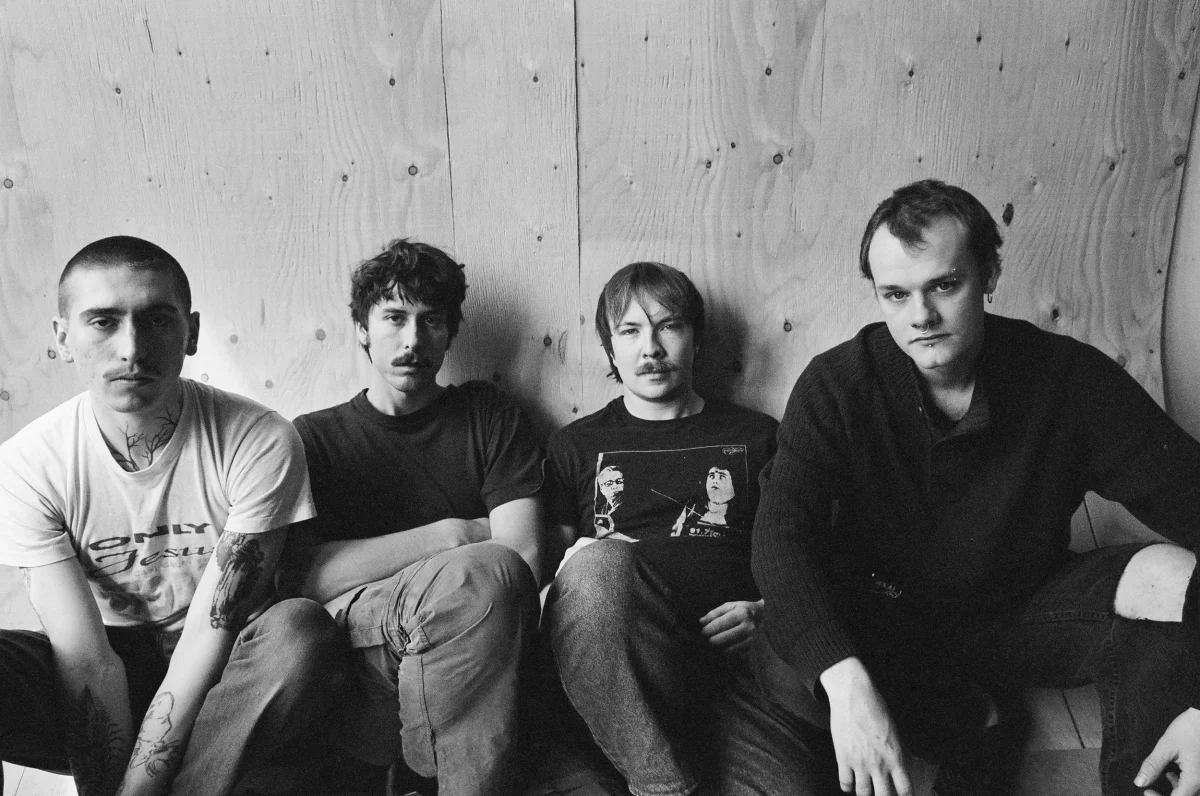
After two electric sets at FME 2026 and a chance meeting at Bar Pazzo, haha Laughing had us charmed. The charismatic pair wielded chaos on stage and exuded friendly Texan vibes when off. Aby Oviedo and Jay Dilick are each rockstar multi-instrumentalists, warping genre and theatricality into a performance style totally their own. Romantic partners first, the love between the pair on stage is clear even amongst their trademark “noisy rap shit.”
Noticing their many lyrical references to annoying band behaviour and misconduct, such as on “ROACHEZ AND MOSQUITOZ,” we wanted to get the lowdown on the Austin scene and how, haha Laughing had been received in the milieu.
“Sometimes, in the Austin scene, people just fucking suck and they still get to do their thing,” says Dillick. “There’s so much stupid high school bullshit drama that happens with people’s egos being way bigger than they should be.”
“The thing that frustrates me is that the Austin scene is very much not pretentious. So for someone to come in with that energy, I’m like, ‘this isn’t fucking LA,’” says Oviedo.
Though “ROACHEZ AND MOSQUITOZ” is inspired by run-ins with irritating band boys and clout chasers, Dilick clarifies that it’s not all metaphor. “It’s also about how there’s a fucking goddamn huge amount of roaches all the time. But they gave us the catalyst to write a song. It stemmed from Aby fucking around on a keyboard when we were recording the vocals for the last record, and I chopped it up.”
haha Laughing at FME
haha Laughing’s consistently updated catalogue of EPs is something to behold in the modern world of independent music, where so often artists are hindered by the devil’s bargain of creative control that quickly spills into maladaptive perfectionism. We were curious to know how haha Laughing cracked the code with their unique integration of influences and instruments, including guitars, live drums, saxophone, and countless illegal samples.
“I make all the beats for the most part,” says Dilick. “Then we write all the lyrics, and then we go and record them at this studio that’s right by my house.”
Oviedo clarifies that the ‘studio’ is a shed in some old lady’s yard, where Jay used to record with his old punk bands. But for the bulk of the production, Dilick prefers taking his work on the road.
“I do a lot of it in my car on my break at work, or I go to this bar, Tweety’s in Austin, all the time, and sit on the computer and make shit.”
“He’s always making shit,” says Oviedo. “Sometimes I have to be like, ‘can you slow down on making shit?’”
haha Laughing has come a long way from being Dilick’s pandemic-era solo project. Now, writing is much more collaborative between the pair, with songs like “SLIVERZ OF SKIN” and “DEATH SPIRAL 3” stemming from jams and writing sessions. The duo also loves picking up inspiration from unlikely (and uncleared) sources.
“I love “Wait (The Whisper Song)” by the Ying Yang Twins,” says Dilick. “And that turned into “NO SUDDEN DEATHS.” They don’t sound anything alike, but that came from the tempo and the vibe.”
“We love media. That’s our biggest influence,” says Oviedo. They take musical cues from video games, movies, music, and random snippets of dialogue on TV, including a crazy-sounding ‘yeah’ off Even Stevens.
“Not yet,” says Oviedo. “One day we’ll get sued. Probably by Disney.”
On the live instrument side, we were curious to know how Oviedo ended up being the band’s occasional brass player. “I always loved the saxophone. I always thought it was so sexy and honestly, there was a long part of my life where I was like, ‘whoever I fall in love with, I’m gonna make sure they’re a saxophone player.’”
“You never told me that,” pokes Dilick.
“And then one day I was like, ‘wait, I can be the saxophone player,’” continues Oviedo. “So I literally went on Craigslist and found this saxophone. I wasn’t a band kid.”
Oviedo made their onstage sax debut playing a “Funkytown” cover with one of Dilick’s bands at the time. “I was like, ‘yeah I can figure it out,’” they said. “That’s how it’s always been with music for me. I have no formal training. I just figure it out. That’s how I started playing bass, and then I did the same thing with drums.”
The Craigslist saxophone would later be lost when Dilick’s car was broken into, along with an old guitar and a computer with the only up-to-date mixes of haha Laughing’s 2023 EP, POST_MANIC_MIGRAINE_MUSIC. Looking back at it now, Dilick says being left with earlier drafts helped him let go of the project, set perfection aside, and finally put it out.
These days, Oviedo’s saxophone is less funk-infused and more freakout free jazz, adding aggression and sharp edges to the amped up, breakneck setlist. But after a relentless deluge of sweaty bangers, “LADYBUG NECKLACE” was a standout in both of haha Laughing’s sets. The sonic and emotional shift hits square in the chest, reminiscent of Yung Lean’s uncanny ability to take one from raging like it’s the end of the world to softly weeping.
“We like ending with a chill instrumental thing after yelling on some shit,” says Dilick. “The guitar on the beat is that Duster song “Gold Dust,” tuned down. The keyboard line is from a Little Uzi Vert-type beat YouTube video that I downloaded and chopped up. It felt like the universe was like, ‘this shit will actually work,’ because I did that shit in like 30 minutes.”
“I wrote all those lyrics going on walks and feeling out of place. And there are all these dead cicada shells on the ground. I was trying to find that line of being emo, but not too corny about it.”
“It is kind of corny,” says Oviedo. “But I feel goosebumps when I listen to it or perform it. Something about that song makes me cry.”
Dilick lets his guard down a little further. “I was kind of shy to put that one out,” he says.
“It’s raw emotion,” says Oviedo. “It’s about trying to keep your head up, despite everything. We’re trying to tug at heartstrings, whether it’s through us being silly, or screaming, or being vulnerable. That’s the kind of art I want to make.”
This is the compelling duality that looms so large in haha Laughing’s performance style. They are precise in their chaotic execution, their absurd, vulgar words perfectly audible and spoken with great intention. They don’t miss a beat moving between instruments. With the presence of a classically trained Shakespearean actor, Aby steps into their alter ego to scream soliloquies. Simultaneously, chaos flows through and around them. It’s complicité.
Having been together for over five years, the two naturally have a strong foundation of trust, and it’s clear to see onstage. It’s also what’s gotten them through tough tours, rough gigs, and the pre-show jitters.
“We don’t always practice before sets,” admits Dilick. “Yesterday, we went over the lyrics in the green room before. We’re hiding in the chaos a bit.”
“But I think the lack of presentation makes it more raw,” says Oviedo. “It doesn’t seem so manicured.”
According to Oviedo, the magnetic, fearsome theatricality we saw has never come naturally. “I used to have really bad stage fright,” they say. “I literally couldn’t play a show without wearing sunglasses. The thing that got me through was creating an alter ego for myself.
“BB BASCO is what I tap into when we’re recording, when I’m writing stuff, when I’m performing. Because I’m very social as Aby, but I’m also very shy. BB BASCO is me with the confidence turned up, and the rage actually out. I’m gonna look at you in your eyes. And, yeah, I’m fucking mad and, yeah, I’m fucking crazy. I’m actually letting that out and being okay with that. It’s felt really good to tap into that part of myself. I feel like it’s done a lot for my confidence outside of the band.”
As Oviedo continues to develop the BB BASCO persona, they credit those who came before. “I just wanted to be like all the badass women and femmes that I saw on stages when I was younger in Austin. Their confidence is where a lot of my inspiration comes from.”
Sat perched on a concrete road divider on the edge of Rouyn-Noranda, 2,000 miles from their hometown of Austin, Texas, there’s a deep sense of ease between the two. One that is only forged through facing the mundane difficulties of real life and the extraordinary challenges of life on the road. Dilick can feel how much they’ve both grown, shaping one another, making each other better, both inside the project and in the rest of their lives together.
“In a relationship, obviously you have to communicate,” says Oviedo.
“It’s like a mirror. So much of the stuff with communication mirrors the band.”
“When you’re working in a creative environment, that’s a different type of communication,” says Oviedo. “It’s a lot more sensitive. We’ve learned to be more sensitive of each other.”
Sometimes, Dilick says, the best thing for the couple is to forget the band altogether for a day or two. “We live together, we’re in a band together, we’ve been dating for five years.”
“We’re best friends,” adds Oviedo.
“I can’t always be like Ari Gold on the Blackberry. I’m trying to chill out and watch Entourage with my baby.”
Of course, watching the pair onstage, you wouldn’t know they have downtime at all. Between the raucous beats, in-your-face delivery, and hyped up lyricism across the whole thing, you’d assume they would be devil-may-care, nonstop party animals. But talk to them for just a few minutes, and you can see the care, patience, and thought that both Dilick and Oviedo pay to each other, and how inextricable their bond is from haha Laughing’s momentum.
Their crazy, avant-garde concoction of screamo, hyperpop, and noisy party rap isn’t (solely) built upon years of hardcore raging down south. It’s a matter of trust, connection, and love, even when the going gets tough.
“The conflicts and challenges you have creating stuff in a band are different,” says Oviedo. “Getting through those conflicts together makes us stronger in our relationship, and as bandmates. I feel like that’s why we work together so well. No matter what happens, we know how to talk through it, sort it out, and see what we’re gonna do better next time.”
haha Laughing will be returning to Quebec on September 24th for POP Montréal at Casa del Popolo. Until then, we’ll be bumping their latest release, BIG WHATEVER.
After the release of the recording of François Dompierre’s The Four Seasons of Quebec, and on the eve of a tour that will present this new work alongside its cousins, daughters of Vivaldi and Piazzolla, throughout Quebec and Europe, I had the chance to discuss with the composer what inspired him in this adventure.
PanM360: When you were contacted and asked if you would be interested in writing your version of theFour Seasons, how did you react?
François Dompierre: Exactly as it happened with the Requiem, it was Francis Choinière who called me and proposed this project. He said to me, “Listen, I have Vivaldi’s Four Seasons and Piazzolla’s The Four Seasons of Buenos Aires on the program, and it would be great to have the Four Seasons of Quebec.”
So, I said, “Okay, I’m going to write this.” And then, I got to work right away. I patched up my themes and then I started.
PanM360: Was it long?
François Dompierre: No, I did that in four months, one season per month. Actually, I started with the last movement and that took me four days. The others were a bit more complicated.
PanM360: Why?
François Dompierre: It was perhaps the form. It’s often construction issues that cause delays. I had themes that I had worked on, and then I wanted to arrange them properly, to my liking, with reprises and all that. It was perhaps simpler for me in the fourth movement.
I don’t know, to be honest. Sometimes, we don’t really know why it takes less time or more time, but that’s how it is.
PanM360: Did you immediately decide on a fusion with echoes of folklore and ancient dances?
François Dompierre: It made perfect sense to me, because when you think about it, Vivaldi also used popular elements, based on themes that were recurrent at the time. In Piazzolla’s case, it’s even more obvious. He went straight into tango. I said to myself, what are our roots? Our roots are not rock, they are not pop songs. Our roots are the dances that come from the last century. I took that and adapted it and I imagined it for a classical orchestra, a string orchestra in the form of a concerto in four movements.
PanM360: Was it also your choice to adopt the solo violin/orchestra format, like Vivaldi?
François Dompierre: I made this choice. But I was also somewhat constrained by what Francis Choinière was asking of me, because his orchestra, the one for the tour for which the work was commissioned, is a string orchestra with a soloist.
It was also obvious, in the context of the seasons of Quebec, to do a bit like Vivaldi had done. I even took the resemblance further by writing four little poems just like Vivaldi had done.
PanM360: What is your creative routine?
François Dompierre: I pretty much always proceed in the same way. I start by finding themes, finding voices, finding a setting, and I often jot them down at the table. I jot down things that come to me, often while walking on the street, I pull them out, I note them down, and then I return to the table, I note them down, and then at some point, I play those themes a bit on the piano, and that’s when I develop them. At some point, I find a continuity, and then I go to the computer and write. I start by writing a structure on two staves, sometimes three staves, and there I try to have the most precise structure possible. Then, I take this structure, and I start again, re-orchestrating while correcting.
PanM360: How does it feel to be the one who wrote the Quebec version of “The Four Seasons“?
François Dompierre: For me, it’s a work like any other; first of all, I consider it a popular work, that is to say, inspired by popular traditions. It was a pleasure for me to write it, I don’t have a big head about having done this compared to other composers, because there have been others besides Vivaldi. There was Piazzolla, as you said, there was Richter and a bunch of others. It’s an idea from Francis Choinière, by the way, I emphasise. Especially since he is taking this work on tour everywhere, there must be about forty concerts being held here and there, in Toronto, here in Quebec at a few places, in Europe as well, in Bordeaux, in Paris…
PanM360: It’s rare for a living composer to see their music performed on such a grand scale…
François Dompierre: It’s a great privilege and I appreciate it a lot. I am very happy to be a composer whose works are performed. We write for that, we certainly don’t write for the money, because nowadays royalties are dwindling, as you know. I made my career differently, by writing commercial music. I’m happy with that too, it allowed me to live and it allows me to write this now on my own and with pleasure, that’s it.
PanM 360: You probably wrote the firstRequiemin Quebec. This time it is theFour Seasons. Is there something else you dream of writing in the not-too-distant future?
François Dompierre: I have the desire to write an important, large-scale symphonic work. A symphony, a big symphony, something like that. I am working on it, vaguely, and I might have news for you in a few months, we don’t know.
PanM 360: Thank you for this interview.
La grande tournée commence dès ce soir à la Maison symphonique de Montréal.
The Montreal saxophonist and composer Colin Stetson (Arcade Fire, Bell Orchestre, Bon Iver, as well as writing soundtracks such as Hereditary, Texas Chainsaw Massacre (2022), and the recent The Whisper Man on Netflix) will be at the Théâtre Outremont this Friday, September 11, with Brìghde Chaimbeul (pronounced somewhat like Bridja Campbell) and her bagpipe. The two will launch the album All the Light in the World, which brilliantly mixes modernity and musical ancestry. I took the opportunity to talk with Colin Stetson, with whom it was a first discussion, but not the last, I hope.
PanM 360 : What was the first spark that led you to play music with this musician and to combine the saxophone and the Scottish pipes?
Colin Stetson : Brìghde came out with a record, her debut, which is called The Reeling in 2019. I just was floored by it. I’m just a huge fan of that record and her playing on it, and just the whole way that it navigates the trad landscape, but in really new and subtle ways. As soon as that came out, I got in touch with her.
At the time, I was working on a documentary about NASA for Disney+. I really wanted to involve her playing in that. I had written a few pieces that I thought that she’d be perfect for.
She recorded several things for me on that score.
After that, she invited me to come to Ireland outside of Belfast to play and to help produce her second record there (Las, 2022), which we did and which came out a number of years ago.
Subsequently, I asked her to play on a few tracks on my solo record that came out three years ago
Logically, it was all pointing towards a proper duo collaboration. The main obstacle of that, as is the main obstacle with everything these days, is time. We finally did find the time to get together at my studio in Vermont and write and record this fully together.
There’s a lot here where we’re really just breaking new ground, but it also feels like we’re just scratching the surface of said new ground. There’s so much possibility, so much potential. It was a very exciting process to write these songs and then just to know that there’s a whole deluge beyond it of more things coming.
PanM 360 :How did you first devise the idea of the album? Did you have an idea of the sound world, or you just came together and just explored on the spot and created things?
Colin Stetson : The sound world is rather straightforward. We are simply bringing our respective solo aesthetics together. We had already explored in ways prior to it, as I said, on her record and my record. It was just an extension of that. There are no overdubs. There is no additional anything. It is just live performances of two people playing their instruments in the studio. Like something you would hear in a concert, like at Theatre Outremont.
PanM 360 :How much improv is there? How much of improv versus written or semi-written canvases are there in the pieces?
Colin Stetson : Improvisation… How much is it? It’s a difficult question. There’s a piece that’s out right now from the record called Dirt Dance, which is a very, very distinct form. It has a form wherein Brìghde is playing a very, very tight ostinato. And then, with her, I start by playing a very, very distinct ostinato, which then is augmented by a half-step, which comes back and augmented by a half-step. And then I start to improvise in metric modulation. Basically, I’m playing with variations on those initial ostinatos, metrically modulating over the pulse, so that I’m rolling fives over twos, sixes, sevens, nines, threes.
And so, yes, I’m improvising that whole thing. But there are very strict parameters. It is not just blow a solo and see what happens.
So, yes, and there is that kind of a thing throughout the record. These are through-composed pieces, and where there’s improvisation, it is very, very specific, very, very well-parametered improvisation.
PanM 360 : And now you are going on tour with this.
Colin Stetson : Yes. First Toronto on the 9th, then Montreal on th 11th for the official launch. After that, Quebec City the next day, Brooklyn on the 15th, Kingston (US) on the 19th and Boston on the 20th.
From Bogotá, the electronic duo RIZOMAGIC is wrapping up a short tour in Quebec—their first appearance in North America. The duo has made a few appearances in the Montreal area, including at the Souk du Sud festival, and is currently at the FME in Rouyn-Noranda, where they’re performing this weekend.The duo’s tour showcases their third album, Cumbión Planetario, released on Soundway Records.
RIZOMAGIC consists of Diego Manrique and Edgar Marún; these highly trained musicians draw on Colombian and Mexican musical traditions, such as the “cumbia rebajada” (slowed-down cumbia) from Monterrey, which is central to their latest album.
These traditional styles are thus electronically adapted for their new album using a tuning system based on the frequency of an Earth day, as indicated by the research of Swiss astrophysicist Hans Cousto. The inspiration came during a residency in Switzerland at the SMEM (Swiss Museum and Center for Electronic Music Instruments).
This “cosmic” vision is thus integrated into their electronic instrument-making, an approach they describe as “Colombian psychotropic futurism.”
Perfect for PAN M 360! An interview was in order, shortly before the Colombian musicians boarded the bus for Abitibi.
PAN M 360: So you’ve been together for a long time?
Edgar: We met while studying music at the Pontificia Universidad La Javeriana. I studied classical and jazz double bass,
Diego: And I studied composition.
PAN M 360: So you come from a classical background?
Diego: Yes. All forms, from Bach to contemporary music. Then I started doing something else. Electronic music came later, but the curiosity was always there. And then we started exploring that electronic side. We finished our studies before the pandemic, and in 2020, we launched this project, just before the pandemic.
PAN M 360: What did you set up at the beginning? How have you evolved? And where are you today? Just tell us about your evolution as a duo.
Edgar: The first album is titled Voltaje Raizal. And back then, we used a lot of sampling, all based on music from Colombia’s Atlantic and Caribbean coasts. The rhythmic approach involved, for example, adding unusual accents to traditional Colombian rhythms like fandango, porro, or chandé. At first, we started by exploring these samples. Voltaje Raizal did very well. It was released on the Italian label DisastersByChoice.
Diego: We started before the pandemic, around late 2019 or early 2020. And the lockdown in Bogotá began in March. At first, I’d go over to Edgar’s place and we’d start making music. That’s when we came up with the Rizomagic concept. But during lockdown, we couldn’t go out, so we had to exchange files remotely—it became a very seamless way of working. Even after the pandemic, since we lived far apart in Bogotá.
Edgar: This way of working still works today; we still work like that—it’s a bit like an “exquisite corpse,” the Surrealists’ technique. It created a working dynamic for the project that we’re still carrying out.
PAN M 360: Okay. And musically, how has it changed? What we heard today at the Souk du Sud was pretty ambient, with slow or medium tempos, dub atmospheres juxtaposed with Colombian music.
Diego: There are, in a way, two aspects to Rizomagic: the album and the live set. They’re different things. For every album we produce and compose, we always have a clear idea in mind—a concept to bring to life.
Edgar: And also a creative constraint—that’s really important to us. For example, for our latest album, Cumbión Planetario, we’ve made slower tracks, no faster than about 100 BPM. These kinds of constraints help us develop a more precise sound.
Diego: For our second album, Marimbitiaios, we’re focusing on music from the Pacific Coast—music for the marimba, for example. And the third album is more oriented toward *cumbia rebajada* from Monterrey, which is a slow-tempo cumbia.
Edgar: Cumbia rebajada originated in Mexican sound systems, where they’d play old Colombian 33-rpm records, slowing down the tempo. It’s a tradition that continues today. It just so happens that we really loved that sound. We also liked that tempo. Yeah, but we started composing at that tempo. But when we started playing this music live at 60 or 70 BPM, we realized it was too slow for dancing. So we did the opposite—we started speeding up our tracks.
PAN M 360: The album is more ambient in a way, and the music picks up speed in your live sets.
Diego: Exactly.
Edgar: We really love seeing people dance. It’s important that the audience coming to our shows has a physical connection to the music.
PAN M 360: I’ve also been told to ask you about that special tuning for the new album, Cumbión Planetario.
Diego: Yes, the album was recorded in Switzerland, at a place called La Becque, near Montreux; we’d been invited for an artist residency.
Edgar: While we were composing the album, and as part of our research, we looked into the concept of planetary frequencies developed by the Swiss physicist Hans Cousto. We then developed a tuning system based on the planetary frequencies calculated according to his theory. Internationally, the note A is set at 440 Hz—the standard for tuning instruments—which is 440 wave cycles per second. However, Hans Cousto calculated several astronomical phenomena, including the Earth’s cycle. So if this cycle lasts 24 hours or 23.9
hours or something like that, what fraction of this cycle does the Earth complete in one second? By rotating on its axis in 24 hours, the Earth completes one cycle every 86,400 seconds; this rhythm corresponds to a frequency of:
f = 1 / 86,400 = 0.000011574 Hz. Another characteristic is that if we multiply this number, we obtain a similar frequency. So we multiplied it up to 20 Hz because the human ear can only perceive sounds starting at that range.
PAN M 360: So you tuned the music to 20 Hz.
Diego: Yes, we have a micro-tuning system, so we can choose frequencies that correspond to various astronomical phenomena. This is the case for several tracks on the album. But in our experience—for example, with “KIR,” a track from the new album—we’re starting to hear it. We never get tired of listening to it because it’s a natural tuning, based on “pure” intervals—that is, ones that reflect nature.
PAN M 360: More specifically, what tools do you use to compose and produce your music?
Diego: One important thing to note is that we compose on a computer but perform live without one.
PAN M 360: What’s your gear?
Diego: We have two “brains”—Edgar has an Ableton Push 3, and I have an Akai FORCE. The two “brains” are synchronized: the Akai handles percussion and sampling, while the other manages the MIDI synthesizers. So we have the bass, the harmony, and the melody.
Edgar: The synthesizers are analog, but they aren’t modular. That means you can adjust and modify all the sounds however you want.
PAN M 360: And there’s no question of reproducing the albums.
Edgar: We don’t want to do that—though we could.
PAN M 360: Do you ever work with live musicians?
Diego: We did it in 2022 at the Bogotá Planetarium. We invited two saxophonists and a percussionist to join us. It’s really nice to have that extra dimension. We could definitely do it again. We also play instruments. I’ve been playing guitar since I was a kid. Edgar plays several instruments, so we have lots of projects and a bright future ahead of us to create all kinds of things.
PAN M 360: The gap between instrumental composition and digital composition isn’t as pronounced anymore.
Diego: Exactly.
PAN M 360: Here’s another example, this time from Colombia!
AT THE EMERGING MUSIC FESTIVAL, RIZOMAGIC WILL PERFORM:
Saturday, September 5, 2026, starting at 1 p.m.: Free concert on the Osisko Lake Peninsula as part of the Télé-Québec Afternoon.
Sunday, September 6, 2026, starting at 7 p.m.: They’ll be part of the free ÉrableRiemix closing night on the 7th Street Outdoor Stage, where they’ll provide the soundtrack alongside the DJ Passion collective.
Publicité panam
September has landed, meaning one of Quebec’s most wacky and experimental festivals, the Festival de Musique Émergente (lovingly referred to as FME), is only hours away. As one of the co-founders of the DIY, alternative music label, Mothland, Philippe Larocque has been helping curate the visionary lineups for the Rouyn-Noranda festival for many years. We spoke to him ahead of this year’s FME to learn a bit more about his Top Five Acts.
Violent Magic Orchestra – VMO
My colleague JP’s been talking about that crazy black metal infused electro act from Japan for weeks and I finally saw them with my own eyes last week at SAT confirming the hype. I never thought one of the craziest mosh pits I’ve seen this year would be at MUTEK… Don’t miss this, folks!
Xela Edna
Another act that I discovered at SAT when they launched their first record MY DATA CANNOT ROT;. Xela is an amazing performer and is quickly becoming one of my favourite acts coming out of our little island. Blending languages, sounds, and possessed dance moves. I suggest listening to the amazing feat with another favourite of mine, local star elf cyborg KROY!
Mek’Dr’Dr
Coming out of Brussels’s well curated label EXAG,Mek’Dr’Dr plays great minimal, danceable post-punk that will surely make your feet move. It will please fans of the Slits, Liliput or ESG. This one is a hidden gem matched with two of the best new bands coming out of our scene: La Sécurité and Corridor!
Truck Violence
I first saw Truck Violence play songs from their breakthrough album Violence at FME a couple of years ago. I’ve obviously known the band well since we signed them to our label Mothland but they were playing crazy experimental hip hop under the name Truck but I was quite surprised to see them unleash their new sound at Le Cabaret de la dernière chance. Now they are back with two albums out and tons of mileage behind them. It’s going to be sick!!
The Sadies
For some, Rush or The Tragically Hip are the ultimate Canadian rock bands, but for me, it’s The Sadies. I got the chance to spend the whole day with them when they played at Taverne Tour in 2020. It was my first time seeing them, and they totally blew my mind: the crowd was wild, the floor was soaked in booze, and the fiddle went crazy! Sadly, it was the last show Dallas Good played in Montreal. May he rest in peace. Darker Circles is one of my favourite albums.
Today, as part of the Souk du Sud Festival, we’re taking the time to discover an artist whose career is deeply rooted in Montreal’s cultural scene. A singer-songwriter, musician, director, and producer, Paul Cargnello has been active for over twenty years in a rich and eclectic musical world where folk, rock, reggae, blues, and chanson—in both French and English—come together. With 20 albums in his career and numerous collaborations, he has built a career marked by artistic freedom and commitment. But beyond music, Paul Cargnello is also an active member of his community. As co-founder of NDG Arts Week and founder of Upper China Studio, he helps promote Montreal’s artistic scene. Keithy Antoine interviewed the artist to discuss music, creativity, social engagement, his career, and his performance at Souk du Sud on Saturday, September 5, at 6 p.m. on the main stage!
Publicité panam
As part of the Souk du Sud Festival, music becomes a space for dialogue between cultures, regions, and memories. Today, I invite you to discover a project that offers just such an encounter.
Nicolas Lossen is a guitarist, singer-songwriter, and producer from Martinique whose work lies at the intersection of contemporary jazz and Caribbean music. As the founder of Jazz à la Pointe in Martinique, he is particularly interested in issues of heritage, identity, and cultural transmission.
With his new project, NATIVE, he explores the heritage and memories of the First Nations of the Americas. Born out of research residencies in French Guiana, encounters with Indigenous artists, and recording sessions in New York, NATIVE seeks to create a dialogue between contemporary jazz and living traditions, without resorting to folklorization.
Nicolas Lossen gave an interview to Keithy Antoine, and together they discussed creativity, memory, cultural encounters, and his upcoming performance on the main stage at the Souk du Sud this Saturday, September 5, at 5 p.m.
Publicité panam
As part of the Souk du Sud Festival, we discover artists with diverse backgrounds who share a passion for creativity and a desire to share their artistic worlds. This year, I invite you to discover Emmanuelle Boucher, a singer-songwriter who has been active in the Quebec music scene for over ten years. After several years as a performer and a notable stint on *La Voix*, she chose to fully embrace her identity as an artist and own her country sound. Since then, she has been developing her own repertoire and performing at renowned venues, including LASSO and the Festival Western de St-Tite. In 2025, she released her second album, *Ma route*, a title that aptly sums up her journey and the choices that have brought her this far. Today, we’ll talk about perseverance, music, her career, and above all, that moment when you decide to follow your own path. Keithy Antoine spoke with Emmanuelle Boucher, who will be on stage at the Souk du Sud on Saturday, September 5, at 4 p.m.
Publicité panam
As part of the Souk du Sud Festival, we invite you to discover an artist who has chosen to build her career both on stage and behind the scenes in the cultural world. Borduas, whose real name is Vanessa Borduas, is a singer-songwriter and cultural entrepreneur. Alongside her artistic career, she founded Productions Flèche, a company that supports independent artists in developing their careers and producing and marketing their projects. Through initiatives such as La Tournée Escale and La Boîte créative, Vanessa also helps create spaces for artists to showcase their work, create, and connect with one another. Her journey offers food for thought on the realities of being an artist today: how to develop one’s artistic identity, promote one’s work, and create the conditions necessary to advance one’s career.
Keithy Antoine spoke with Borduas for PAN M 360; she is an artist to watch this Saturday, September 5, at 3 p.m. on the small stage.
Publicité panam
He often stays in the background, but this man of many talents really gets things moving, as they say. Originally a bassist, he chose to step behind the scenes to build the infrastructure that allows diverse artists to shine. Whether through his booking agency, Pasa Musik—which also serves as a record label while operating in the music publishing industry—Patrice Agbokou has, over the years, become a key player in the Montreal, Canadian, and international arts scenes. He was also a member of the jury at Womex in 2025 and is preparing to fly to South Africa with a Canadian delegation in a few months to participate in ACCESS. But it was primarily regarding the third edition of Souk du Sud that our reporter Sandra Gasana spoke with him to learn more about the lineup for September 4 and 5, as well as the day dedicated to industry professionals on September 3. For more information, click here.
Publicité panam
Agent 360 is the nickname Alain Mercier has given himself, as he wears many hats. But beyond the nickname, Alain is an influential manager and talent agent in the Montreal community. As the founder of Divertissement Mercier, he combines pragmatism with artistic sensibility, particularly in the field of jazz. Recognized for his dedication, kindness, and commitment to culture, Alain Mercier actively contributes to the city’s musical reputation. This year, he is part of the organizing team for Mois du Créole, having helped bring two big names in zouk—Jocelyne Béroard and Tony Chasseur—who will set the Monument National on fire on October 3, 2026. Our journalist Sandra Gasana spoke with Alain Mercier for PANM360.