Gracie Abrams shone on the second night of Osheaga in front of an audience that was already won over, despite the concert being cut short by the weather. “This is unreal,” she said on stage, visibly moved by the warm reception from festival-goers.
She made her entrance with her guitar in hand, dressed in a long white dress that made her look like an angel. The 25-year-old artist immediately created a magical atmosphere by opening her set with the song “Risk,” from her latest album, The Secret of Us, released in June 2024.
It was this album that propelled her to the popular success she enjoys today and brought together an enthusiastic crowd on Saturday evening at Jean-Drapeau Park. Gracie Abrams first made a name for herself with “21,” a track from the album Minor, released in 2020. She performed it in front of sparkling fireworks projected behind the stage.
Unfortunately, a storm forced the show to stop about ten minutes before the end, preventing Gracie Abrams from playing her two most popular songs, “Close To You” and “That’s So True,” much to the disappointment of her loyal audience.
However, we will remember the artist fondly, as she gave one of the strongest performances of the second day of the festival. She proved that she is as skilled on the guitar and piano (on which she played “Cool” and “I miss you, I’m sorry”) as she is with her voice. Always authentically herself, the singer performed with equal parts gentleness and passion.
“Osheaga, I’m so sad we had to cut the last set short because of the weather, but you were incredible tonight. It was crazy and wonderful to be back after three years,” wrote the singer, who first came to Osheaga in 2022, on Instagram, clearly sharing her fans’ disappointment but also their joy.
Crédit photo: Osheaga
Osheaga 2025 I Shaboozey, the Festival’s Cowboy
by Sophie Mediavilla-Rivard
From the very first notes, Shaboozey set the tone for the show he was about to deliver at Osheaga on Saturday afternoon. Accompanied by banjo music and performing in front of a backdrop reminiscent of a rather clichéd Wild West setting, the new country phenomenon kicked off his song “I’m the Last of My Kind” with the crowd.
Despite a certain monotony, the singer thrilled the diverse audience that had gathered to see him. He lived up to expectations with his catchy choruses and deep voice reminiscent of Zach Bryan or even Dylan Gossett. The moment seemed straight out of a movie credits sequence, as his popular tunes floated in front of the sublime sunset overlooking the stage and the Ferris wheel.
Shaboozey released his first album in 2018, but his music career really took off in 2024 with his song “A Bar Song (Tipsy),” which was and continues to be a huge hit. The song broke the record for the most weeks spent at the top of the Billboard Canadian Hot 100, and was nominated for Song of the Year, Best Country Song, and Best Country Solo Performance at the Grammy Awards.
With a few extra minutes at the end of his show, the man nicknamed The Boot Cut Kid took the opportunity to perform this famous song twice in a row. Didn’t he have anything else to offer? We don’t hold it against him too much, since the crowd obviously danced and sang along to the lyrics again with great enthusiasm.
“Thank you all for changing my life. Every day of my life is a blessing,” he shared before the song “Good News.” Quebecers seem to adore him—and they haven’t seen the last of him performing. After appearing at the Quebec City Summer Festival last month, he will also be back at Lasso on August 15.
Crédit photo: Tim Snow
Osheaga 2025 I Smino, Rapper of the Hour
by Sophie Mediavilla-Rivard
Critically acclaimed artist Smino delivered a compelling performance on Saturday night at Osheaga, switching seamlessly between styles with his trademark boundless energy.
The 33-year-old rapper, who has a string of musical projects under his belt, took to the stage with intensity, setting the tone for the show to come. He opened with the track “KLINK” from his second album Noir, released in 2018, and followed it up with “90 Proof.” The latter was produced in collaboration with J. Cole, a detail that Smino did not forget to mention, emphasizing how much this song had changed his life due to its popularity.
He quickly charmed the audience—which included both longtime fans and new faces—by interacting with them frequently. For nearly an hour, Smino shared the mic with his DJ and sidekick NOS: the duo’s energy, particularly during “I Deserve,” was striking. The musicians’ involvement, with a strong presence of electric guitar and drums, also added dimension to the rapper’s set.
Born Christopher Smith Jr., the American artist is known for the R&B influences in his music. His performance of the song “Wild Irish Rose,” among others, demonstrates his impeccable mastery of his voice, which transitions flawlessly from low to high notes and remains highly controlled during rap verses.
Special mention goes to his performance of “Pro Freaks,” a track produced with Fatman Scoop and Doechii—the big star of the festival’s first day—which had the crowd screaming and jumping until the end of the show. One thing is certain: he set the stage perfectly for hip-hop fans waiting for headliner Tyler, the Creator at the end of the evening.
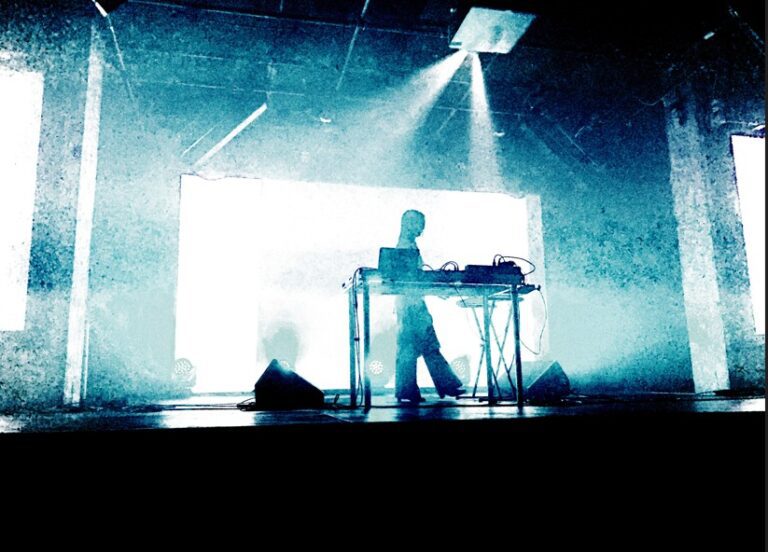
I’m a huge fan of early to mid-2000s era electronica dance music (Blockhead, Bonobo, Com Truise), a sound that is recreated on stage rather than just DJ’d live, and this is what the Scottish producer Joshua Spence Mainnie, known as Barry Can’t Swim, brought before Doechii’s set next door. Before last week, I had no idea who this 30-something producer was, having been sent his new album, Loner, press release countless times. But after his set, it’s safe to say I’ll be playing Loner on the headphones to relive the live set experience.
Barry Can’t Swim live consists of a three-piece; Mainnie on a high rise, surrounded by synths and keyboards, one other keyboardist, and a live drummer (who holds down the beats so the others can really go for it). The backdrop is a mix of vibrant, psychedelic imagery; kaleidoscopic human walking, shapes melting into eyes and faces, and maybe just for Osheaga, a Pink Floyd-esque laser show. The music is always danceable, but brings a bit of noise and experimental electronic work before bouncing into a future house vibe full of bass. You wait for the drop, but sometimes it comes when you least expect—my favourite kind of electro music, non predictable and bringing the right amount of intensity and bass when you want to rage. Mainnie’s little jazzy keyboard solos really send Barry Can’t Swim’s sound into the stratosphere. This is an artist I’ll be watching for sure.
Bibi Club, le duo montréalais de dream pop alternative composé de Nicolas Basque et Adèle Trottier-Rivard, est un héros de la scène musicale montréalaise depuis qu’ils ont lancé leur premier album La soleil et la mer, il était donc logique qu’ils ouvrent la scène Sirius XM, où Osheaga a laissé tomber tous les groupes locaux cette année. Bien que je pense qu’ils méritent de jouer sur une plus grande scène, peut-être Valley ou Island, Bibi Club a apporté sa fureur dreamwave ; Basque a posé des pistes de guitare bruyantes, tandis que Trottier-Rivard a oscillé entre le synthé, les cymbales crash, et sa voix à la Cocteau Twins. J’ai déjà vu Bibi Club et c’est probablement ce qui se rapproche le plus d’un set de quelqu’un comme Stereolab, ce qui est un grand compliment.
Le set était enjoué, et c’était cool de voir les passants s’arrêter pour voir certains des titres de Feu de garde de Bibi Club, sélectionnés pour le Polaris, et même rester pour tout le show, au lieu d’aller voir Artemas ou la fin de Lucy Dacus. Je suppose donc que leur présence sur la plus petite scène, juste au milieu des autres, était stratégique pour attirer la foule qui n’avait aucune idée de ce qu’était ce duo de dream pop franco-synthétique. Nous, Montréalais, connaissons Bibi Club et sa présence éternelle, mais c’était agréable de les voir enfin reconnus dans un festival grand public.
Osheaga 2025 I FINNEAS Transforms Osheaga Into a Dreamscape
by Stephan Boissonneault
FINNEAS’s Osheaga set was a masterclass in cinematic pop minimalism, delivered with quiet intensity and emotional precision. Best known as Billie Eilish’s brother, producer, and co-writer, FINNEAS stepped confidently into his own spotlight, blending singer-songwriter vulnerability with slick electronic and piano ballad flourishes, and a few electric guitar licks—honestly I could have had more. Dressed simply, like a trucker, except for his heart pants, he let the music do the talking, his voice clear and arching above a sparse piano line that silenced even the festival chatter.
What followed was a carefully crafted set that moved between introspective ballads and pulsing alt-pop. “Little Window” brought a nostalgic surge of glitchy synths and yearning, while “Let’s Fall In Love For The Night” felt like a whispered mantra to the crowd. FINNEAS proved himself a natural performer—gracious, soft-spoken, but magnetic with a voice of immense range—drawing listeners in with every shift in tone. His music is quite generic, sounding like some of the pop from yesteryears (I’ll say ABBA or Supertramp at times), but in the best way.
Joey Valence & Brae’s live show is a high-octane blast of throwback chaos, blending early-2000s Beastie Boys energy with Gen Z absurdity. From the moment they hit the stage, the duo detonates into movement, flinging themselves across the stage like hyperactive cartoon characters armed with MPCs and mosh calls. They’re self-aware without being ironic, ridiculous without being gimmicky.
Their chemistry is electric—Joey’s machine-gun delivery paired with Brae’s off-kilter charm turns each track into a rapid-fire volley of punchlines, Nintendo-core samples, and breakbeats. As mentioned earlier, they share the same angst-ridden cadence as Ad-Rock and Mike D of the Beastie Boys, but modernize it with beats from Run The Jewels and Charli XCX’s “365.” The set feels like a DIY LAN party fused with a backyard rap battle, wrapped in a Hot Topic hoodie. Somehow, it works. Joey Valence & Brae may be nostalgic, but they’re not stuck in the past—they’re flipping it, glitching it, and stage-diving straight into the future. For a duo that has just started getting more known, especially over Instagram, this rap duo delivered the goods for old and new fans of hip hop.
Festival de Lanaudière | Marc-André Hamelin and Dover Quartet : Music That Resonates
by Frédéric Cardin
After heroically saving the Orchestre Métropolitain concert last July 27th (READ MY REVIEW HERE), pianist Marc-André Hamelin last night offered the program for which he had been initially called. It was taking place at the Mascouche Church (north east of Montreal), which was very well attended for the occasion. We are delighted because the evening was beautiful.
Hamelin launched the program with a sonata by Nikolai Medtner, the one in A minor, Op. 38 No. 1, “Reminiscenza.” It’s a single-movement piece, about 15 minutes long, that skillfully blends, as is the case with Medtner, Rachmaninoff-esque romantic impulses with German contrapuntal density. This sonata is unusual in that it is part of a larger cycle of eight “forgotten melodies” (reminiscenza), hence the numerical cataloging. Op. 38 No. 1 is the most extensive of the eight, a true sonata in its own right that was strangely inserted into a thematic suite. It begins with a gentle melody with nostalgic echoes before developing into something increasingly dense and agitated, and then returning to the spirit of initial simplicity. Hamelin played it with force, although the church’s rather reverberant acoustics somewhat blurred the contours of the piece.
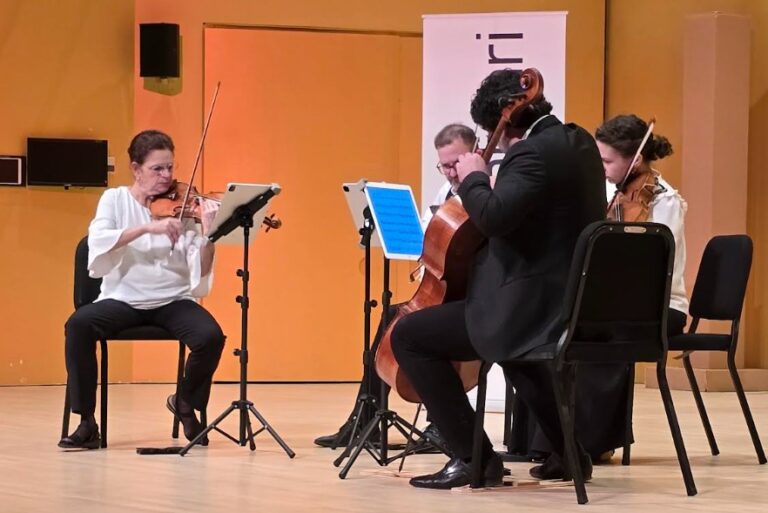
Next was the American Dover Quartet, formed at the Curtis Institute. The group is solid and has numerous acclaimed and award-winning recordings to their credit. The usual violist, Julianne Lee, was unable to attend, so she was replaced by Pierre Lapointe. No, of course not the one heard the day before with OM on Mount Royal, who is a popular singer in Quebec. Rather a Canadian violist born in Hull and based in Texas, who is unfortunately little known here. The poor man is almost impossible to find on the francophone web. Type in Pierre Lapointe, add “alto” or even “violin,” and the entire results page will still be taken up by the Quebec pop artist. Too bad, because he showed very good skills with the rest of the group. Technically solid, expressive, although a bit muted in terms of projection, with some exceptions.
Thus formed, the Dover Quartet launched Tchaikovsky’s captivating String Quartet No. 1 in D major, Op. 11, with a somewhat thin, almost acidic sound. For comparison, listen to the St. Lawrence playing the same entrance, this theme so powerfully linked to the Russian soul, and feel the roundness of the sound, with its wonderful dark and deep color like an abyss. I admit, I prefer this way. That said, the Dover Quartet quickly regained their composure and delivered a very lyrical performance, particularly in the superb (and extremely famous) Andante cantabile, and in the Finale, which was also imbued with convincing vital energy. The last two chords could have been a bit better held, less rushed, but the audience went for a bathroom break happily humming the unforgettable theme.
The main piece was César Franck’s Piano Quintet in F minor, FWV 7, which brought together Hamelin and the quartet. The quintet is a powerful construction, with passages that give you chills. I’m thinking especially of the second movement, with its sublime chords imbued with poignant spirituality, even transcendent mysticism. Not all string quartets manage to recreate that moment in its emotional intensity. Not all pianists join in with the necessary delicacy. That was the case yesterday, and therefore a very beautiful moment of music. The final movement was performed with effective feverishness, driven by precise articulations, although, once again, somewhat blurred by the resonant vastness of the space. It makes me want to recommend a comparison (if you were present and can make it) : go listen to the same Marc-André Hamelin, with a four-star quartet (Joshua Bell, Pamela Franck, Nobuko Imai, and Steven Isserlis) in a recording captured live at Verbier: the clarity of the voices is remarkable, as is the dramatic intent of the writing, in a sound recording that is much clearer than the in-situ projection at the Mascouche church. A noticeable difference.
Nevertheless, the expressive fire and quality of playing of the five musicians on stage gave the audience present an excellent concert of high-quality music. A heartfelt ovation was given, and rightly so.
Orchestre métropolitain on Mount Royal: a big collective hug
by Frédéric Cardin
When we go to the annual OM concert at the foot of Mount Royal, we don’t go there to play the knowledgeable music lovers, who seek the sonic sublime and the magic of colors in its maximum fullness. For that, you have to go to the Maison symphonique. Or, if you want to do it outdoors, at the Lanaudière Amphitheatre, a model of its kind. Here, what we are looking for is more of a sense of collective communion. In this sense, the mandate is still well fulfilled and the objective achieved by the Montreal orchestra. A large crowd, reflective of the city, united in all colors, styles, ages, social classes, gender identities, politics, etc., gathered on the slopes of the mountain at sunset and as night fell, offering a dreamy panorama of the city’s skyscrapers behind the scene, and the splendid nature of the Mount, on the side.
In this kind of meeting, the sound quality is what it can be, that is to say, pushed by generous amplification so that we can hear the notes played by the orchestra as loudly as possible and over a vast distance, but without generating unpleasant distortion. A difficult equilibrium. Comments gleaned here and there after the evening indicate that some connoisseurs deplored the fact that what we had heard did not exactly correspond to what we heard at the Maison symphonique. That’s obvious, and as I just said, that’s not the goal.
From the start (and after a pre-concert appetizer in the form of a tribute to Pierre Péladeau, the patron who allowed this orchestra to exist at the beginning, despite the presence of the more glorious OSM), the colors were announced with a greeting about Yannick as the “most beautiful human being put on earth by God” (nothing less), about Montreal as the most beautiful city in the Universe and the OM as the best orchestra in the world. We know that the host Mariana Mazza (replacing Kim Thuy, which necessarily disappointed many people, the two personalities being at opposite ends, Kim Thuy all elegance and delicacy, Mazza a go-getter, even vulgar) was laying it on thick and fully assumed the chauvinistic swelling of the announcements. But we smiled, and we especially appreciated it in the sense that, indeed, Montreal has something special, an energy, a personality, even a soul that instills in many of its inhabitants, and many non-natives, a rather strong devotion. We gave each other a big collective hug, a bit exaggerated, but benevolent.
As for the music, the program was very relevant in its eclecticism: the Italian Symphony by Mendelssohn that offers a very appropriate summer sparkle and memorable melodies, easily appreciated by anyone, even those who never listen to complete symphonies in normal times. A pretty piece by Augusta Holmès, L’amour et la nuit, in a romantic, almost cinematic style, was followed by a Quebec work by Hector Gratton (1900-1970), inspired by folk melodies, Dansons le carcaillou (which no one dared to do, fortunately). The classical portion concluded with the magnificent Firebird by Stravinsky, yet another score whose melodic features and colorful, grandiose style had all the makings of a film score for unfamiliar ears. A seductive factor, then, and fully appreciated by the crowd.
The Orchestra played well, to the extent that, once again, we are outdoors and the nuances and details tend to get lost. The specialist and regular concert-goer in me wants to salute the beautiful listening offered by this very large audience (50, 60 thousand?).
The finishing touch, the “cherry on the cupcake,” was provided by the immense Pierre Lapointe, probably the most refined and easily “classicizable” of Quebec singer-songwriters of the last 20 years. He sang three songs from his album Dix chansons démodées pour ceux qui ont le cœur abîmé. Three magnificent pieces with finely woven lyrics, melancholic tunes and rich and flavorful orchestrations (provided by the excellent Antoine Gratton). We were here in the great French song, at this level of musical excellence where words and notes fuse together.
The now well-established tradition of playing Beethoven’s 5th (the theme of the 1st movement) in disco style ensured a festive departure for the audience, who thus had the opportunity to sway and especially stretch their legs before returning home and saying to themselves (that was the goal) that, a classical concert, is fun.
The nitpickers will surely grumble by criticizing the largely amplified sound recording, Yannick Nézet-Séguin’s frequent changes of attire (a bit too much), Mariana Mazza’s animation (somewhat out of sync with a typical classical concert, but still, and often, funny), or even the program itself, but none of them will probably have succeeded in democratizing the symphonic concert and classical music, even the most accessible, with such effectiveness. That is why we must recognize that the OM knows how to do it and is still succeeding in its gamble to unite an entire city and its inhabitants around its product.
The OM and Yannick Nézet-Séguin have placed classical music at the heart of Montreal’s life and spirit, eliminating multiple disparities and offering a unifying narrative, acquired and appreciated by everyone, and “anyone in between.”
Orchestre métropolitain au pied du Mont-Royal-Yannick Nézet-Séguin; crédit : Tam PhotographyOrchestre métropolitain au pied du Mont-Royal-Mariana Mazza; crédit : Tam PhotographyOrchestre métropolitain au pied du Mont-Royal-Mariana Mazza; crédit : Tam PhotographyOrchestre métropolitain au pied du Mont-Royal; crédit : Tam PhotographyOrchestre métropolitain au pied du Mont-Royal; crédit : Tam PhotographyOrchestre métropolitain au pied du Mont-Royal-Yannick Nézet-Séguin-Mariana Mazza-Pierre Lapointe; crédit : Tam PhotographyOrchestre métropolitain au pied du Mont-Royal-Pierre Lapointe; crédit : Tam Photography
Late-Night Warehouse Ambiance for Juan Atkins All-Nighter at the SAT
by Julius Cesaratto
Techno’s godfather, Juan Atkins—one half of the pioneering duo Cybotron—took to the Société des Arts Technologiques to deliver an unmissable performance for techno purists. Celebrated as a founding force behind the sound born out of 1980s Detroit, Atkins gracefully delivered a classic techno set full of his signature melodies, distorted robotic vocals, and unmistakable use of the Roland TR-909—the drum machine that laid the foundation for techno itself.
He began the night slowly, layering mechanical sounds that gradually built in intensity—playing with frequencies as the dance floor warmed up. The SAT’s raw concrete pillars rose above the crowd like the skeletal remnants of a disused factory, a fitting backdrop for the industrial pulse of Atkins’ sound—at times harsh, yet always melodic.
Just blink, and you might find yourself suddenly transported to a pulsating Motor City warehouse in the early morning hours.
As the saturation of sound gave way and the lights flickered in deep shades of green, minimalist drum kicks gave way to the groovy, synth-laced melodies that have defined Atkins’ illustrious career as a producer and DJ. The multi-generational crowd of ravers in attendance was taken on a true sonic voyage—Atkins weaving his techno-futurist sound together with synths and bouncing funk basslines, a nod to his early influences.
Leaning on more than 40 years as a selector, he turned up the BPM, blending a rich array of styles—from early synth music to Italo-disco—without ever losing the core of his sound. The apex of the night came when he dropped Giorgio Moroder’s “Chase”, drawing cheers from the crowd. A brief flash of nostalgia, it lent itself perfectly to the groove of the night, echoing the roots of techno without ever feeling retro.
As a parting gift to the dancefloor, Atkins closed his two-hour set with a tasteful sprinkle of jungle—a fast-paced closer that left the crowd wanting more.
The sounds were industrial yet melodic; the layering of drums, bass, and synths was funky, seamless, and impeccably timed. A true artist behind the decks.
Lanaudière Festival | Metropolitan Orchestra/Yannick Nézet-Séguin/Marc-André Hamelin: When Nature Drives the Concert
by Frédéric Cardin
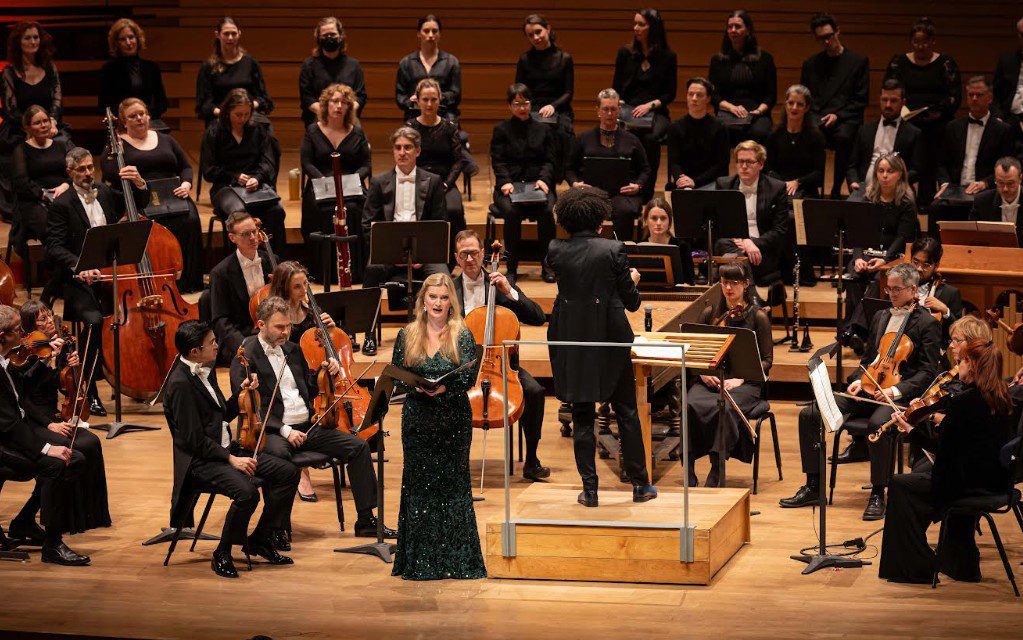
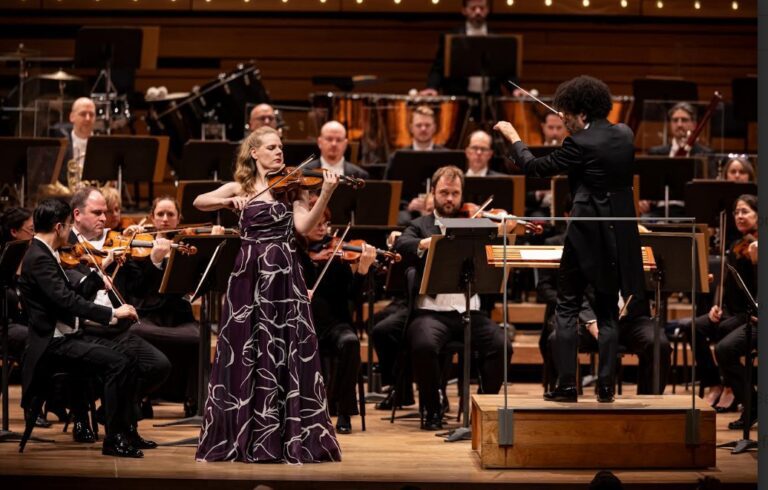
Nature, and human nature in general, had the last word this Sunday at the Lanaudière Amphitheatre for the concert by the Orchestre Métropolitain (OM) conducted by Yannick Nézet-Séguin, with the imperial Marc-André Hamelin on piano. Let’s remember that it was the young sensation Yuja Wang who was supposed to be there, but sick for a few days, she had to withdraw. In Lanaudière, miracles do exist, according to the artistic director Renaud Loranger. He may not be wrong, because replacing an artist as intense as Wang at the last minute with an absolute master of his art such as Hamelin is indeed a blessing.
With the OM and Yannick, the two Ravel piano concertos were on the menu, the one for the left hand and the one in G, of course. From the outset, we knew that we had not lost anything in the exchange, because the Quebec pianist seized the Concerto for the Left Hand in D Major, without ever letting up the pressure for a moment, so explosive in its contrasts, so nervous and urgent in its motifs and melodies, so fragmented in its references, moving from jazz to military music, modernism and lyricism. Hamelin controlled the entire discourse and pacing of the work, with unwavering confidence, to which Yannick and the OM submitted with grace, infusing their musical part with very beautiful colors, feverishly drawn by the conductor. This kind of music is second nature to the Quebec pianist, as if he never needs to think about it, just let his instinct and essential Self take over.
The Concerto in G major, more substantial in content though not much longer in duration, is an absolute marvel, which is part of our collective music-loving psyches. Here, if we could feel a slowness to “get into” the game from Hamelin, but quickly resolved. The two external movements demonstrated a beautiful mastery of the textural play in the orchestra, by Yannick, and of the pointillist discourse by Hamelin. A few rare flights seemed less clear in their execution than those of the concerto for the left hand, no more. It was in the central movement, which is one of the most beautiful musical passages in history, that the pianist showed inspiring poetry and benevolent gentleness. Not better than the best, but not worse either. In short, a high-quality reading, of the kind we expect from the best artists in the world. If the OM did well in this movement, it missed the step towards an absolute standard, particularly in the woodwind solos that precede the great and wonderful English horn soliloquy. Some aesthetic clumsiness was noticeable in a wrongly placed flute breath and a slightly vulgar clarinet attack. The English horn solo itself, although very beautifully sung by the excellent Mélanie Harel, could have been projected with more force and stately presence in front of the orchestra. In short, it is in these infinitesimal details that the difference between the OM and the OSM is noticeable. A notch, a very small notch, but one that makes the difference for those who listen carefully.
Hamelin was almost heroically greeted by the audience, to whom he offered magnificent Jeux d’eau by the same Ravel. Another Lanaudois miracle: it was exactly at the climax of the piece that thunder and rain began to fall, in a spontaneous symbiosis as wonderful as it was funny. We would have wanted to program it, but we could probably never make it happen.
As an opening piece, Yannick had chosen a very pretty impressionistic score by Lili Boulanger, D’un matin de printemps, which set the table nicely for what was to come, namely a festival of orchestral colors.
As if the musical density had not yet been maximized enough, the concert ended with the substantial Symphony No. 2 in D major, Op. 43 by Sibelius. This time, nature did not collaborate kindly with the musicians. After a few minutes of settling into the first movement, the audience and artists had to take a break from the musical communion because the downpour, not only noisy, even made its way onto the stage due to the strong winds, risking damage to the performers’ instruments, especially the strings.
We were destabilized by the resumption, which did not take place at the beginning of the work, as announced, but roughly where we had left off. With stability restored in our minds, we paid attention to the unfolding of these sublime pages from the symphonic repertoire. Yannick succeeded where, I find, he did not entirely satisfy in his Atma label recording. In the latter, he draw an almost mineral, chthonic vision, whereas I believe that this symphony requires an airy approach, without neglecting the grounding in the soil. It’s a bit of what we got as the sky finally lit up. The Finale was adequately held and sustained in its celestial and luminous ascent so emblematic, so mystically powerful. Satisfaction, despite the initial disagreements of Mother Nature.
Festival de Lanaudière | Sol Gabetta : Queen of the cello meets les Violons du Roy
by Frédéric Cardin
Friday evening, the Lanaudière Festival welcomed the Argentine cellist Sol Gabetta, for the first time in Canada, said the press release. In the introduction to the concert, the artistic director Renaud Loranger rather mentioned a “first time in Quebec.” I tried some research, but I can’t say if it’s “Canada” or “Quebec.” If you know, let me know.
In the end, all of this is of little importance in light of the spectacular performance that the Swiss-based artist offered to the fairly large audience. Spectacular, certainly, but not in the sense of a show-off who wants to accelerate the allegros systematically into Mad Max-esque furiosos. Rather in the sense of a technique so precise that it forces admiration and provides excitement by itself, and that is also supported by a warm singing of the phrases that lets all the notes flow with undeniable naturalness. I am thinking particularly of Haydn’s Cello Concerto No. 1 in C major, Hob. VIIb/1, of which I have rarely heard such a clear and touching reading. In this sense, Gabetta (and the Violons du Roy, of course) expressed with excellence the spirit of Empfindsamkeit, or the “sensitive style” of the late 18th century, a precursor of Romanticism in that it favored a freer expressiveness, while remaining framed by still very precise and coded forms. No urgency or disheveled propulsion of rhythms, then, nor aggressive attacks that seek to force “energy.” Only a calm narration, but one that exudes a communicative sparkle, all within a technical execution that reaches stylistic perfection. It was a very great moment of music.
The other concerto played by Ms. Gabetta (there were two, since she was with us…) was that of Carl Philipp Emmanuel Bach, the very pretty Wq 172 in A major, one of my favorites in the repertoire, although still relatively unknown to the general public. The cellist admitted in the interview granted to my colleague Alexandre Villemaire that she had not touched this piece since 2014. We noticed, as a result, that the lady did not have this score as instinctively “in her fingers” as the Haydn, even though in the end she still gave a solid lesson in musicality to anyone who would like to try it.
I don’t know if Bernard Labadie’s Violons hadn’t been in contact with this concerto for several years either, but the fabulous clarity demonstrated in the first part of the concert (in addition to the Haydn, Mozart’s Symphony 29, which I’ll tell you about below) wasn’t quite as crystalline in this CPE Bach. Oh, for any other ensemble, it would have been an accomplishment in itself, but after what we had heard previously, the bar had just dropped by an infinitesimal micron, nevertheless perceptible.
From the very beginning of the concert, and as mentioned just now, Bernard Labadie gave a Symphony No. 29 in A major, K. 201 perfectly balanced with steady rhythms and finely drawn phrases. All this in a relaxed and elegant style. Already, we had an idea of the aesthetic choice proposed for this concert. In the end, it was at the end of the program that the Quebec conductor showed a little more vigor with Haydn’s Symphony No. 45 in F-sharp minor, “The Farewell,” to which he breathed a dynamic that we had not felt before. A convincing conclusion that did not deviate from the spirit of the evening’s general. A great success.
We only hope that these are not “goodbyes” that Sol Gabetta is leaving us with, but only a “see you later,” because this fabulous performer absolutely must come back to us quickly. We dream of hearing her at the Maison symphonique or at the Bourgie hall!