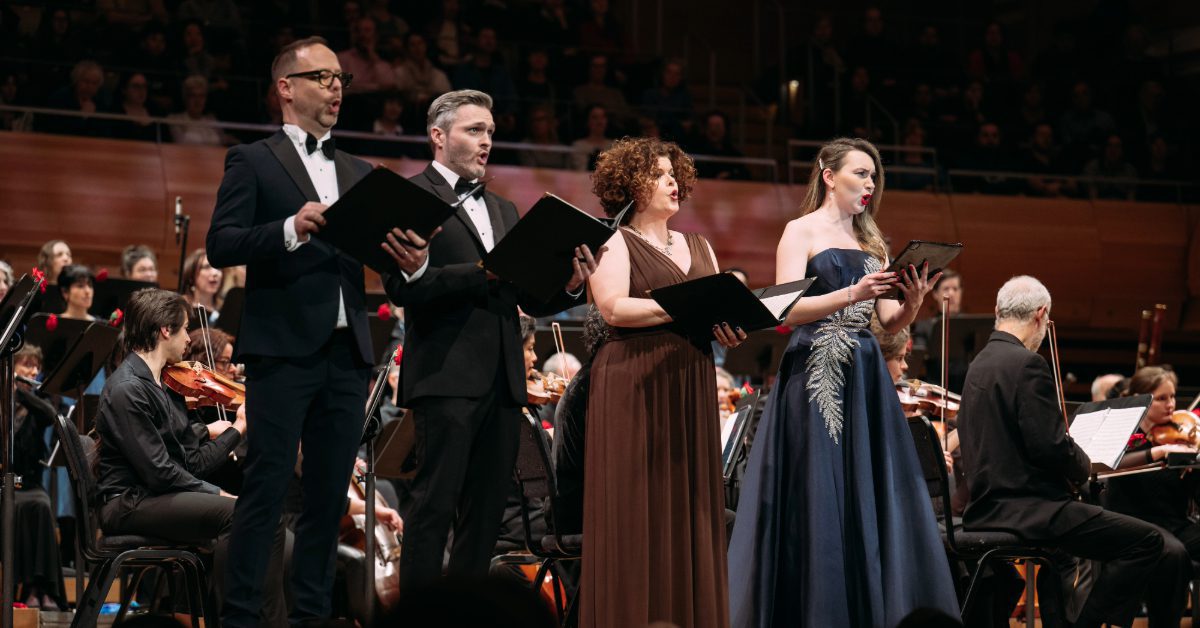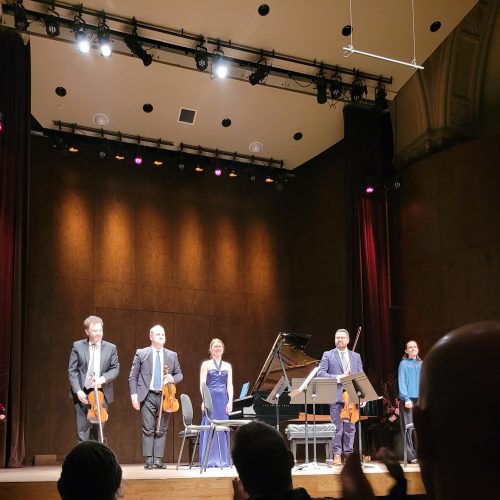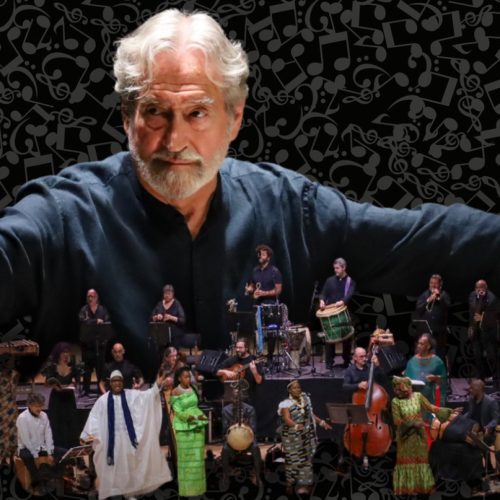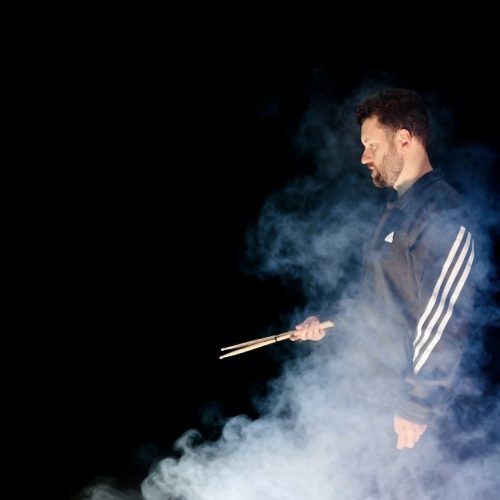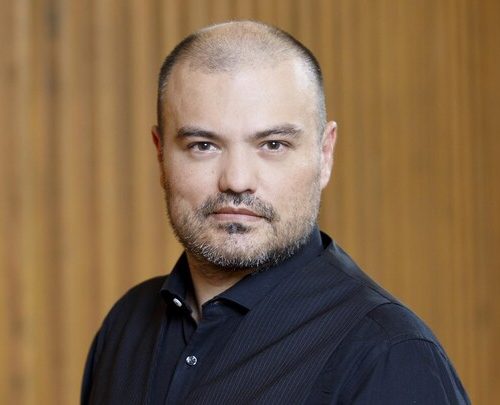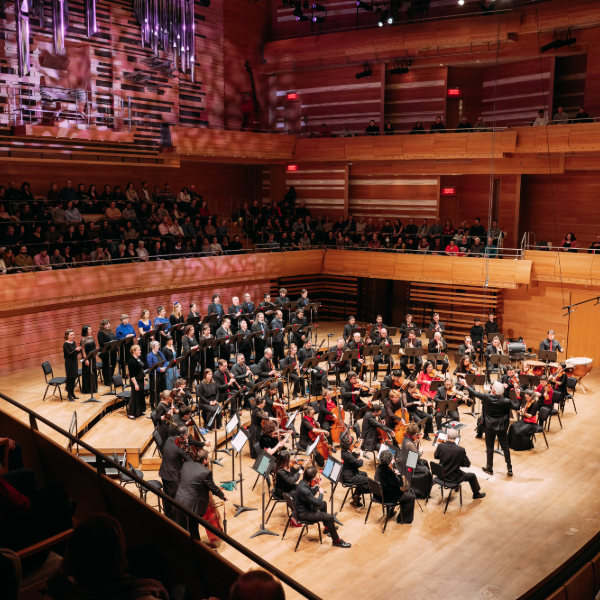
On this Valentine’s Day, we were treated to a premiere at the concert by Ensemble Caprice and Ensemble ArtChoral: Beethoven’s 9ᵉ symphony on early instruments, conducted by Matthias Maute.
The original program was to have opened with the little-known cantata Hiob by Fanny Mendelssohn-Hensel. Instead, we were treated to two Yiddish pieces, Ernst Bloch’s Yih’yu L’ratzon and a traditional aria calledOy dortn, as well as Gregorio Allegri’s famous Miserere.
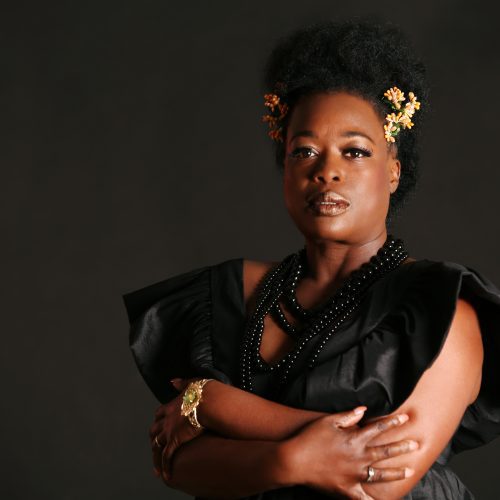
The two Jewish pieces feature soprano Sharon Azrieli and her imposing vibrato. Acting as cantor, she announces psalmodies and the choir responds. We don’t know if it’s a microphone or projection problem, but she was barely audible from the back of the audience. All the same, it’s very pretty, and reminds us that this Jewish and Hebrew music is too rarely performed in our concert halls.
The Miserere is a jewel of musical genius that leaves no room for error. Unfortunately, there were mistakes. Firstly, the voices of the quartet perched high up in the Maison symphonique are not homogeneous; those of the men do not vibrate, whereas those of the women do. What’s more, it’s not always right. Then, there’s no change in volume throughout the piece, and as this piece is often repeated, it becomes redundant and loses all its intimacy. Then, in the psalmodies, different notes are accentuated by the choristers, instead of being lightly pressed, and it’s sometimes unclear in the cuts and consonants. In short, this is a fine work, but it would have deserved a more consistent rendering.
The real treat of the first half is Höre auf meine Stimme, written by William Kraushaar, also a chorister in the bass section. Maute warned us that the melody would stick in our heads, and for good reason. Simple without being kitschy, repeated often enough without our noticing it too much, it is supple and expressive. The accompaniment doesn’t impose itself, leaving the choir to sing along, acting as a harmonic carpet. Were it not for a few dissonant chords from the language of Morten Lauridsen and his contemporaries in the a cappella passages, we would have placed this work between the styles of Mendelssohn and Schubert, and on our first listen, this piece seems accessible to most amateur choirs. When will it be published?
According to conductor Maute, this is the first time in Montreal that Beethoven’s Ninth has been played on period instruments. It takes a few minutes to adapt to the new sound, but it’s very pleasant and successful, despite a few lapses in accuracy and precision. The sound isn’t fat, and the loud passages don’t give the impression that Obelix is lifting the Sphinx, but the tension is there. In the first movement, which Maute conducts at breakneck speed, you can hear all the elements of the musical dialogue, and the second really has the feel of a dance, something you don’t get from many other conductors. However, the middle section of this movement is too fast, and the winds don’t keep up. The third movement is certainly not adagio, but very cantabile. One enjoys the phrases without lingering or falling into the moon.
The last movement opens smoothly and lightly. Finally, the cello/bass recitatives are not too heavy! And all is exalted before the entrance of the chorus, with the recitative of bass Dominique Côté. But as soon as the chorus begins, something annoys us: a soprano pierces more than the rest of her section, especially in the high register, which is like saying almost all the time in Beethoven. Once this is targeted by the ear, it’s extremely difficult to ignore. My seatmate, who was also bothered by it, confided to me at the end of the evening that it wasn’t the first time it had happened to this tandem. If you don’t want one person’s work to unbalance a rare, high-level performance, this is something to be corrected.
photos: Tam Photography